
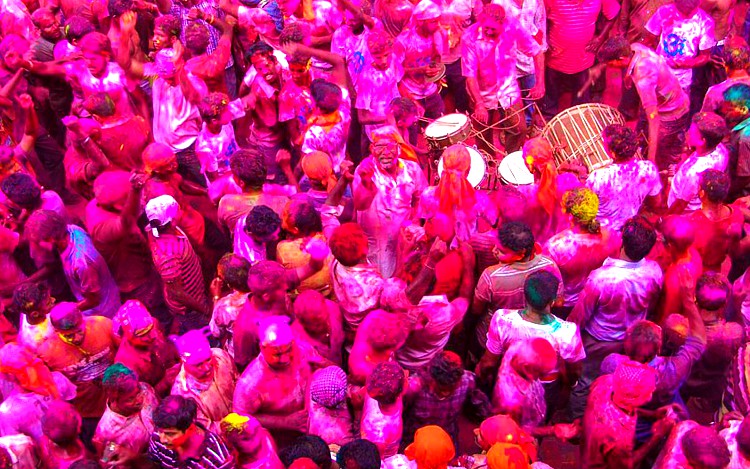
Zambaulim Gulal: Goa’s Sacred Riot of Colour and Memory In the quiet village of Zambaulim in South Goa, colour is not merely celebration — it is devotion, resilience, and remembrance. The Gulal festival, linked to Goa’s springtime Shigmo celebrations, unfolds every year in the month of Phalgun at the revered Shri Damodar Temple. Though […]
The Walking Saints of Goa Velha: A 400-Year-Old Tradition
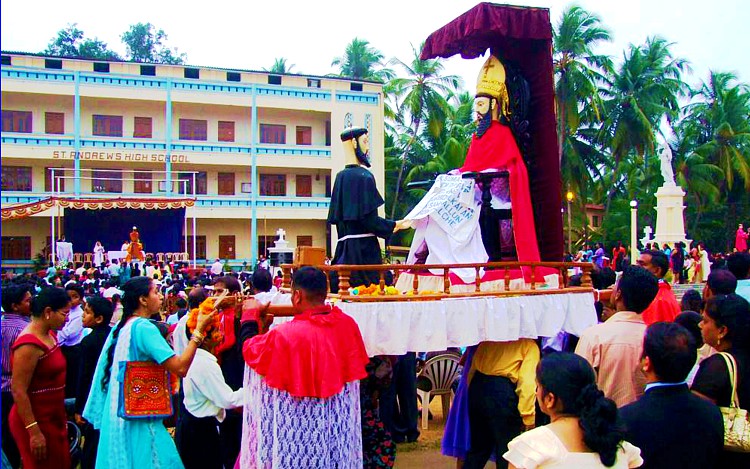
The Walking Saints of Goa Velha: A 400-Year-Old Tradition Each year, thousands of pilgrims and visitors from across Goa and beyond converge on the historic village of Goa Velha to witness the Santachem Pursao (Procession of Saints). Held at the Church of St. Andrew on the fifth Monday of Lent, this solemn and […]
Topshyo: A fiery finale to Shigmo in Fatorpa
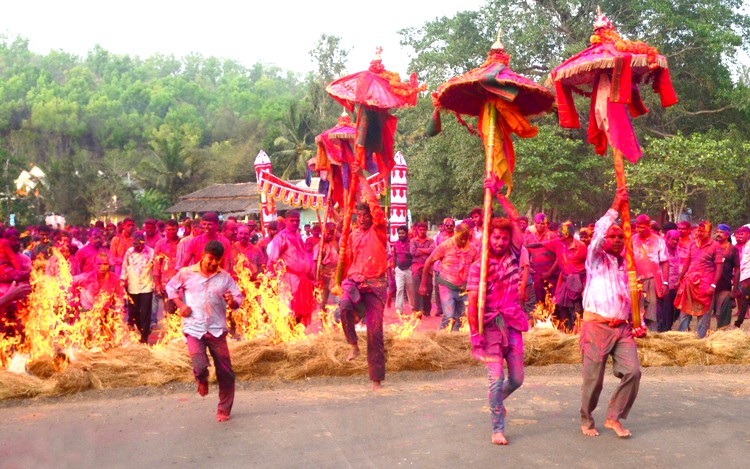
Topshyo: A fiery finale to Shigmo in Fatorpa Tucked away in the hinterland of South Goa, the village of Fatorpa in Quepem taluka hosts one of the most captivating and emotionally charged finales to Shigmo: Topshyo. It is a ritual where faith meets fire and community memory is renewed. While Shigmo across Goa […]
Bonderam: Divar’s Festival of Flags and Island Spirit
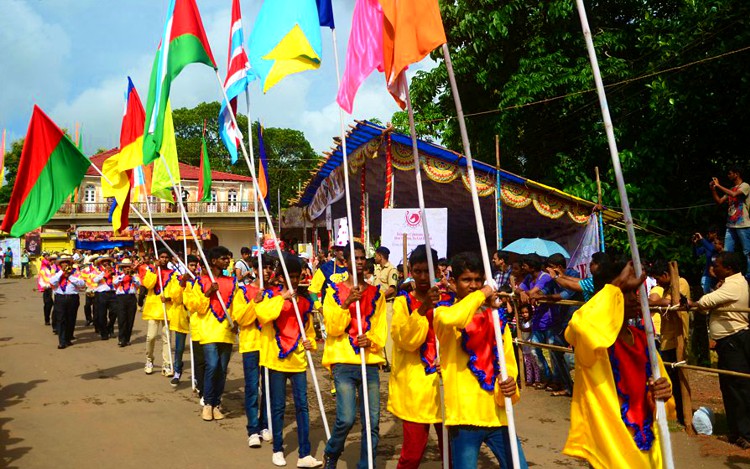
Bonderam: Divar’s Festival of Flags and Island Spirit On a monsoon afternoon in late August, when rain clouds drift lazily across the Mandovi and the paddy fields of Divar glow a luminous green, the quiet island sheds its languid rhythm. Boats arrive steadily at the ferry jetties, music begins to echo through narrow […]
Where Devotion Meets Fire: The Homkund Festival of Chorao
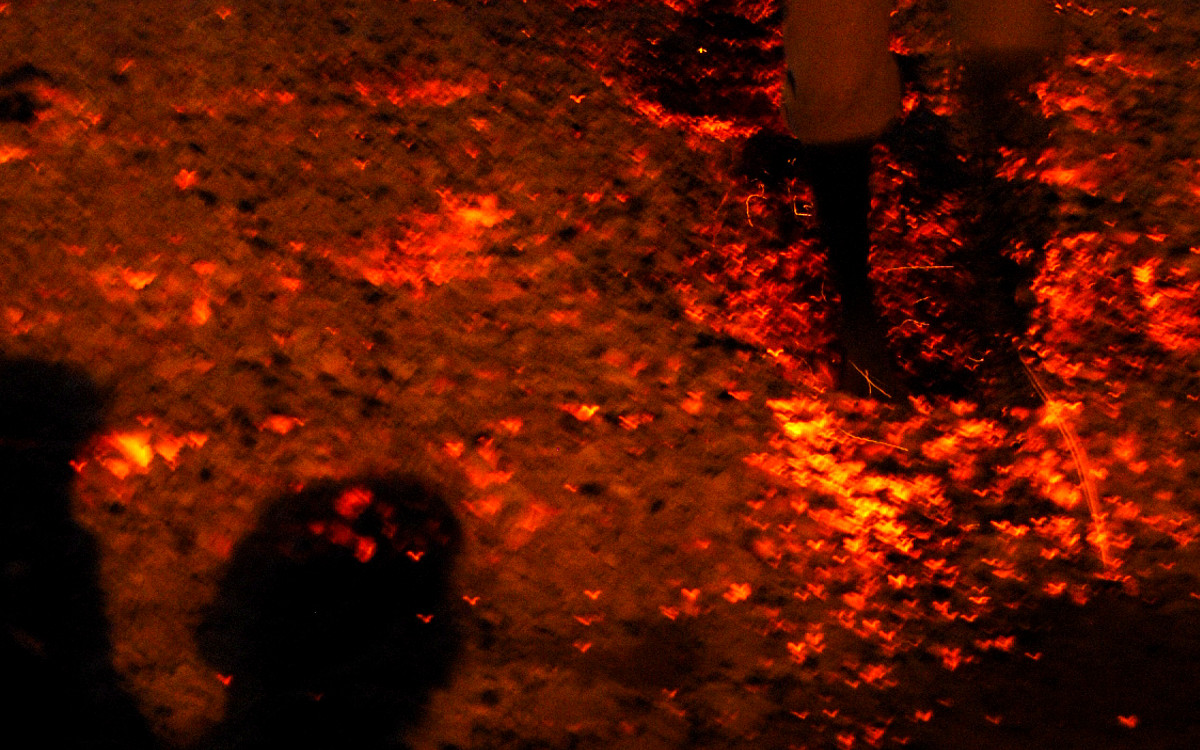
Where Devotion Meets Fire: The Homkund Festival of Chorao On a warm Shigmo night on Chorao Island, the darkness suddenly erupts into fire. Drums thunder through the quiet village lanes, cymbals clash in a hypnotic rhythm, and flames flicker against the temple walls as hundreds gather in anticipation. Soon, men and boys will walk barefoot […]
Betal’s Sacred Journey: The Taka Procession of Poinguinim


Betal’s Sacred Journey: The Taka Procession of Poinguinim
Across rivers and villages in South Goa, an ancient triennial procession keeps alive the powerful bond between a community and its guardian deity.
Every three years, the quiet village of Poinguinim in South Goa’s Canacona taluka awakens to an extraordinary spectacle of faith and tradition. Drums echo through the countryside, sacred flags rise above the crowd, and hundreds of devotees move in reverent anticipation. At the heart of it all is the Taka Procession—locally known as Takyachi Zatra—a centuries-old ritual that binds myth, devotion, and community into one vibrant expression of living heritage.
More than a festival, the Taka Procession is a powerful reaffirmation of the bond between the villagers and their fierce yet protective deity, Shri Betal.
A Pact Forged in Legend
Local lore traces the origins of the celebration back to the 13th century. It is said that Shri Betal, having conquered twelve kingdoms, arrived in the region that is now Poinguinim. Faced with the deity’s immense power, the villagers sought peace and prosperity by making a solemn promise—to honour him with a grand celebration every three years.
From this pledge emerged the Gadyanchi Jatra, a tradition that continues to shape the cultural and spiritual identity of the village.
Poinguinim itself is believed to derive its name from Panchyagram, meaning “five villages.” Each of these settlements is devoted to a different deity—Parshuram, Purushottam, Durgadevi, Adipurush, and Vetal—together forming the sacred landscape of the region.
A Festival Spanning Three Years
Unlike most festivals that unfold over a few days, this tradition follows a unique three-year ritual cycle.
The first year begins with Jevnni, a communal feast where villagers gather in fellowship, strengthening social bonds and preparing spiritually for the events ahead.
The second year brings the most dramatic moment—the Taka Procession itself. The Taka is a sacred cloth bearing verses praising Shri Betal. The inscription, believed to date to the Saka year 1745, is embroidered in an early form of Marathi associated with the Yadav–Bahamani era, making it both a religious relic and a historical artefact.
During the procession, the Taka is carried by a devotee believed to be in a trance, possessed by the spirit of Betal. What follows is a remarkable spiritual journey across several villages.
The procession begins at the Navdurga Temple in Aarva and winds its way through Karpanas, Galiem, Sadolshe, Kolsar, Chandanaped, Loliem, and Khargal before returning to the Vetal Temple in Poinguinim.
One of the most dramatic moments occurs at Chandanaped, where devotees witness the ceremonial crossing of the Galgibaga River. The crossing, watched by large crowds gathered along the banks, symbolises purification, renewal, and the continuation of the sacred journey.
The third year culminates in the grand Gadyaanchi Jatra, a vibrant fair marked by rituals, folk performances, offerings, and large gatherings of devotees who come to honour Shri Betal.
The Fierce Guardian
Across Goa, Betal—also known as Vetal—is revered as a powerful folk deity, particularly among agrarian and fishing communities. Associated with tantric traditions, he is believed to command spirits and supernatural forces.
His iconography reflects this formidable power. Betal is often depicted in a fierce form: naked, with serpents as ornaments, a garland of human heads around his neck, a dagger in one hand and a bowl in the other. Offerings made to appease him traditionally include fowls, goats, and liquor, and in earlier times even buffalo sacrifices were performed in some villages.
Yet, despite this fearsome imagery, Betal is widely regarded as a benevolent protector. Devotees visit his temple seeking blessings, protection, and the fulfilment of vows.
The Wisdom of Nagu Velip
Embedded within this tradition is the story of Nagu Velip, a respected elder remembered for his wisdom and diplomacy. According to folklore, he successfully mediated between the villagers and the powerful deity, persuading Betal to use his strength to protect the community rather than inspire fear.
This legendary pact established Betal as the guardian of the village—and laid the foundation for the triennial celebrations that continue to this day.
When the Procession Moves
The Taka Procession begins at the Vetal Temple in Velwada, accompanied by the rhythmic beat of traditional percussion instruments.
At the head of the procession walks a representative of Betal, followed by four devotees known as Gade. Dressed in traditional attire, they carry two Tarangas—ceremonial flags—and two Satryos, sacred insignias representing the deity.
As the procession passes through neighbouring villages, it symbolically extends an invitation for the coming year’s Gadyanchi Jatra, spreading blessings and strengthening ties between communities.
A Celebration Beyond Religion
Over the centuries, the Taka Procession has evolved into far more than a religious ritual. It has become a celebration of shared heritage and collective identity.
People from different faiths and communities gather along the route, joining in music, dance, and devotion. The atmosphere is festive yet reverent, blending folklore, spirituality, and tradition in a way that is uniquely Goan.
A Window into Goa’s Living Traditions
In a state better known to the outside world for its beaches and nightlife, festivals like the Taka Procession reveal a deeper cultural landscape—one where ancient beliefs, oral histories, and community bonds remain vibrantly alive.
For visitors fortunate enough to witness it, the Taka Procession of Poinguinim offers something rare: a glimpse into Goa’s spiritual soul, where legend walks beside history and the rhythms of tradition continue to guide the life of a village.
And every three years, when the sacred cloth is lifted once more and the drums begin to echo across the fields, Poinguinim remembers the promise that has bound its people and their guardian deity for centuries.
Photos by Lynn Barreto Miranda / lynn.barretomiranda.com
Photos are of the Taka Procession held on 20th March 2016 at Poinguinim.
Ghode Modni: When Goa’s Warriors Ride Again


Ghode Modni: When Goa’s Warriors Ride Again As the drums begin to thunder through Goa’s hinterland during the spring festival of Shigmo, the air fills with anticipation. From the village lanes emerge warriors in vibrant turbans and flowing costumes, swords raised high, their wooden horses swaying rhythmically with every step. For a moment, time […]
Balli Shidiyotsav: Goa’s Ancient Ritual of Faith and Surrender


Balli Shidiyotsav: Goa’s Ancient Ritual of Faith and Surrender In the quiet village of Balli in South Goa, faith occasionally reveals itself in striking and unforgettable ways. Amid temple bells, incense and murmured prayers, a devotee is bound face-down to a tall pole and gently swung in sweeping arcs above the gathered crowd […]
Sheni Uzo: Dancing with Fire in Molcornem
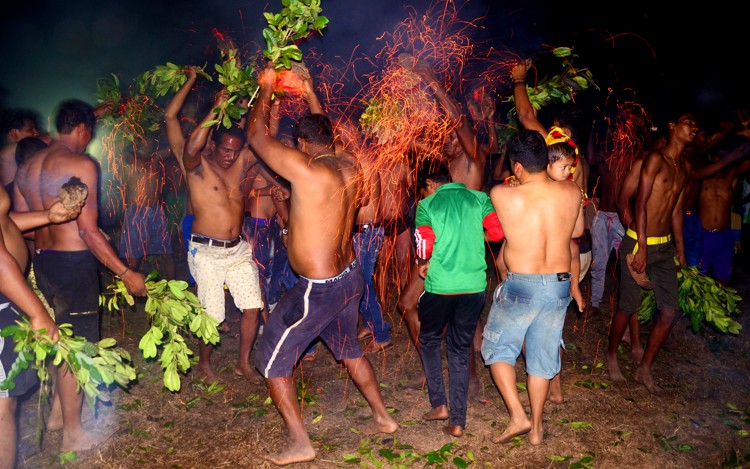
Sheni Uzo: Dancing with Fire in Molcornem Long after the colours of Shigmo have faded across Goa, the quiet village of Molcornem in Quepem prepares for a ritual that seems to belong to another age. On the first full moon night after the festival, villagers gather in darkness for Sheni Uzo—a centuries-old ceremony […]
Cuncolim’s Sotreo: Retracing the Historic Journey of a Goddess
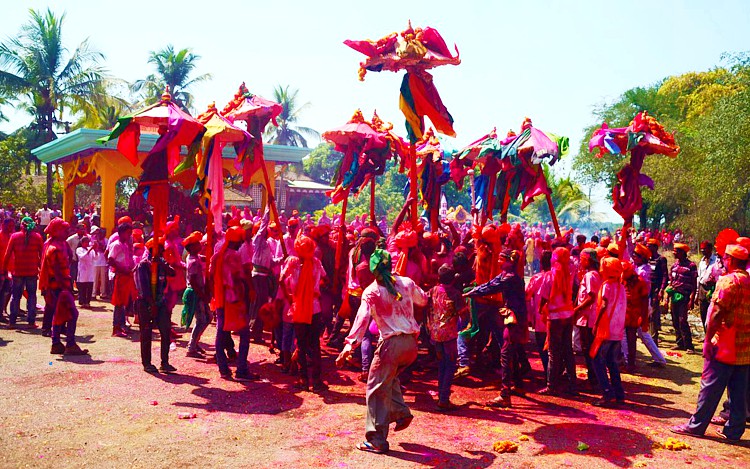
Cuncolim’s Sotreo: Retracing the Historic Journey of a Goddess As the first light of dawn spreads across the lush fields of South Goa, the quiet village of Cuncolim begins to stir. Soon the air fills with drums, chants, and bursts of vermilion powder. It is the day of Sotreo—one of Goa’s most evocative […]