
Topshyo: A fiery finale to Shigmo in Fatorpa
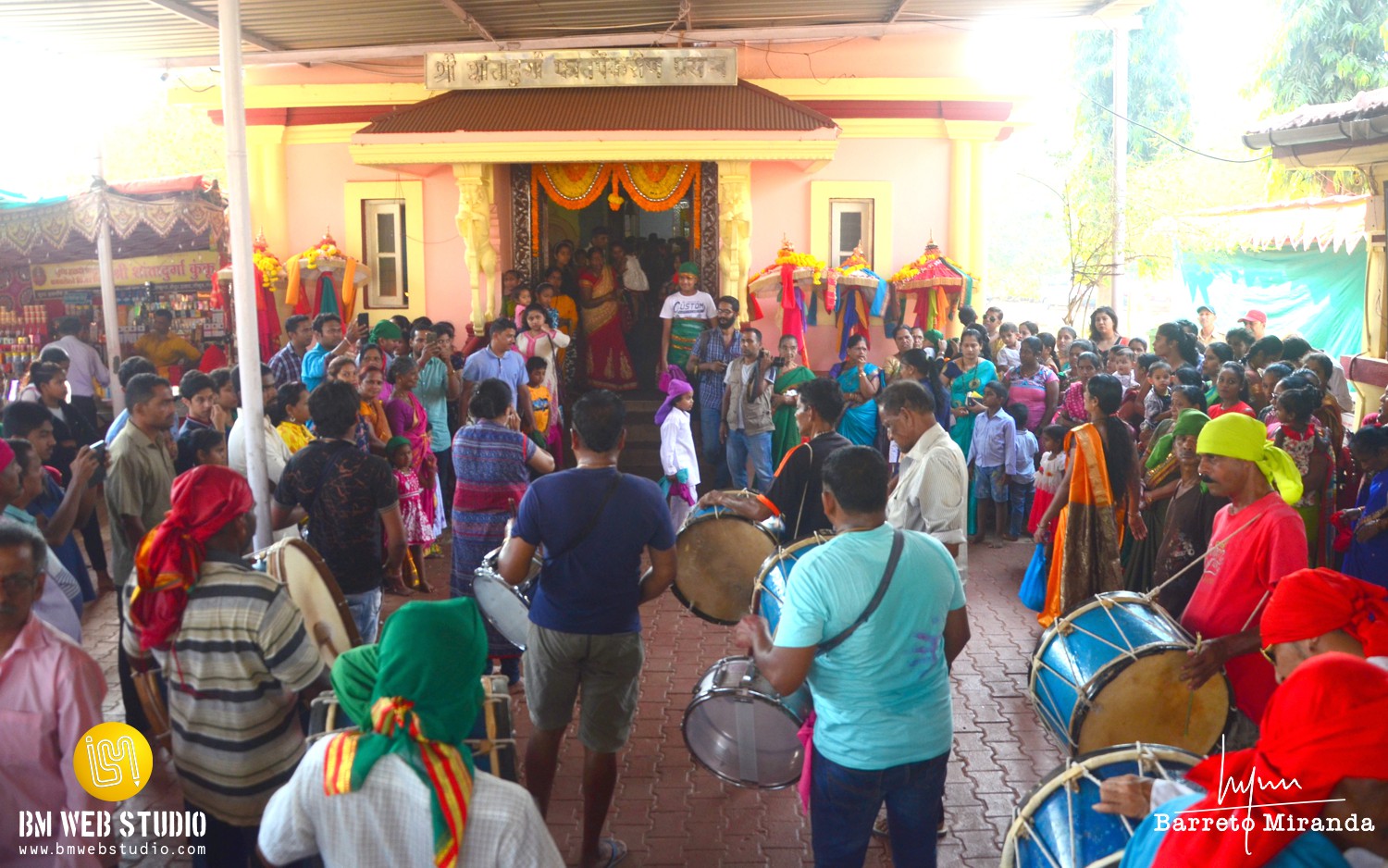

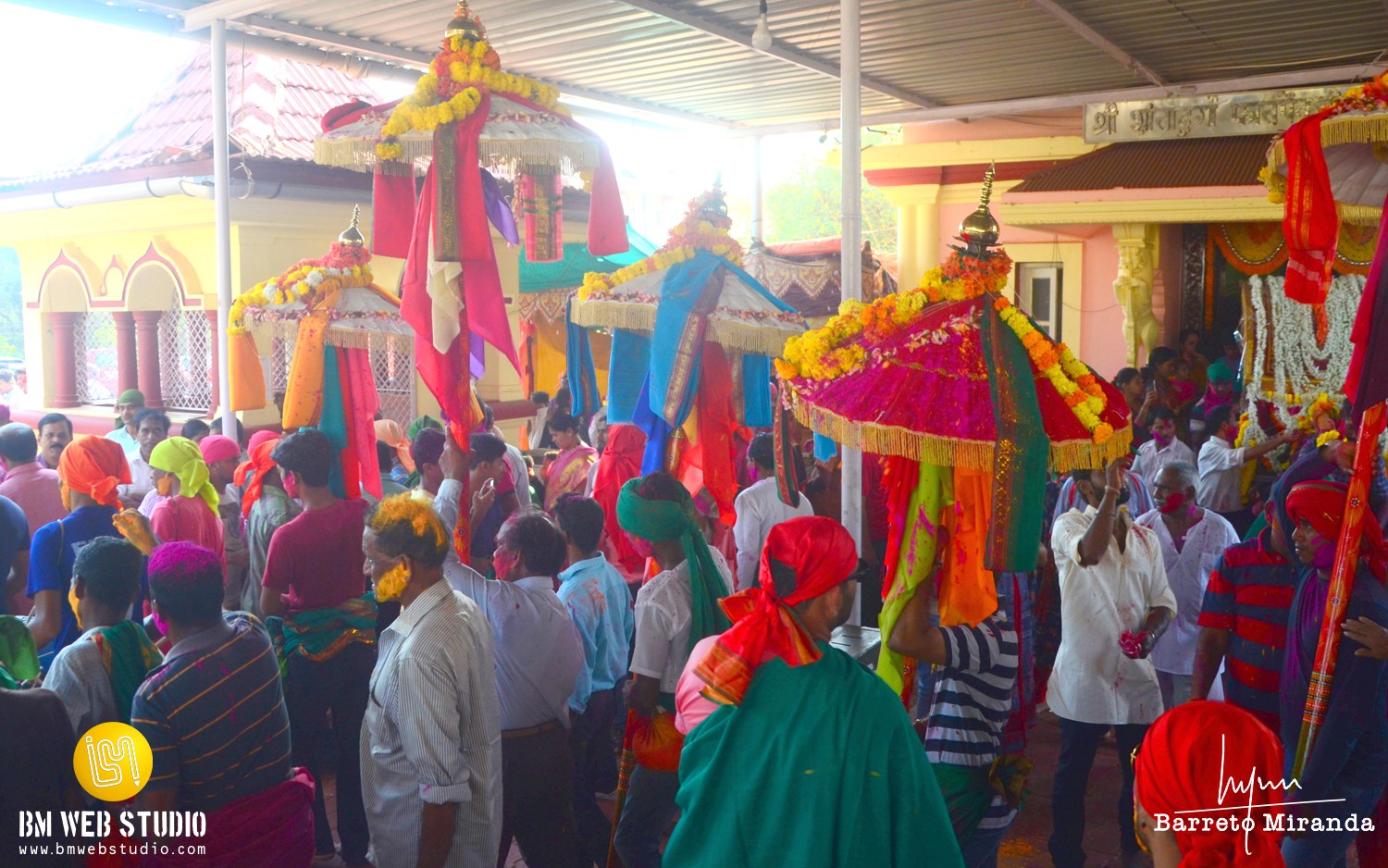
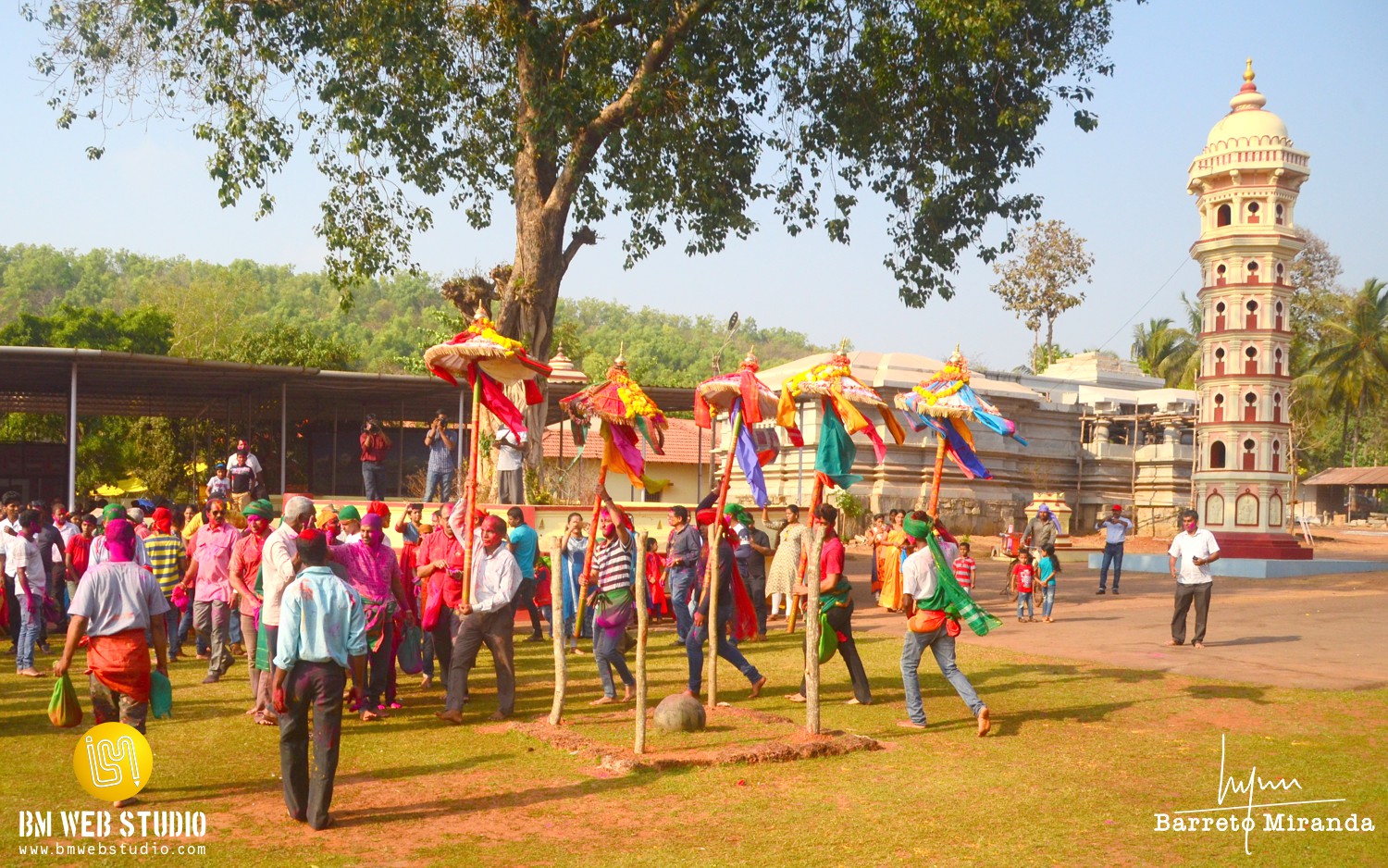
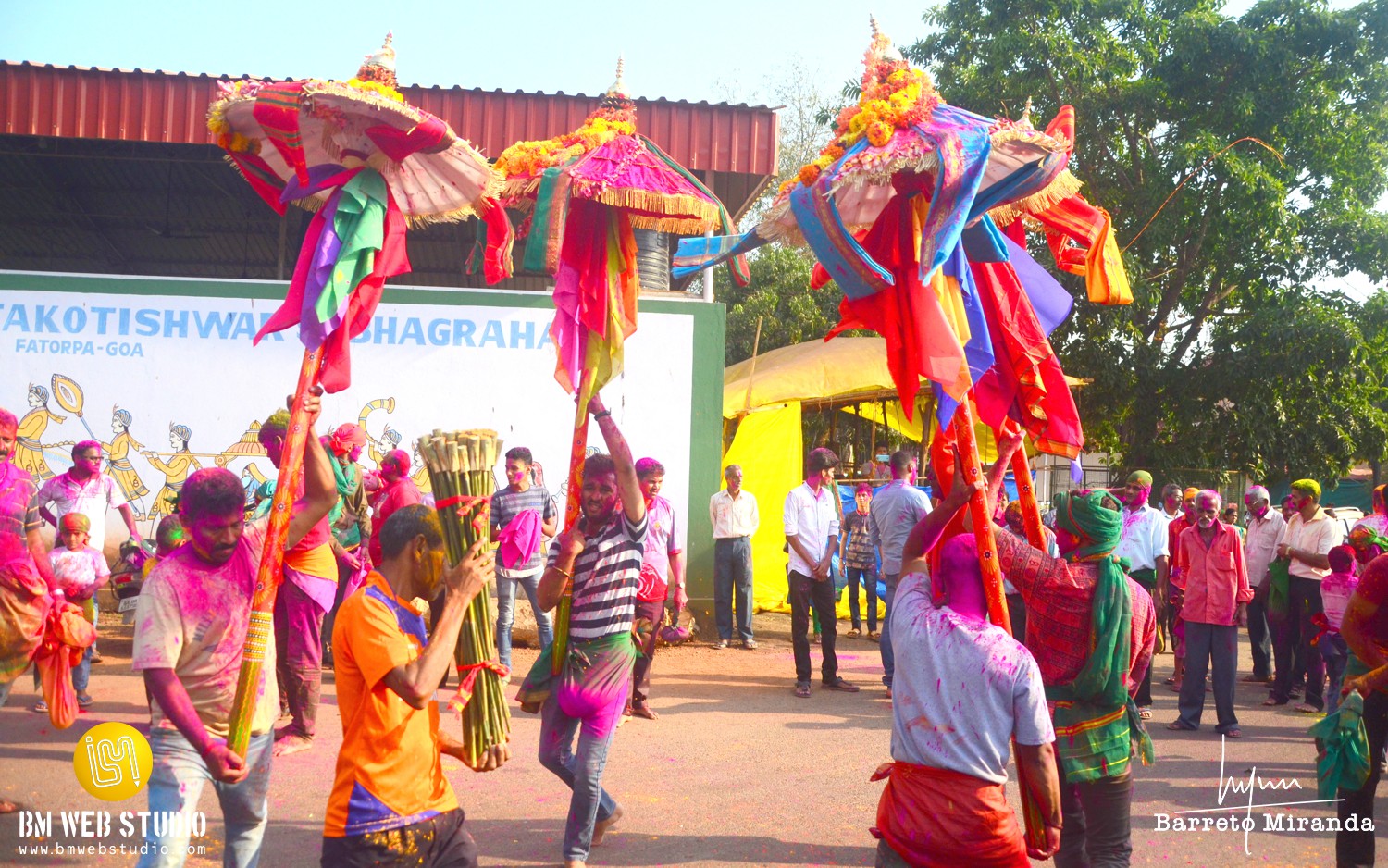




Tucked away in the hinterland of South Goa, the village of Fatorpa in Quepem taluka hosts one of the most captivating and emotionally charged finales to Shigmo: Topshyo. It is a ritual where faith meets fire and community memory is renewed. While Shigmo across Goa is known for vibrant parades and folk dances, Fatorpa’s celebration stands apart for its raw intensity, ancient symbolism, and deep-rooted village participation.
At the heart of the festivities lies the Shri Shantadurga Fatarpekarin Temple, the spiritual nucleus around which the entire celebration revolves. Here, Shigmo is not just a festival — it is a lived tradition, unfolding over several days and culminating in a ritual that blends devotion, spectacle, and collective catharsis.
Historical and Cultural Context
Shigmo, often described as Goa’s spring harvest festival, is rooted in agrarian cycles and warrior traditions. Historically celebrated by farming and martial communities, it marked the return of warriors and the onset of spring — a time of thanksgiving, fertility, and renewal.
In Fatorpa, these broader Shigmo themes take on a distinctive local identity through a sequence of rituals unique to the village. Observances such as Navami, Gade, Sutak, Dindya Bhovar, Diwja, and Sotryo build up to Topshyo, each reinforcing bonds within the community and reaffirming shared heritage.
Topshyo itself is widely understood as a ritual of reconciliation. Elders say it symbolises the burning away of past grievances — a chance for the community to reset social ties before the new agricultural and ritual cycle begins.
The Ritual: Where Fire Meets Faith
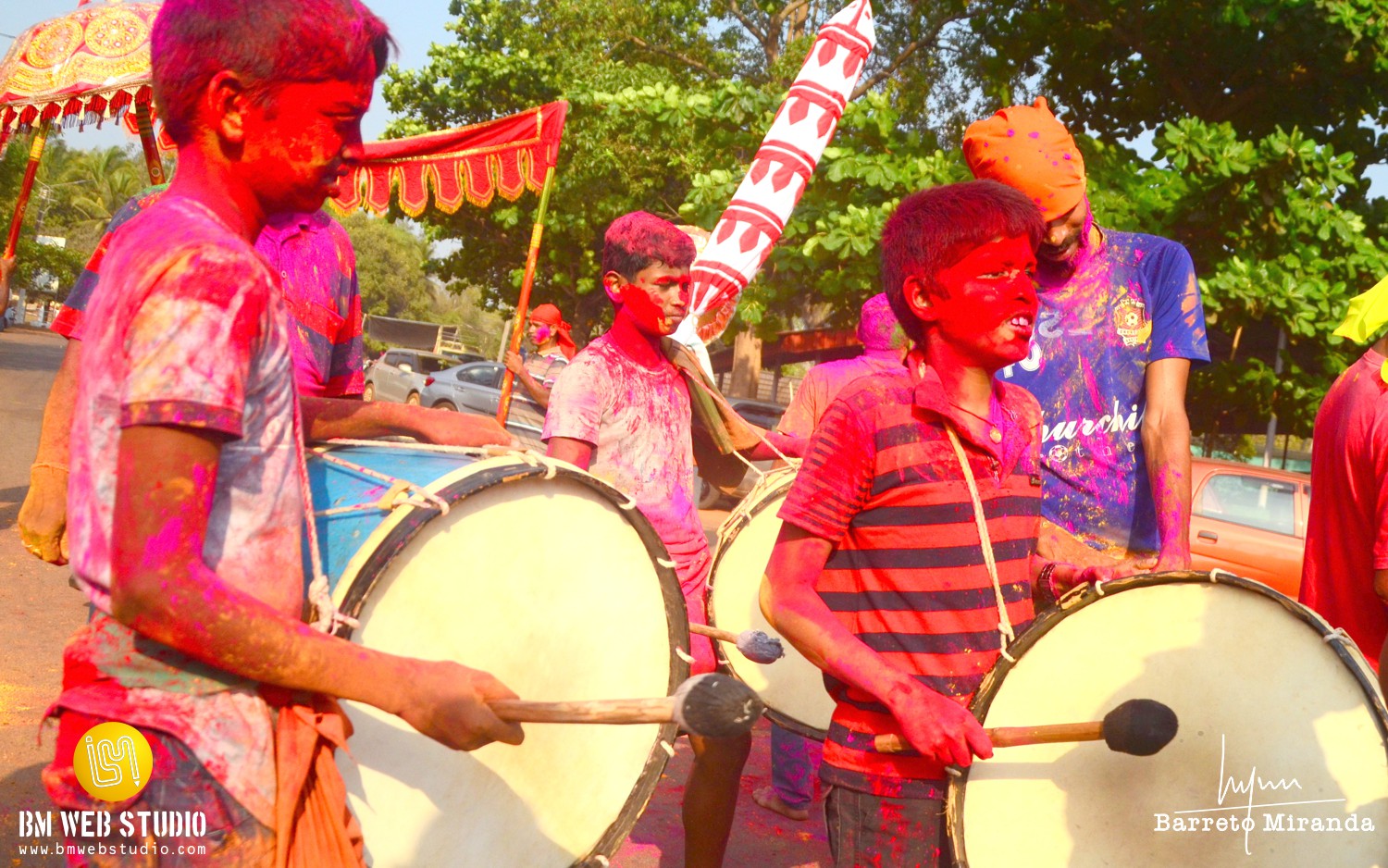
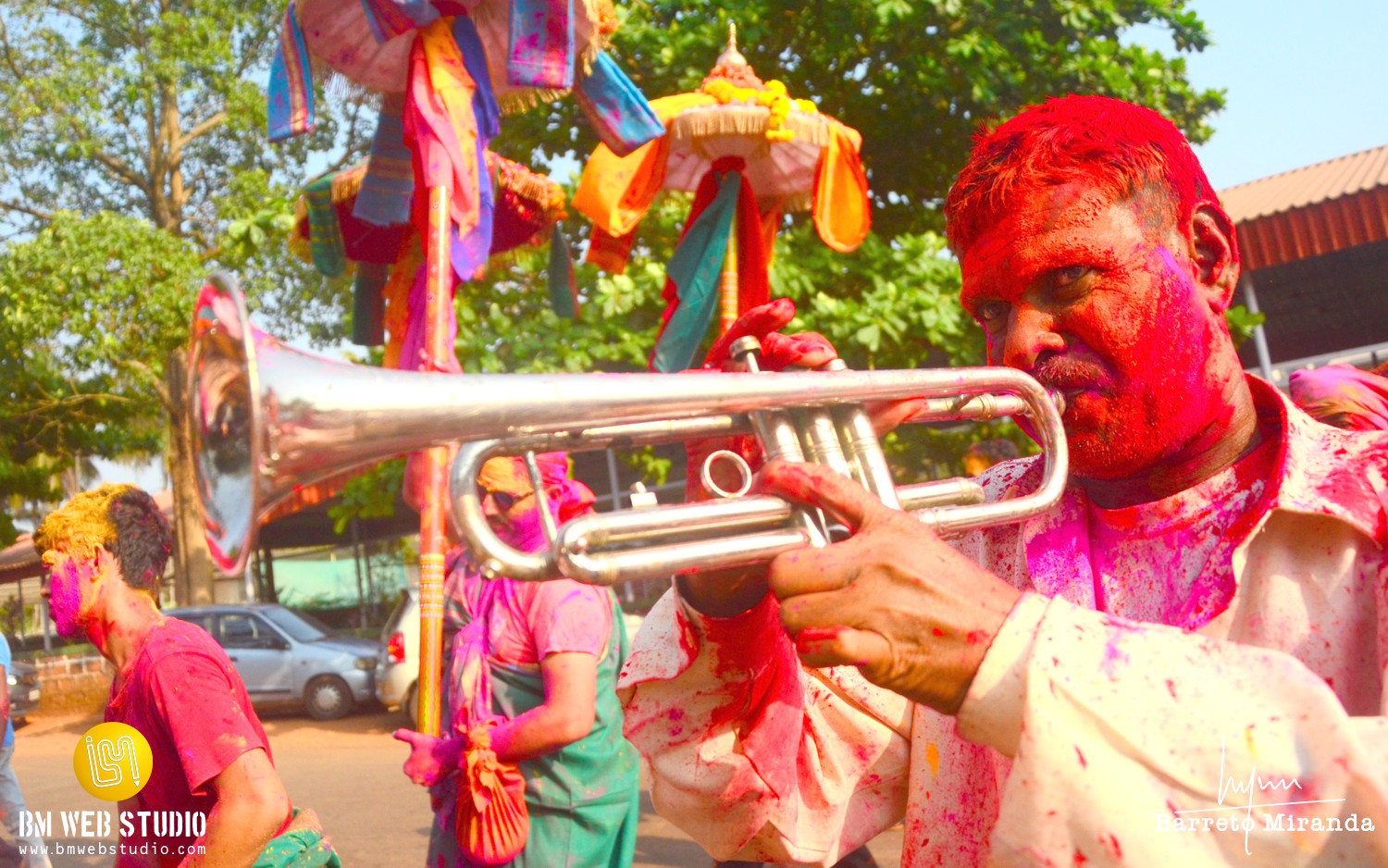
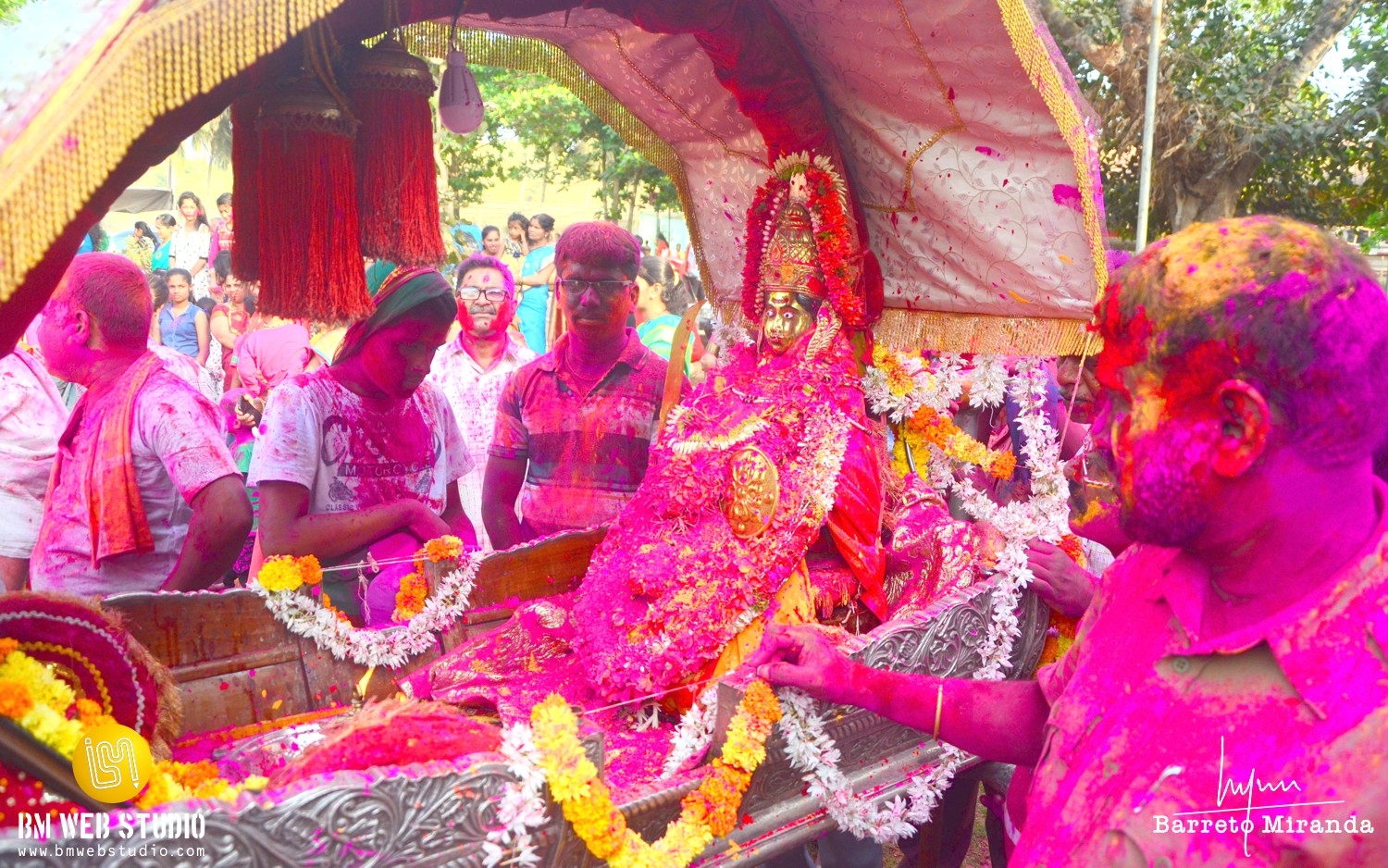
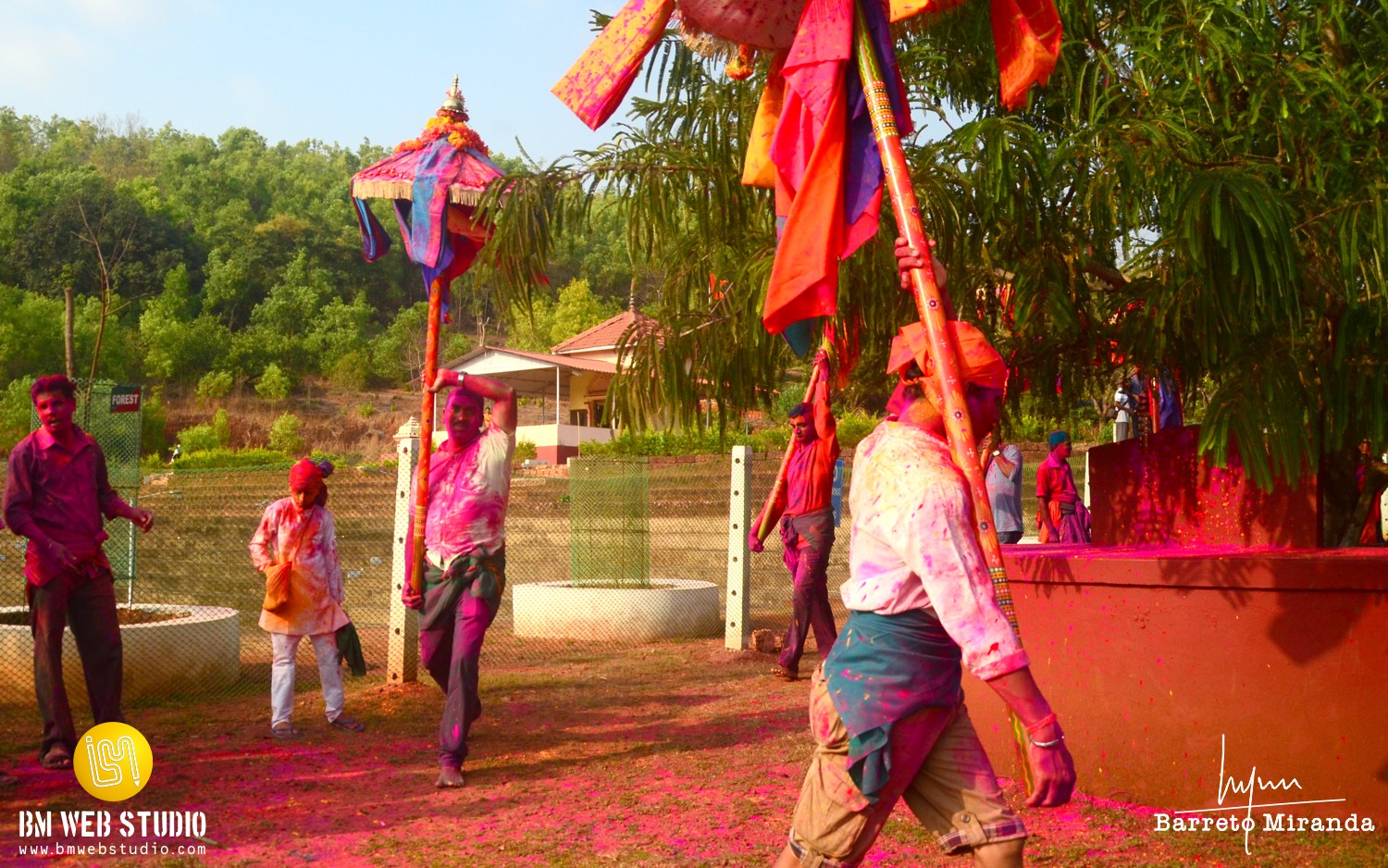
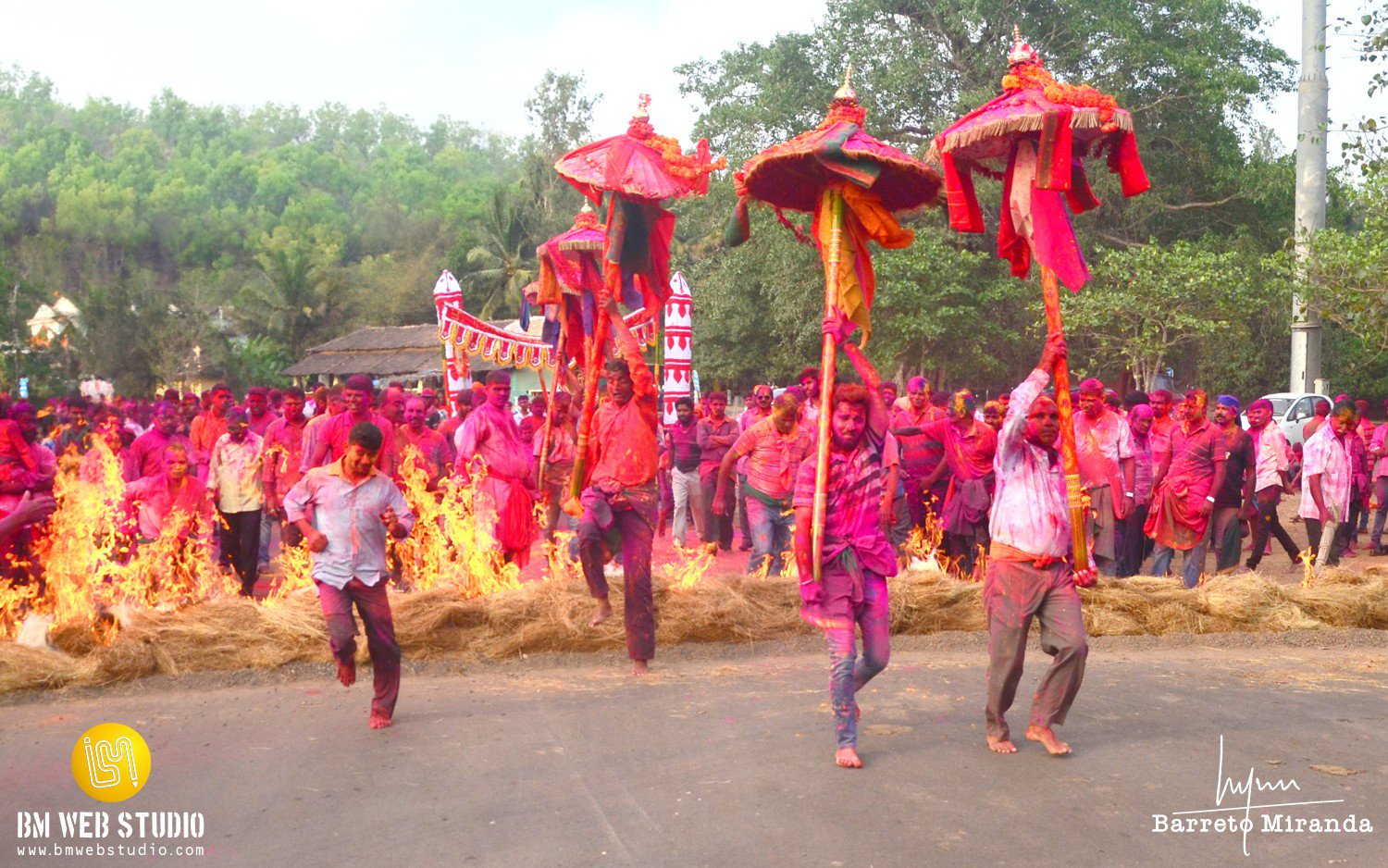
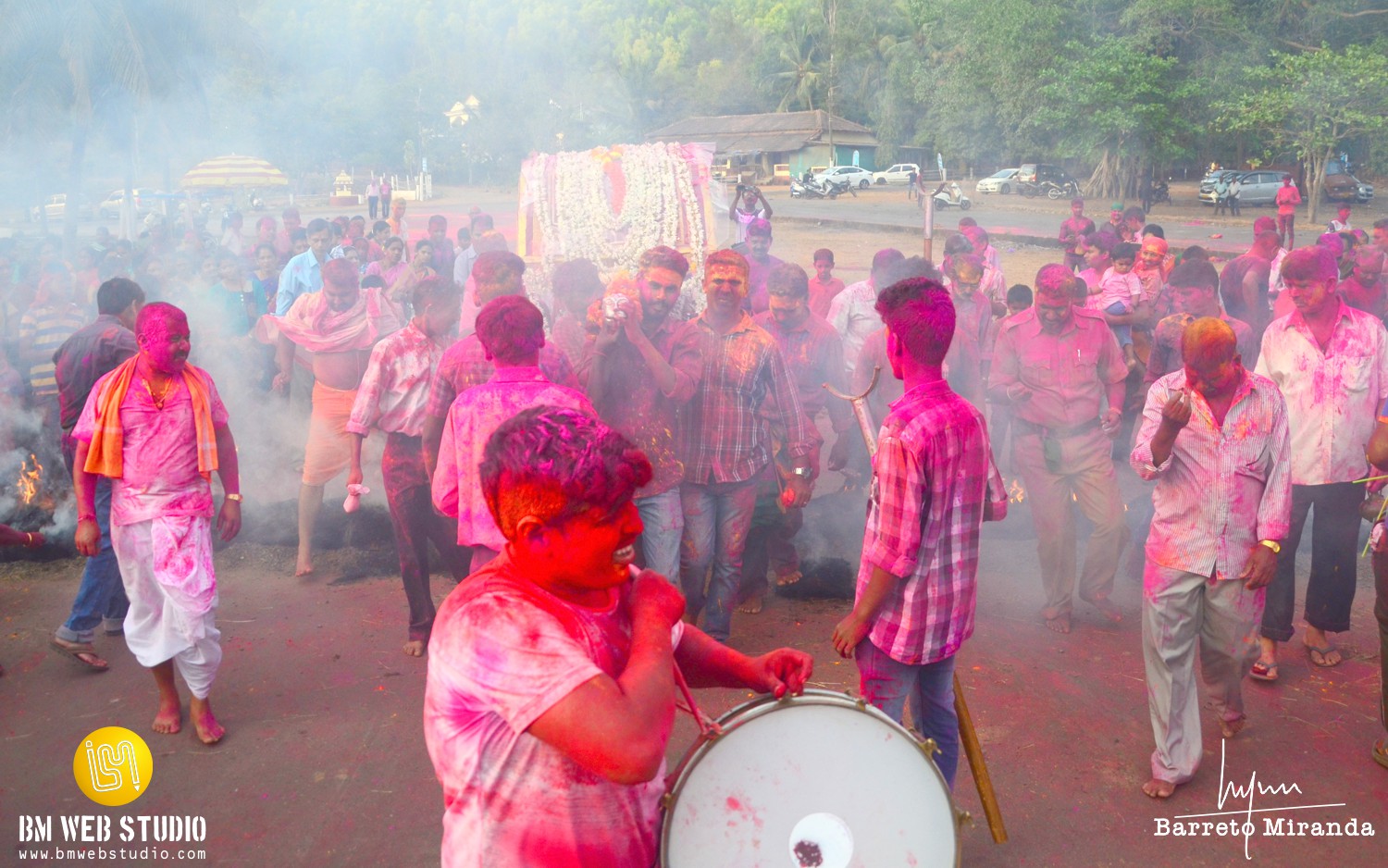
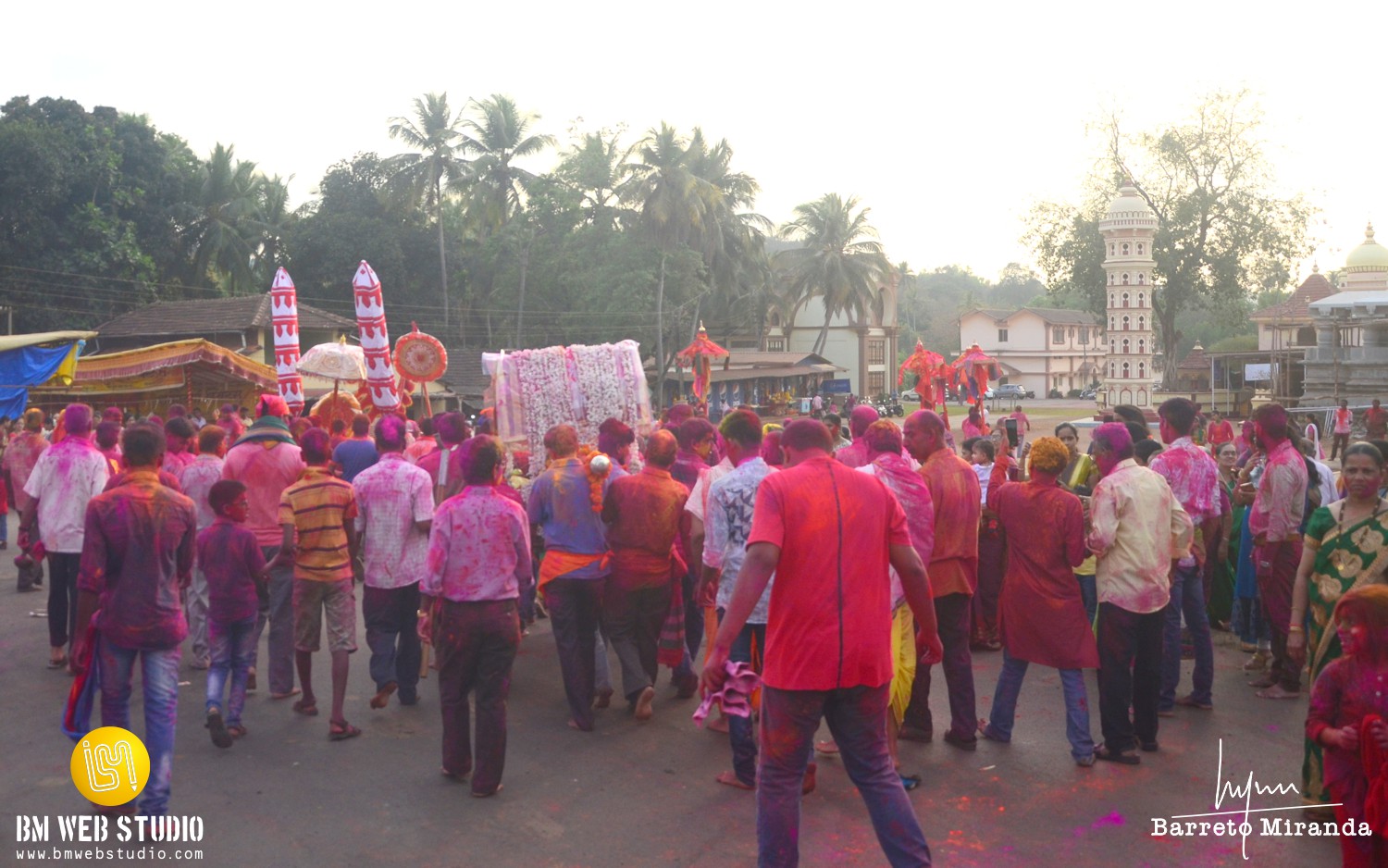
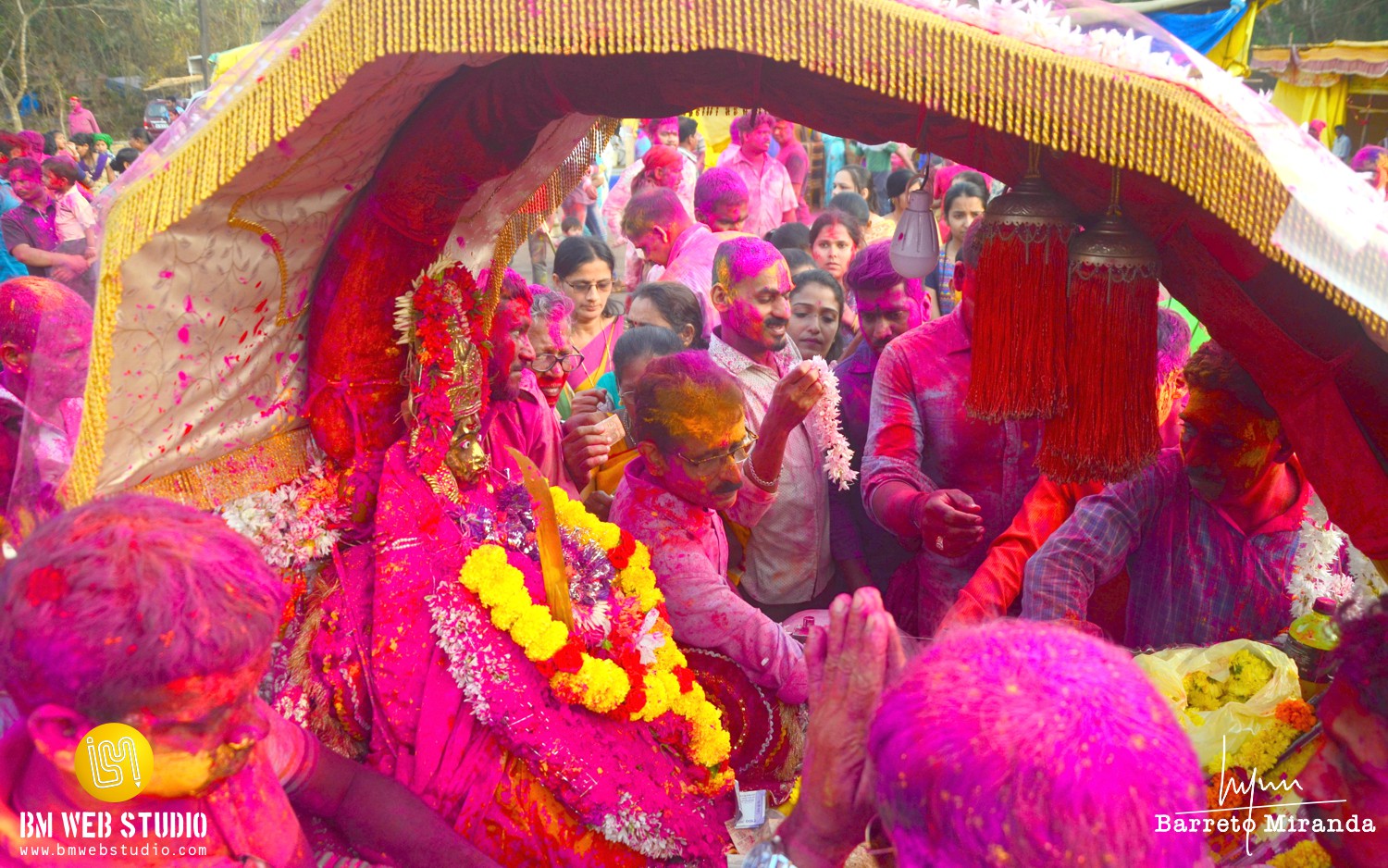
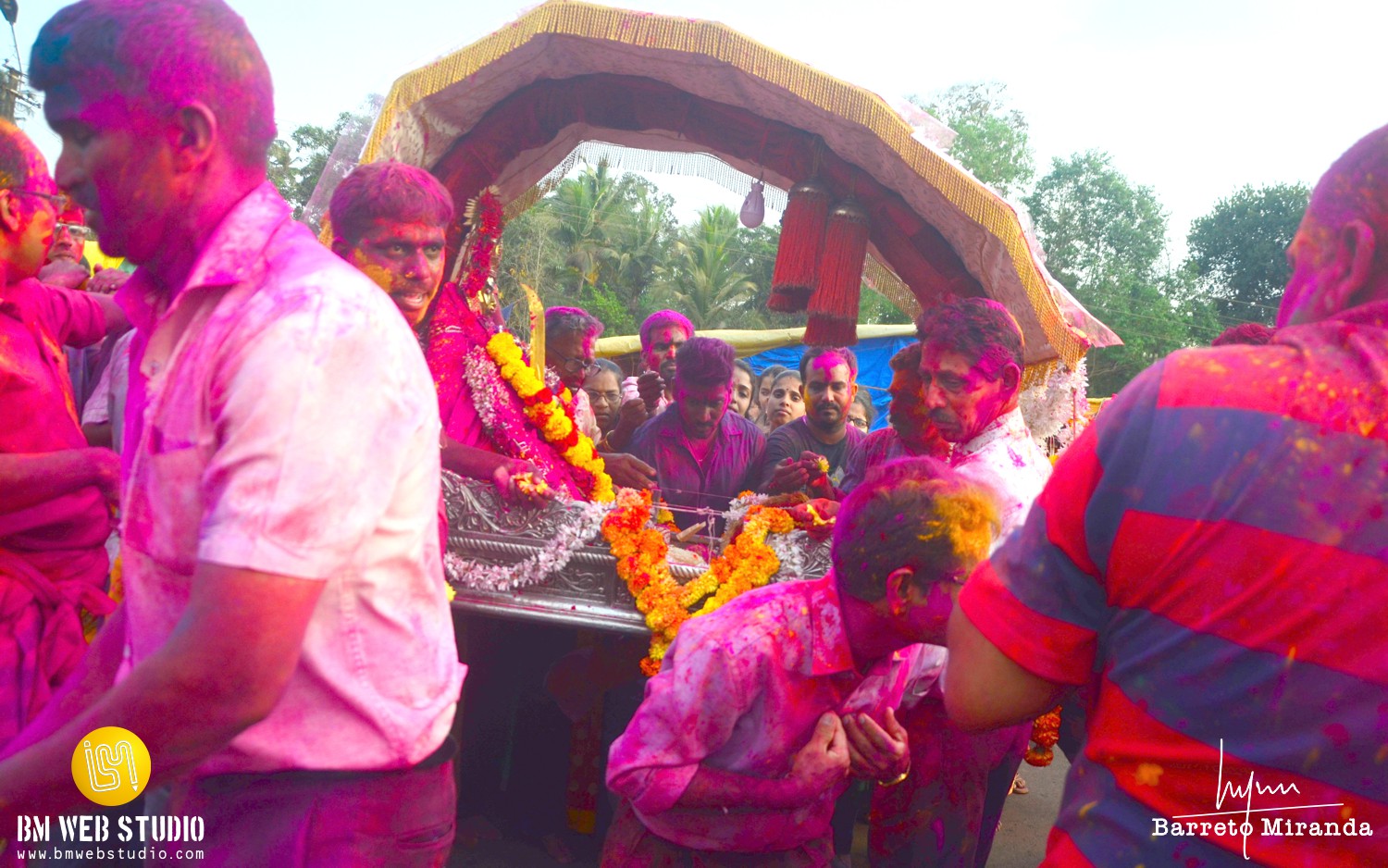
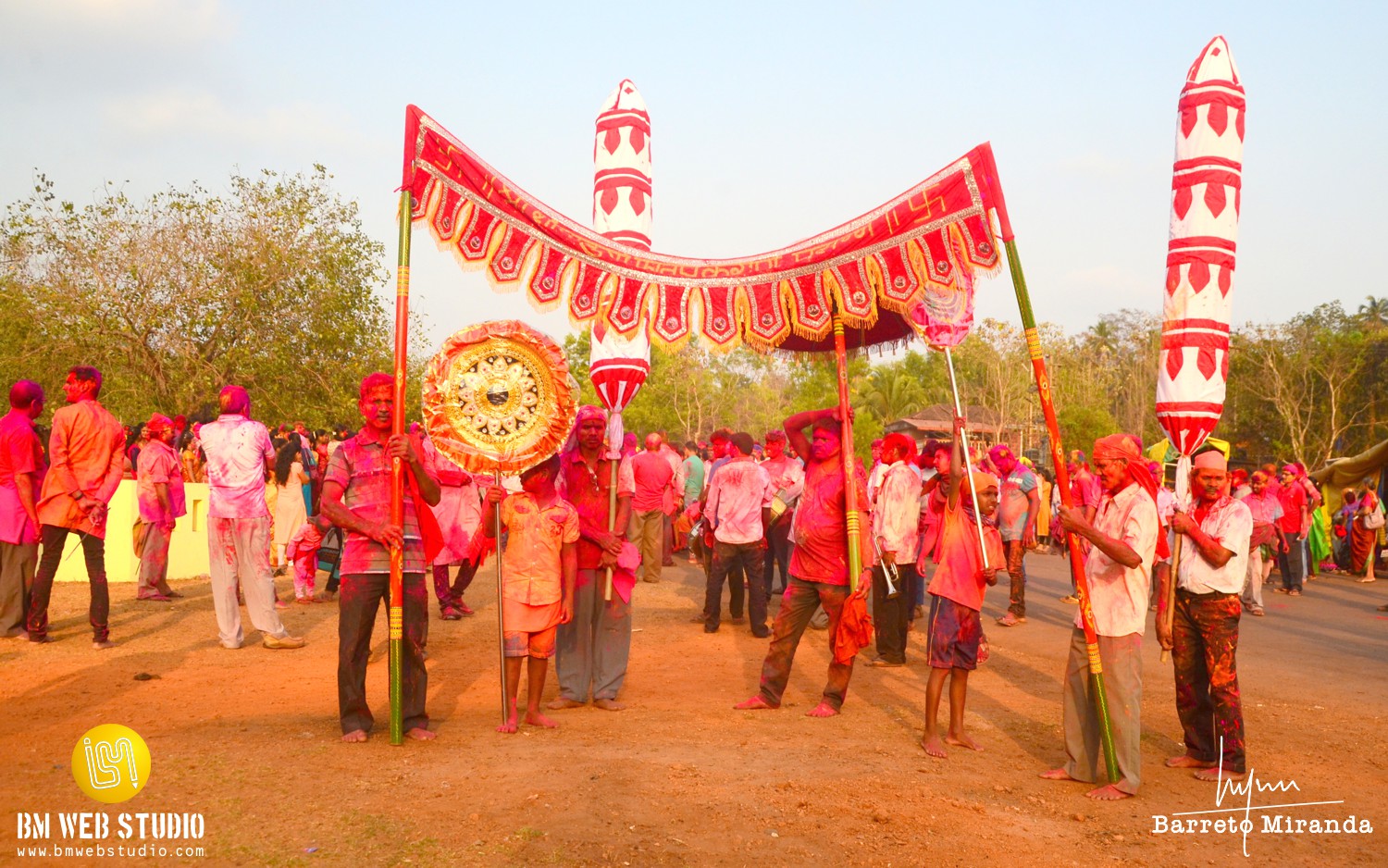
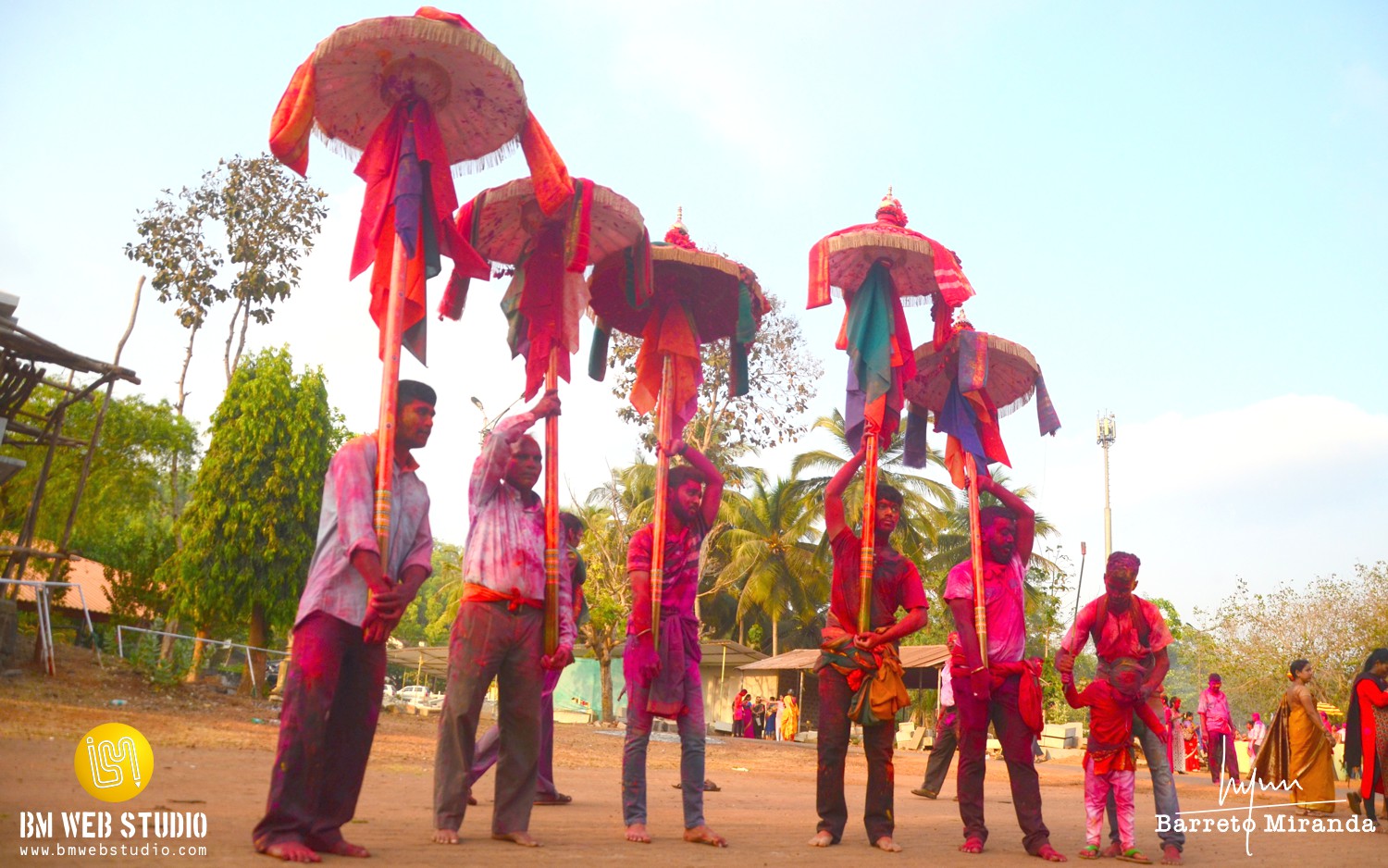
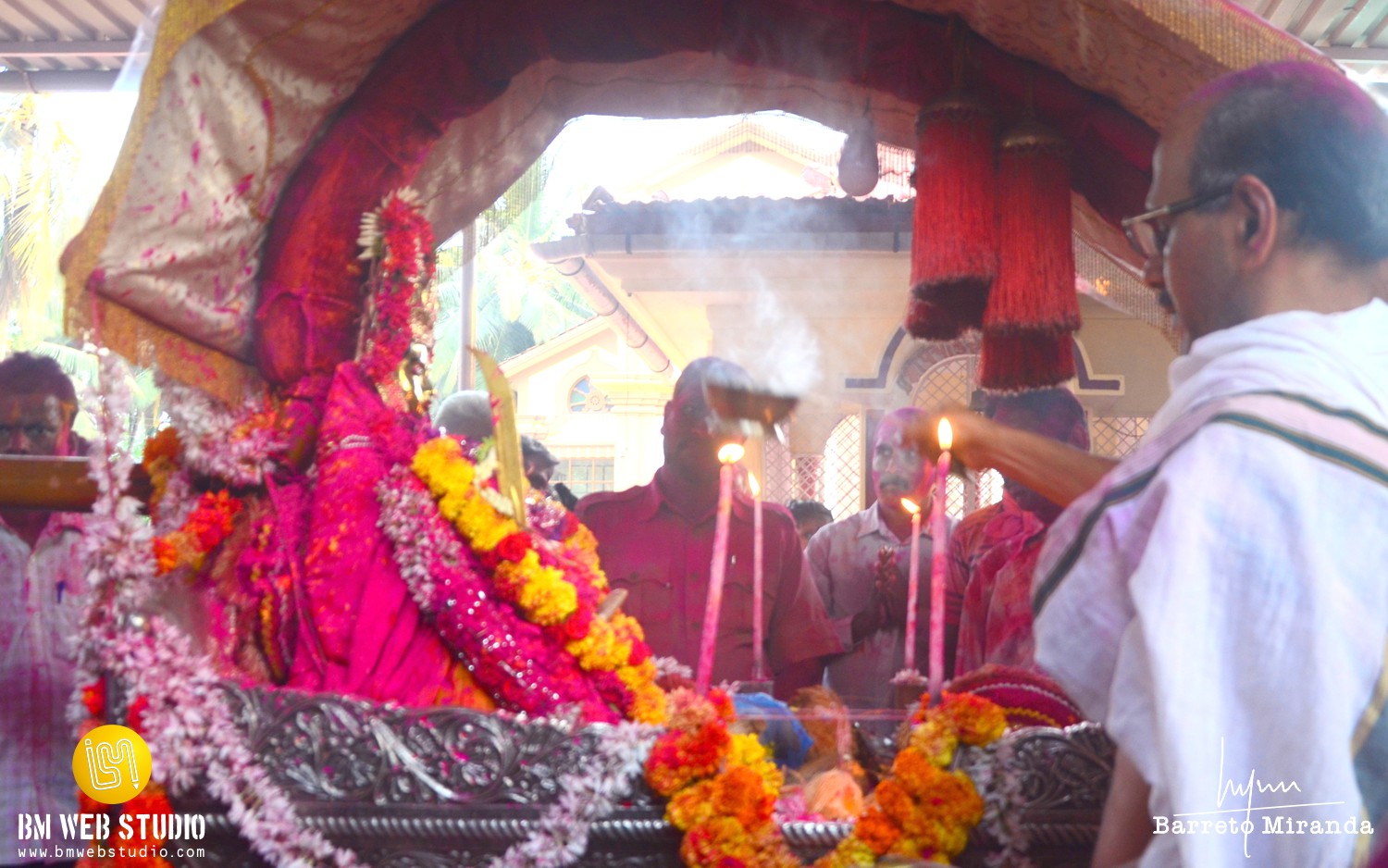
As dusk approaches on the final day, the ceremony begins with a procession of the goddess Shantadurga, carried in a richly decorated palanquin. Devotees accompany the procession with drums, cymbals, and rhythmic chants, while others dance holding topshyo — ornate ceremonial umbrellas that give the ritual its name.
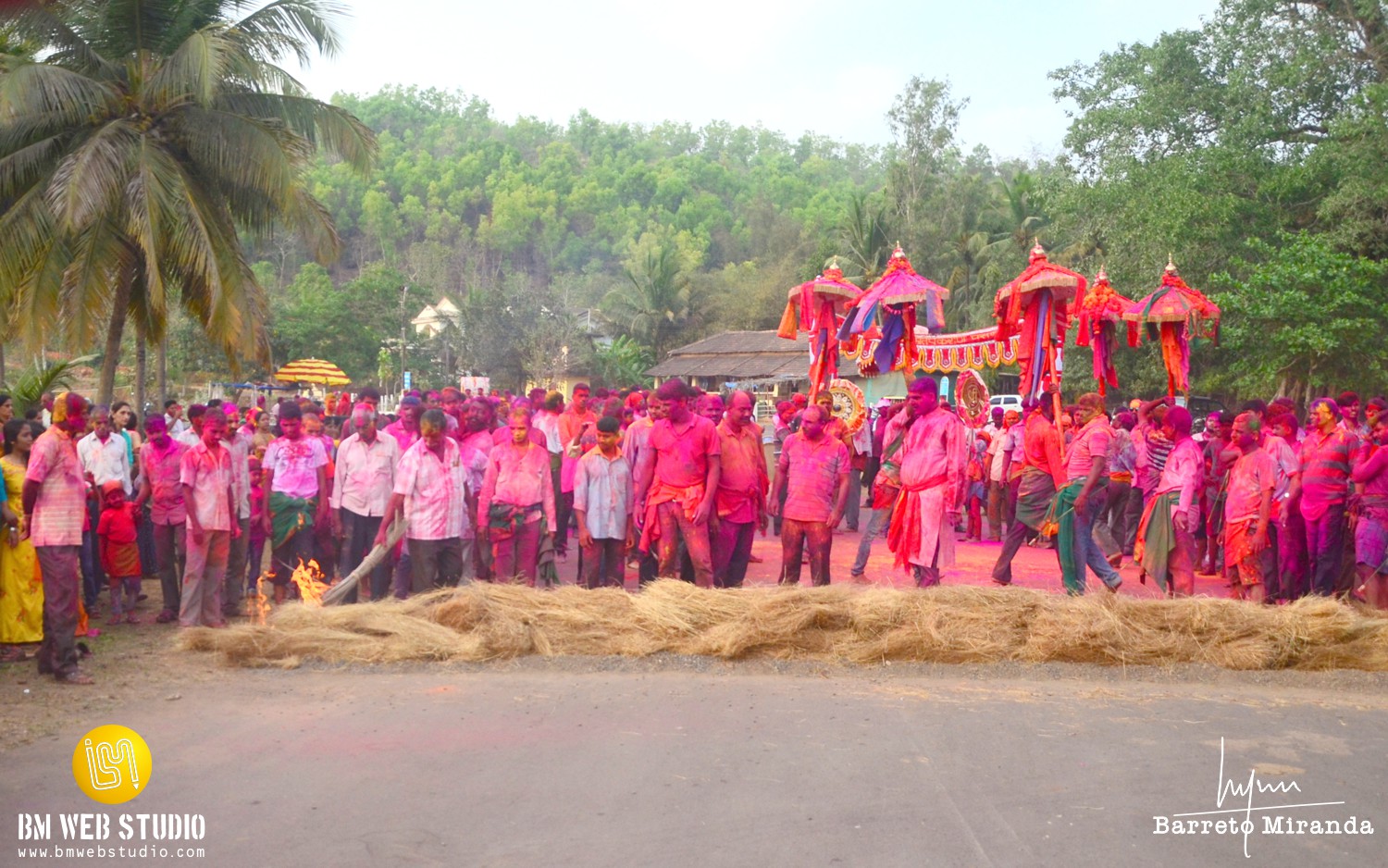
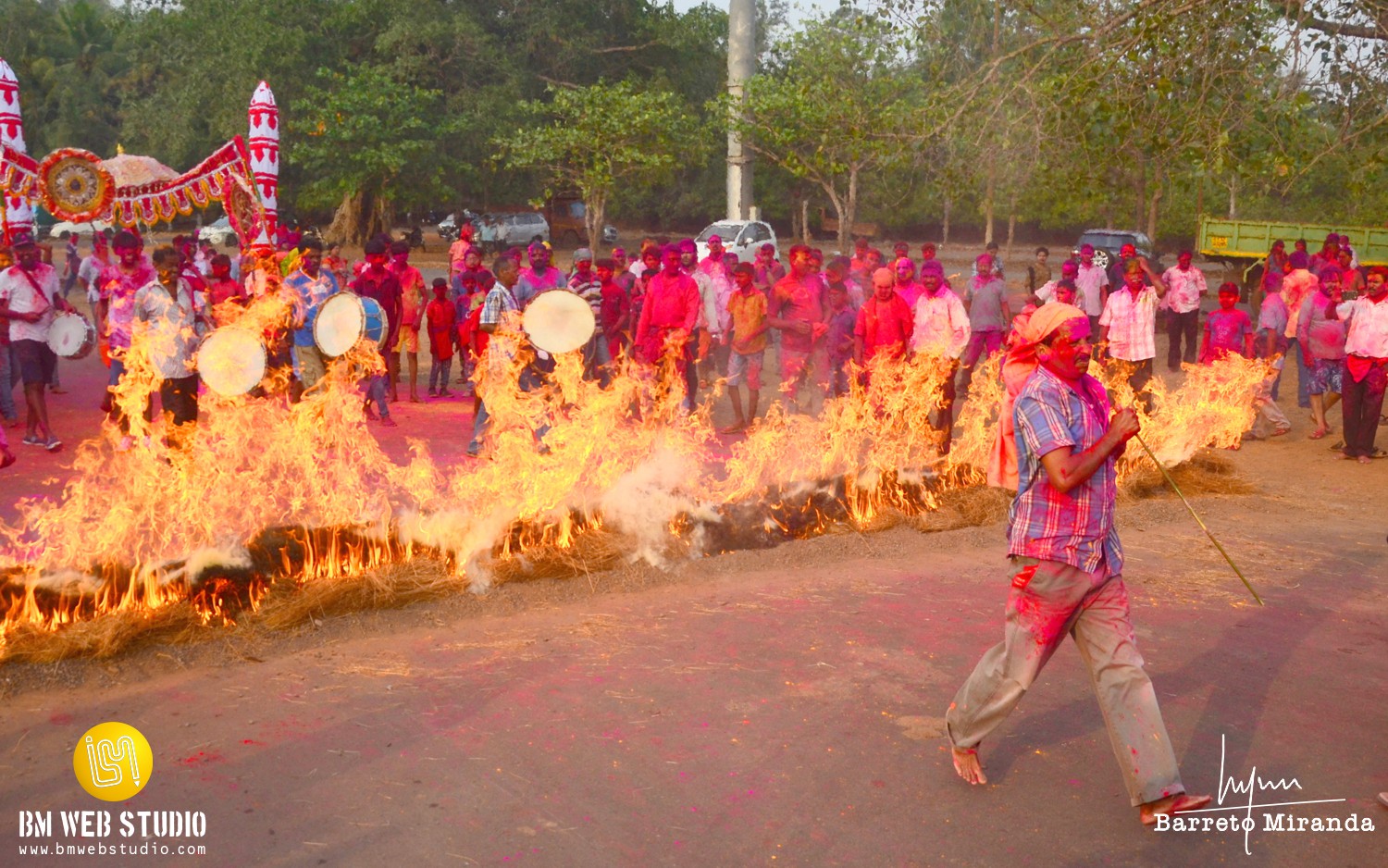
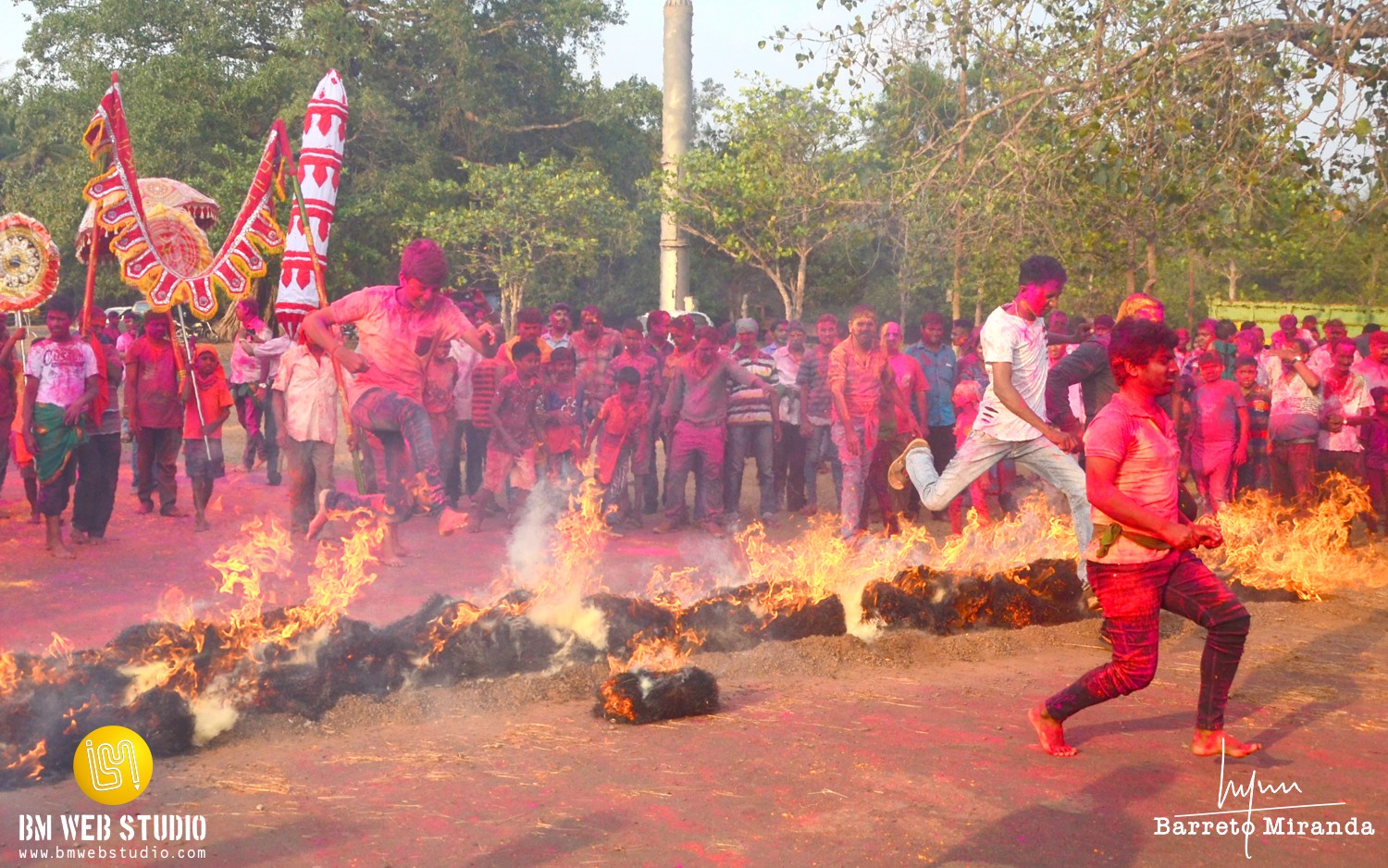
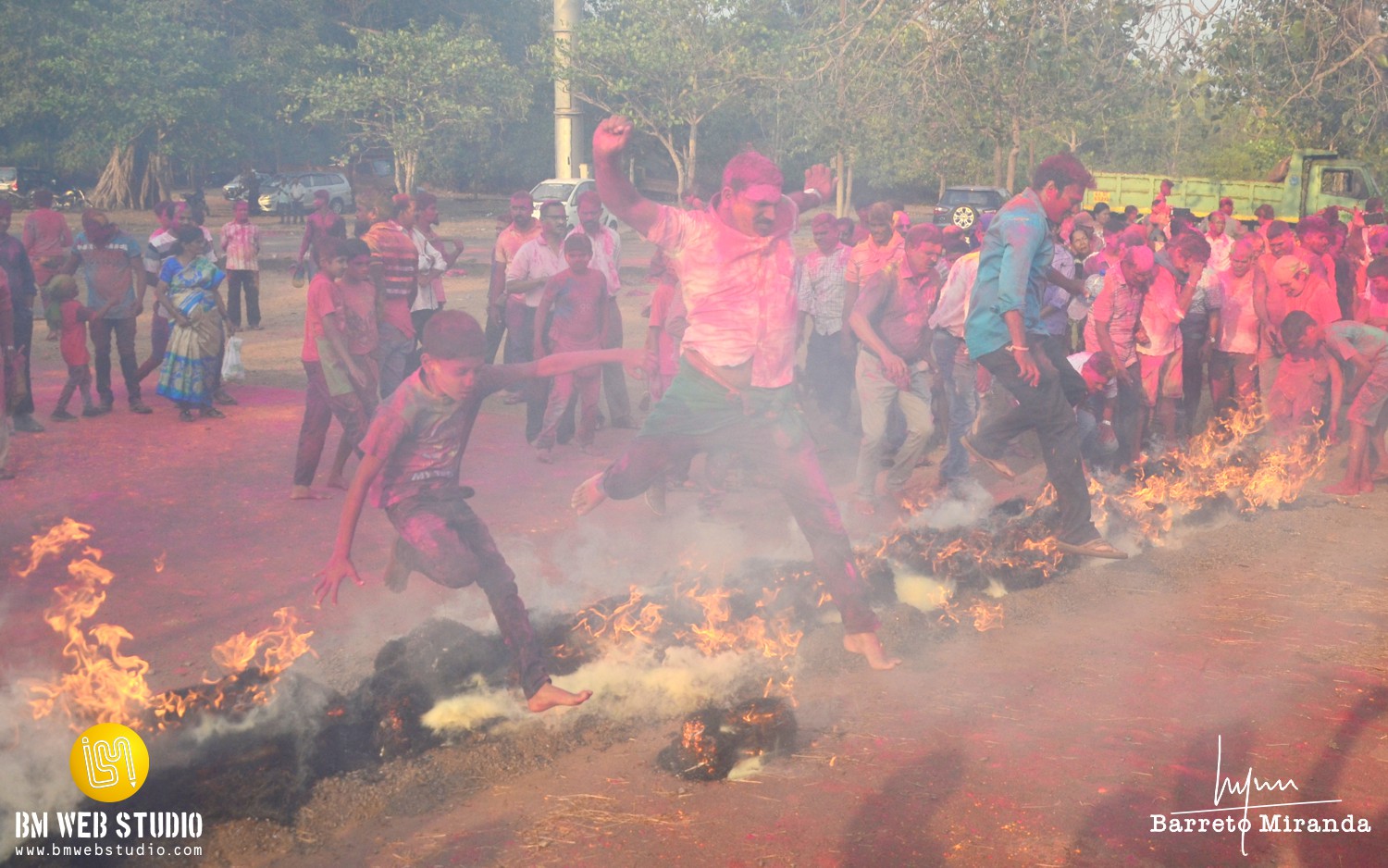
Near the temple, a long bed of dried grass is laid across the road and set ablaze, forming a glowing ribbon of embers. One by one, devotees run and leap across the fire. Some carry children, reinforcing the act as both a personal vow and a blessing for the next generation.
The act is not seen as a display of bravado but as an offering of faith — a symbolic passage from the burdens of the past into a purified future. The moment the procession crosses the embers, Shigmo in Fatorpa is considered complete.
Gulalotsav: The Village in Pink
Before the fiery finale, the village erupts in colour during Gulalotsav. While many hues are used, pink dominates, tinting the air and the temple courtyard in a soft celebratory haze.
The exchange of colour is more than playful festivity — it reflects unity, dissolving social boundaries as villagers greet one another with laughter, blessings, and clouds of pink.
Atmosphere and Experience
Topshyo is a deeply participatory village ritual. The energy is intimate and immersive — drums reverberate through the evening, incense mingles with woodsmoke, and the glow of embers illuminates faces filled with devotion.
To witness Topshyo is to encounter Goa’s cultural heartbeat — not on a stage, but on a village road lit by embers, where faith, memory, and identity converge in a single leap across fire.
* Photos are of the Topshyo held on Monday, March 21, 2022.
Photos by Lynn Barreto Miranda / lynn.barretomiranda.com