
The Feast of the First Sheaves: Goa’s Living Tradition of Gratitude
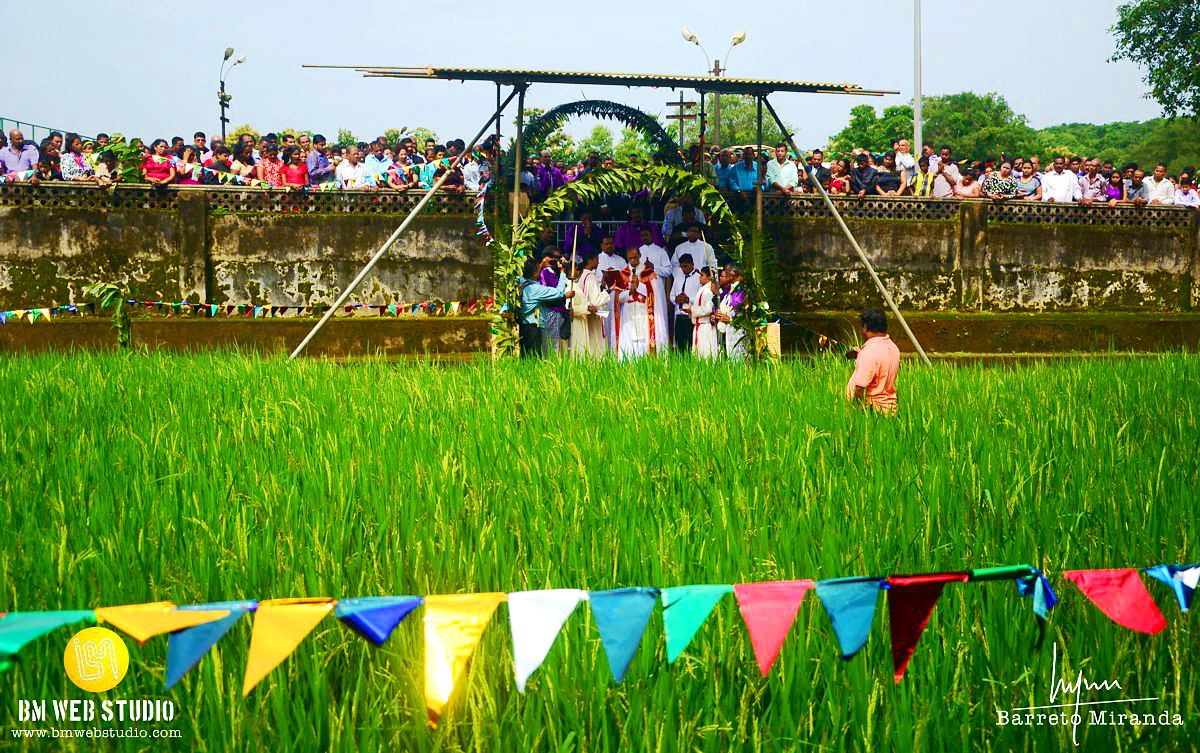



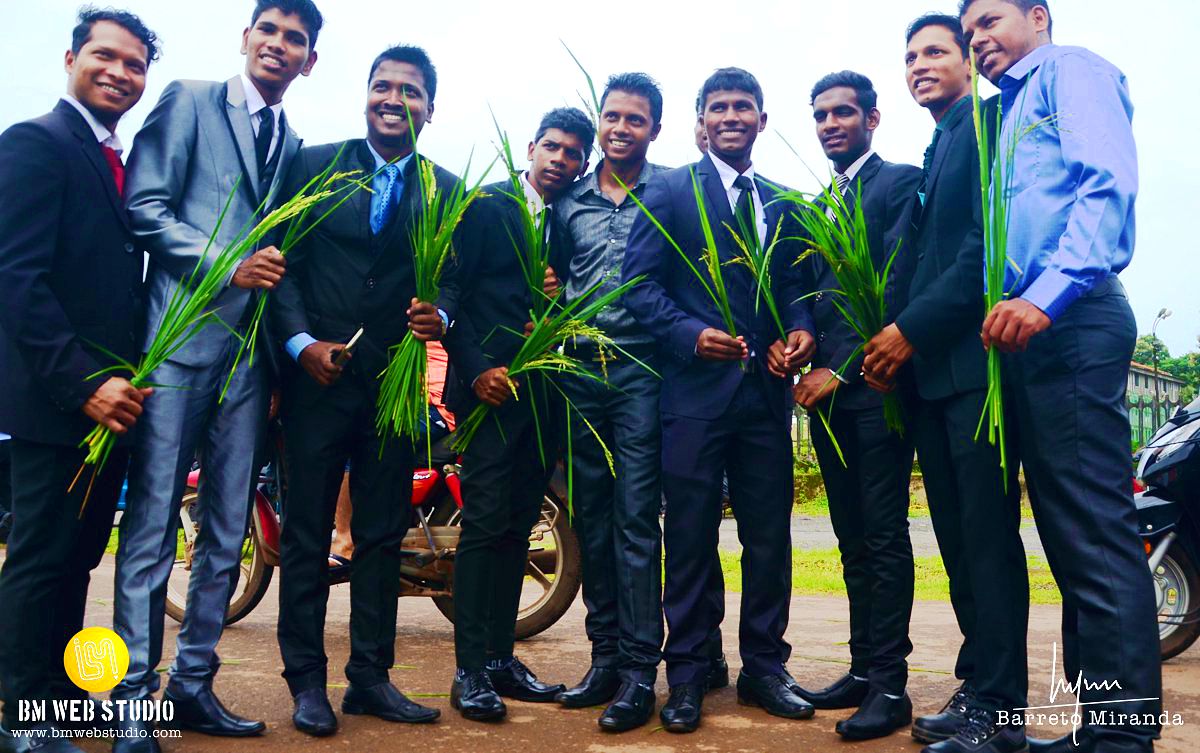
There is a moment in Goa’s monsoon when the land feels almost alive with gratitude. Paddy fields, heavy with ripening grain, sway beneath slate-grey skies, while villages—washed clean by weeks of rain—prepare for a celebration that is both sacred and deeply rooted in the soil.
Across the world, harvest festivals mark the turning of seasons. In Goa, this expression of thanksgiving takes on a uniquely layered character—where faith, history, and agrarian life intertwine in rituals that have endured for centuries.
Known locally as Konsanchem Fest—the Feast of the Sheaves—these celebrations unfold across villages such as Raia, Taleigão, Aldona, Salvador do Mundo, and Divar. Each carries its own story, rhythm, and way of honouring the earth’s bounty.
Raia: Where the Harvest Begins
Every year on August 5, as the monsoon settles into its lush, rain-soaked rhythm, the village of Raia in Salcete quietly assumes a place of prominence. It is here that Goa’s harvest season is ceremonially ushered in—a tradition that has endured for more than three centuries.
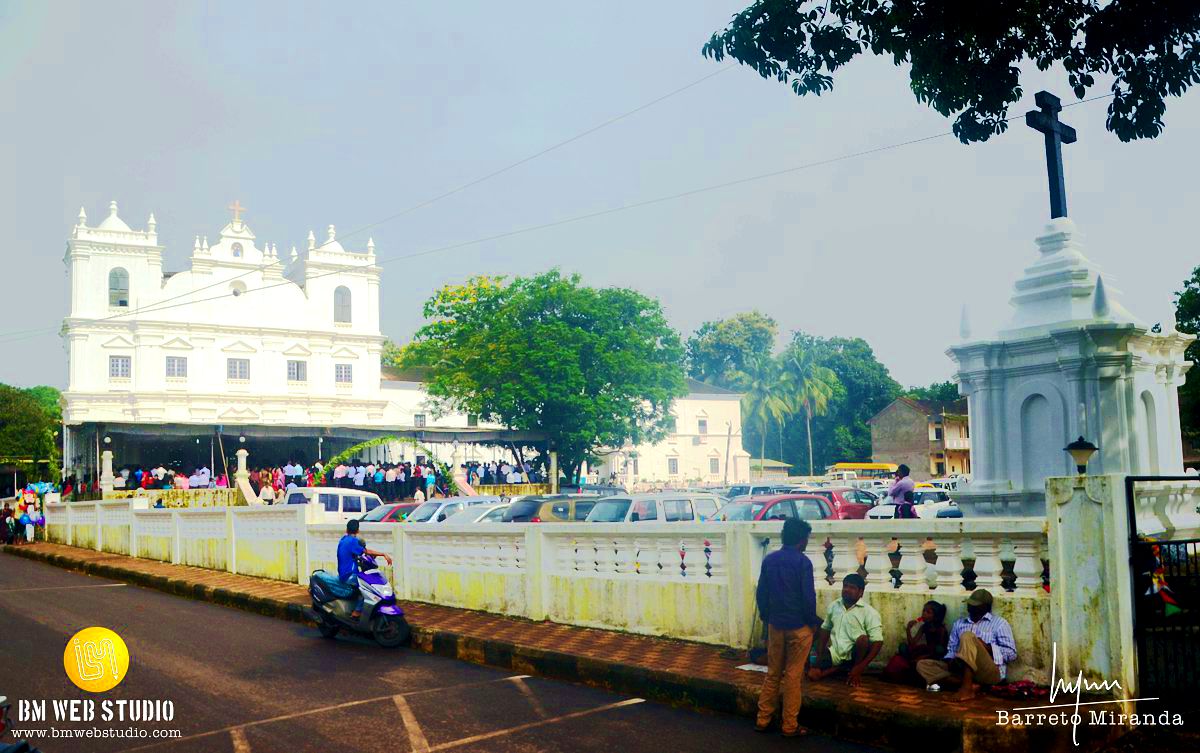
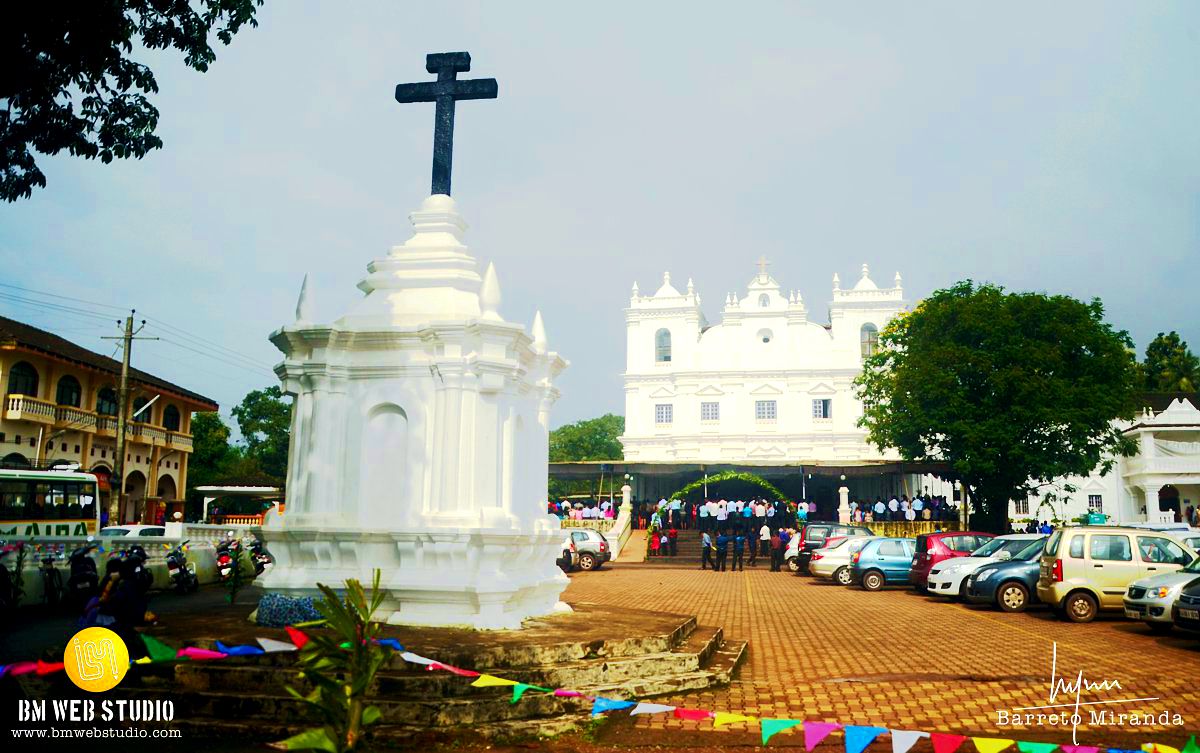
At the heart of this observance stands the graceful Our Lady of Snows Church, its white façade rising above a landscape of glistening paddy fields. The ritual it hosts is simple, yet deeply symbolic.
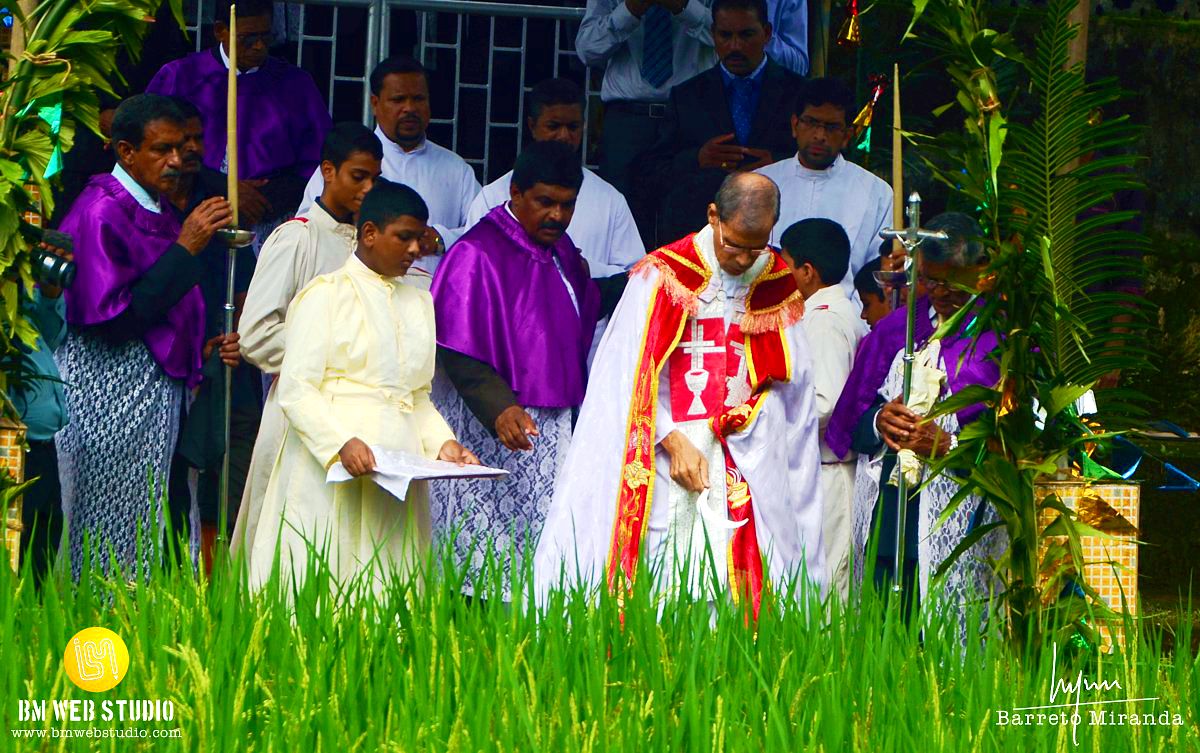
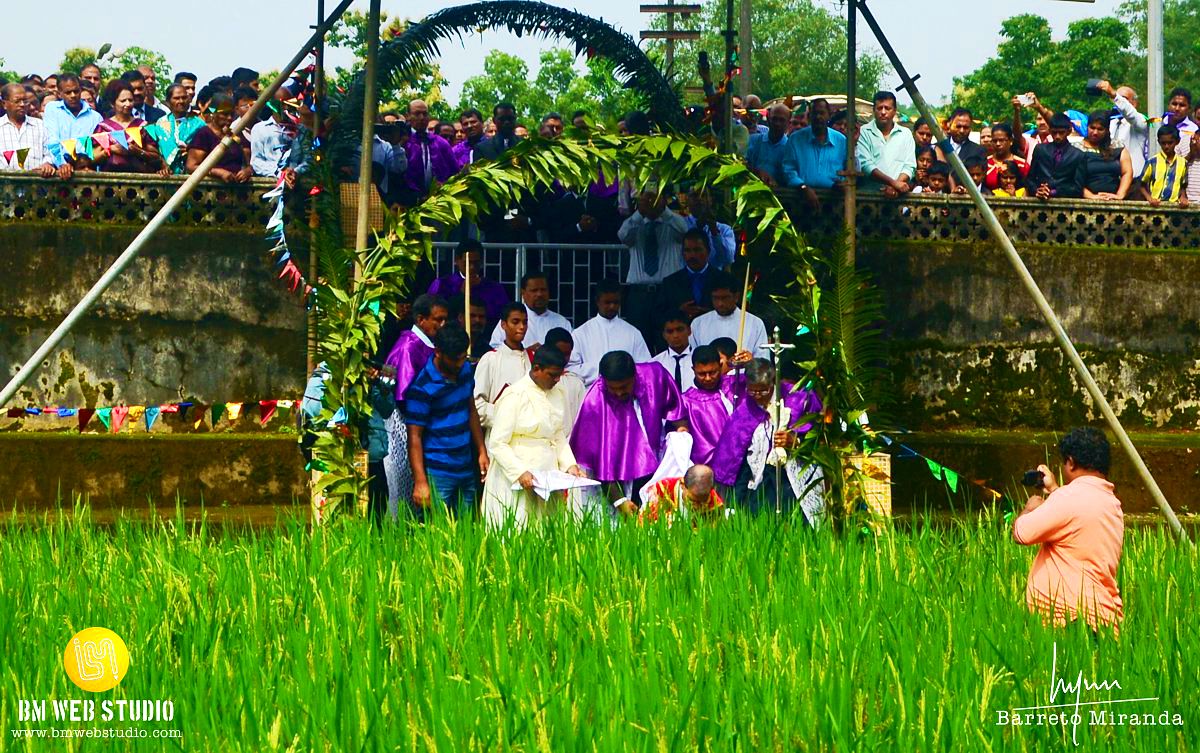
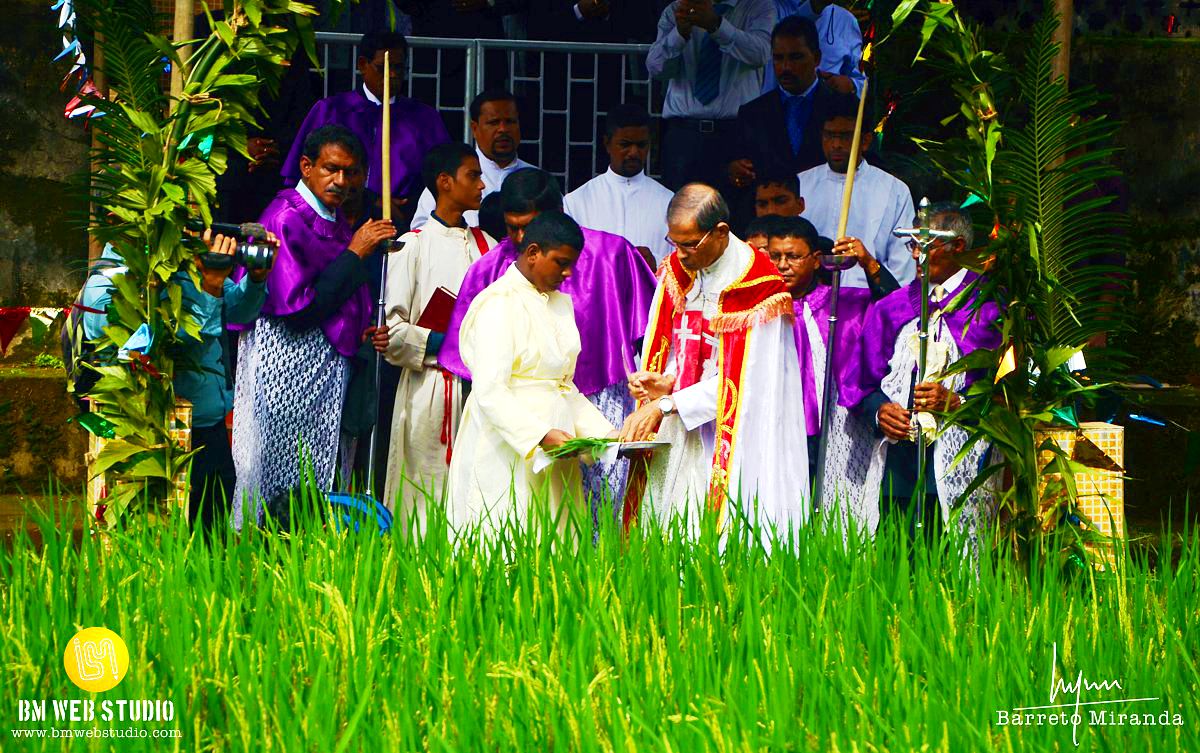
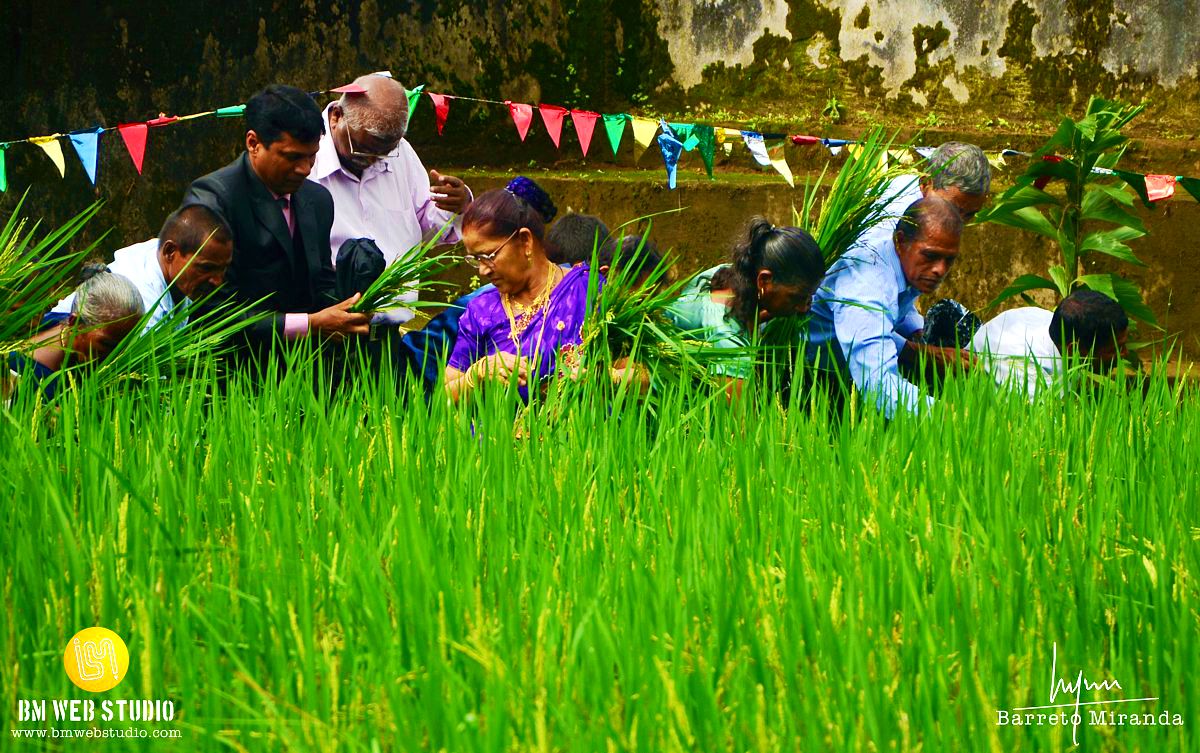
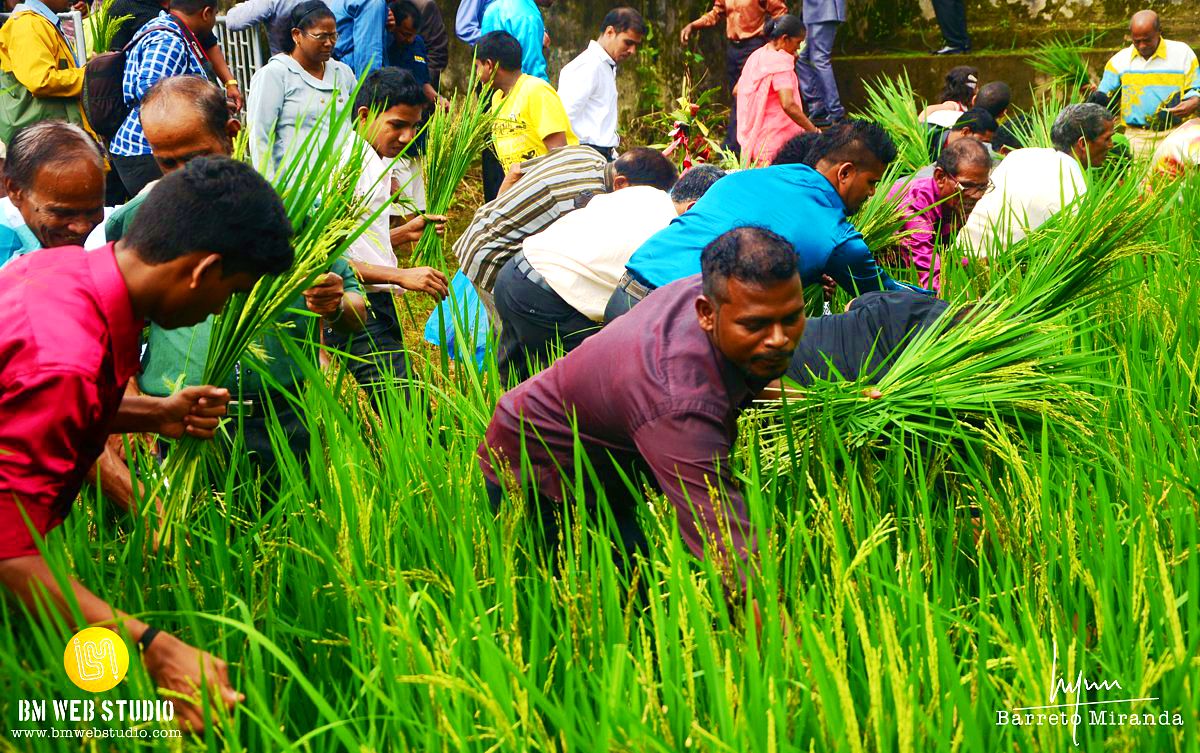
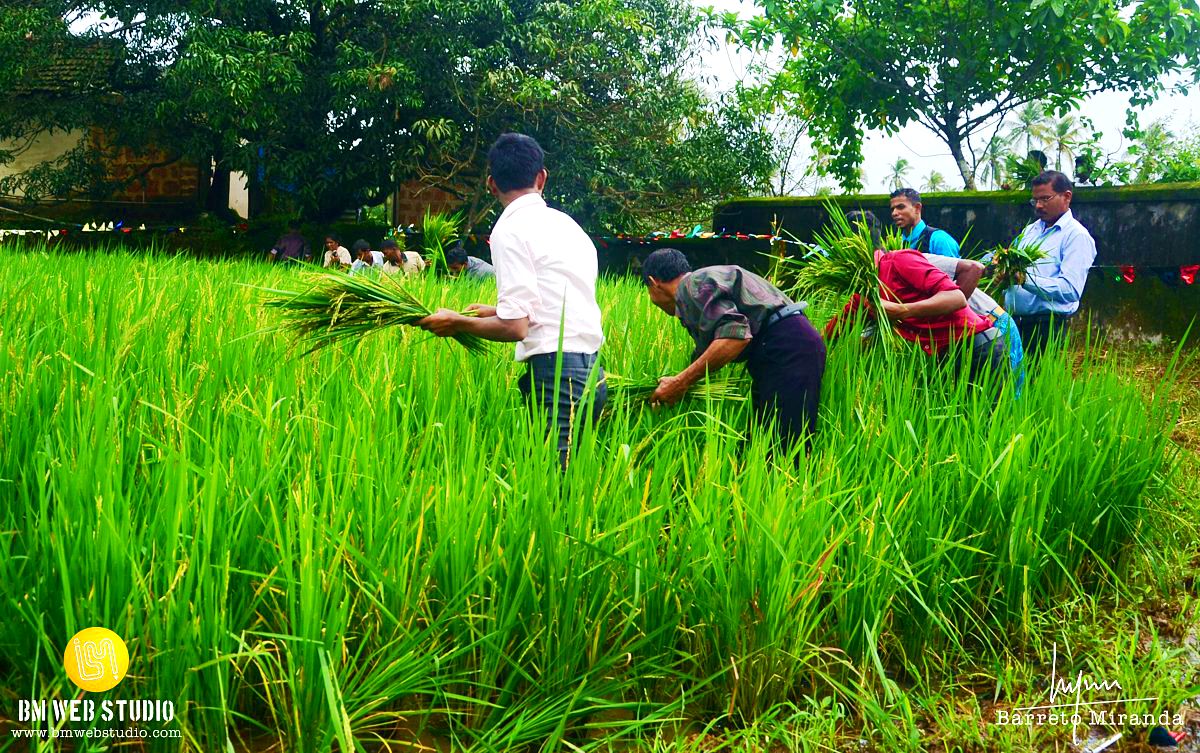
Farmers arrive with quiet pride, joined by devotees from across Goa—Hindus and Christians alike—drawn by a shared faith and a common dependence on the land. They gather in quiet anticipation as the ceremony begins. A silver sickle—believed to have been sent from Rome by the Pope—is placed in the hands of the parish priest, who cuts the first sheaves of paddy, marking the formal beginning of the harvest.
The blessed sheaves, once dispatched to colonial authorities and church dignitaries, are today offered to the Rachol Seminary, continuing a tradition that has gently evolved over time.
The church itself carries a layered history. Though completed in 1699, its origins trace back to 1668, when Jesuit priest Fr Jorge Caldeira recognised the need for a separate parish to serve Raia’s growing Christian community. Until then, the faithful travelled to Rachol for worship. With the support of the Portuguese administration and the local comunidades of Raia and Camurlim, the church took shape—becoming the first in Salcete dedicated to Nossa Senhora das Neves, or Our Lady of Snows.
This devotion traces back to a 15th-century Italian legend: during a time of oppressive summer heat, the faithful prayed for relief and vowed to build a church where snow might fall. Their prayers were answered, and a church rose in gratitude—an improbable story that found resonance centuries later in tropical Goa.
Today, Raia remains as much a spiritual landscape as it is a physical one—its rolling greenery dotted with chapels, seminaries, and institutions of faith. Yet it is during the Konsanchem Fest that the village feels most alive.
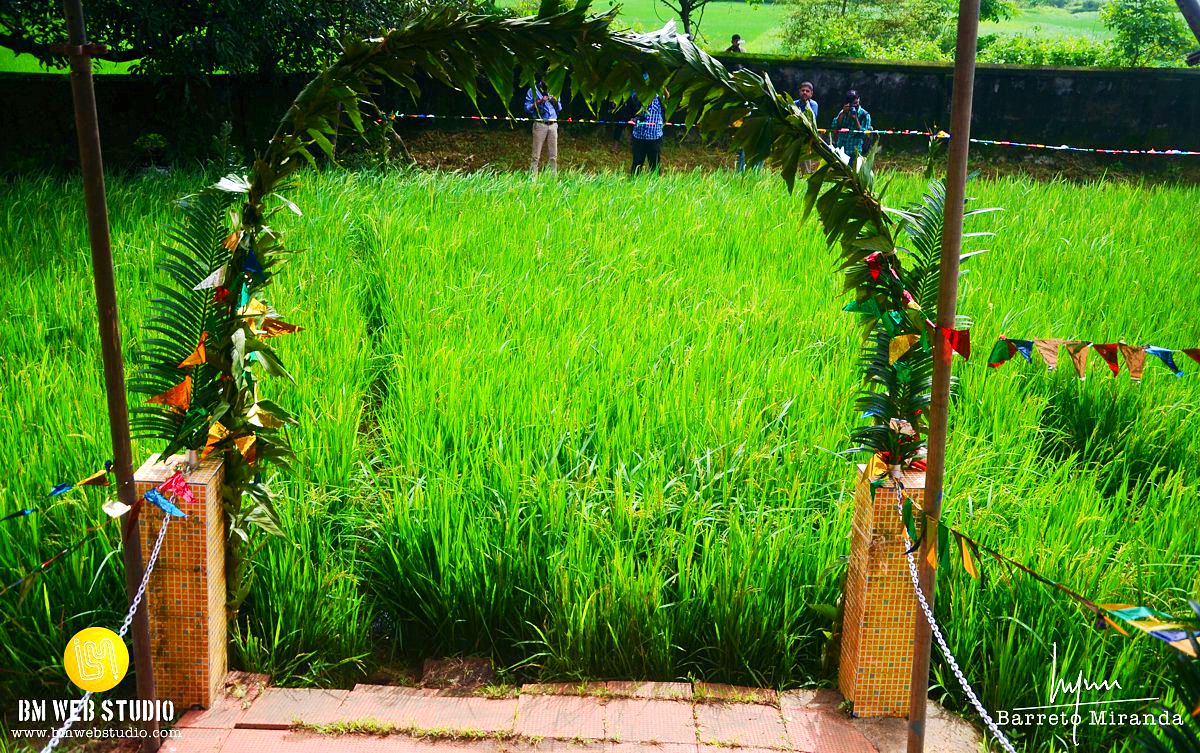
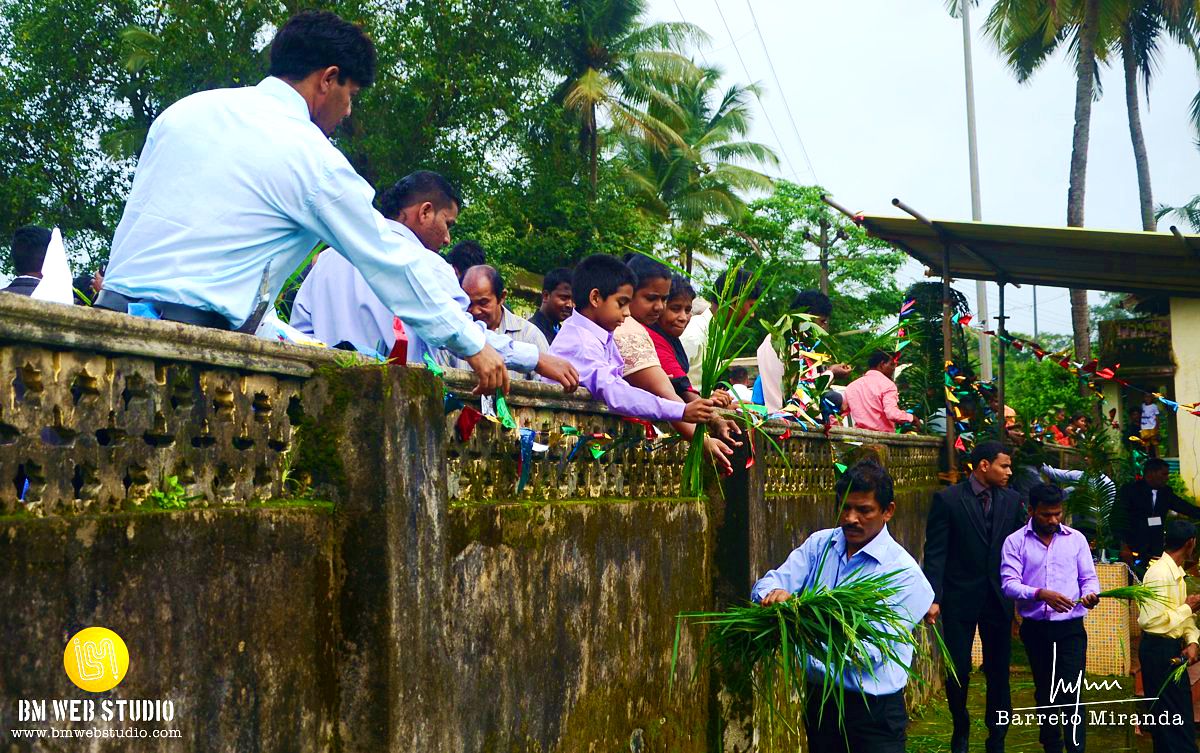
The highlight of the celebration unfolds in the paddy fields. Here, the konsam—freshly cut sheaves of rice—are blessed, a gesture that carries both biblical echoes and agrarian meaning. In the Book of Genesis, Abel offers the finest of his harvest to God; in Raia, that ancient act of thanksgiving is quietly re-enacted each year. As the priest blesses the crop, prayers are offered for a good yield and for the well-being of those whose lives depend on it.
And then, as with all Goan feasts, the sacred gives way to the communal. A village football match brings together local clubs in friendly rivalry, and the day winds down with a much-anticipated lucky draw—simple pleasures that complete the rhythm of celebration.
In Raia, the harvest does not begin with the cutting of grain alone. It begins with a gesture of thanks—offered to the skies above, the land below, and the generations that have kept this tradition alive.
Aldona and Salvador do Mundo: Faith in the Fields
The following day—August 6—the celebrations shift north to Bardez, where the villages of Aldona and Salvador do Mundo continue Goa’s unfolding season of thanksgiving.
In Aldona, the feast coincides with the Transfiguration of Jesus, while in Salvador do Mundo, the faithful honour their patron, the Saviour of the World. Yet in both villages, the essence of the celebration extends beyond the church.
Here, the rituals move outward—spilling into the landscape that sustains them. Processions wind through village lanes and into open paddy fields, where the season’s first sheaves await their blessing. In Salvador do Mundo, a statue of the Saviour—holding a golden sickle gifted by the Athaide family over a century ago—becomes the symbolic harvester, as the priest uses it to cut the paddy in a gesture that bridges devotion and daily life.
It is a scene that feels timeless. Here, faith is not confined to the altar—it is carried into the fields, where the harvest is recognised not just as labour, but as an offering.
Taleigão: A Feast of Memory and Honour
In Taleigão, the harvest feast arrives on August 21, bearing a legacy that stretches back nearly five centuries.
This is a celebration shaped as much by history as by harvest. At its heart lies a rare tradition: the honour of conducting the feast rotates among Taleigão’s nine ancestral vangors (families)—Mendonca, Viegas, Martins, Luis, Gomes, Faria, Almeida, Falcao, and Abreu.
These families are custodians of a story rooted in the 16th century, when villagers came to the aid of Portuguese forces following a defeat at the hands of Adil Shah’s army. In recognition of their support, Taleigão was granted the privilege of being the first in Tiswadi to cut, bless, and present the season’s sheaves to the governor.
That legacy continues to unfold each year. On the opening day of the four-day celebration, a male member from one of the nine vangors ceremonially cuts the corn, marking the beginning of the festivities. Following a thanksgiving mass, the ‘president of the feast’ leads a procession carrying the freshly harvested sheaves towards the Governor’s residence at Dona Paula—a symbolic journey that echoes centuries of tradition—before returning to the village for a communal meal.
Over the days that follow, the village settles into a rhythm of shared observance. Fov (pressed rice) is distributed among villagers, masses are held at Old Goa, and gatherings bring families together in a quiet reaffirmation of community and continuity.
Some traditions have faded with time. The once-popular dhirio bullfights came to an end after their ban in 1998, and the vibrant Addão dance—once performed by tribal farmers in colourful attire—has since disappeared from the festivities. Yet the essence of the feast remains intact.
In Taleigão, the harvest is not merely marked—it is remembered. Through ritual, procession, and inherited honour, the village continues to carry forward a story in which gratitude to the land is inseparable from the weight of history.
Divar: Flags, Rivalries, and Celebration
On the island of Divar, the harvest celebration takes on a more exuberant form. Known as Bonderam, it is marked by colourful processions of flags—echoing historical disputes between village comunidades over land boundaries.
Today, these rivalries have transformed into spirited celebrations. The villages of Goltim-Navelim and Naroa-Malar host the festival on separate weekends, drawing crowds who come as much for the spectacle as for its history.
A Festival Rooted in the Land
At its core, Goa’s harvest festival is not just about ritual—it is about relationships: between people and land, labour and faith, past and present.
The cutting and blessing of the konsam—those golden sheaves of rice—remain the defining moment. It is a quiet act, yet deeply symbolic: a prayer for abundance, a gesture of gratitude, and a reminder of the fragile balance that sustains agrarian life.
Even as Goa changes—its villages expanding and its rhythms quickening—these monsoon celebrations endure. In the fields of Raia, in the processions of Bardez, in the inherited honour of Taleigão, and in the vibrant flags of Divar, the story remains the same.
A story of rain, resilience, and reverence.
And for a brief moment each August, as the first sheaves are lifted skyward, Goa pauses—not just to celebrate a harvest, but to remember where it all begins.
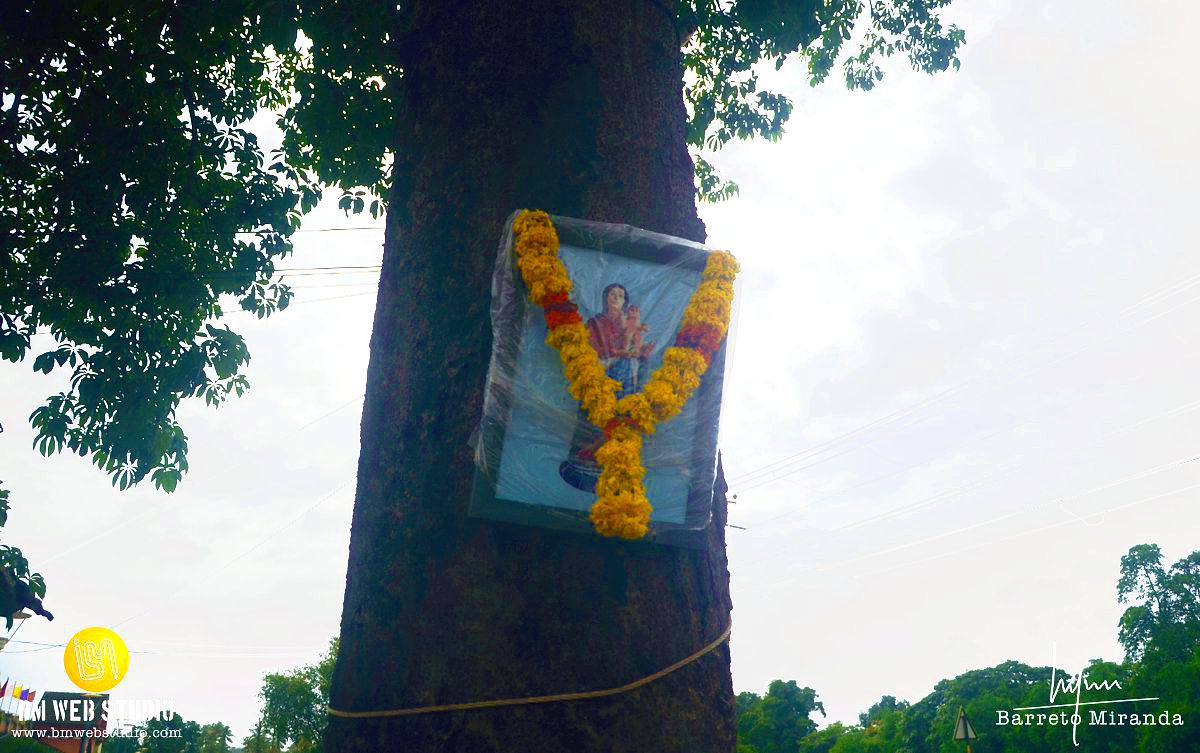
* Photos are of the Konsamchem Fest held at Raia in 2016.
Photos by Lynn Barreto Miranda / lynn.barretomiranda.com

Scan the code for directions.

website designed by lynn
goa / ph: 9822151419