







Poinguinim’s Gadyaanchi Jatra: A Promise Kept Across Centuries
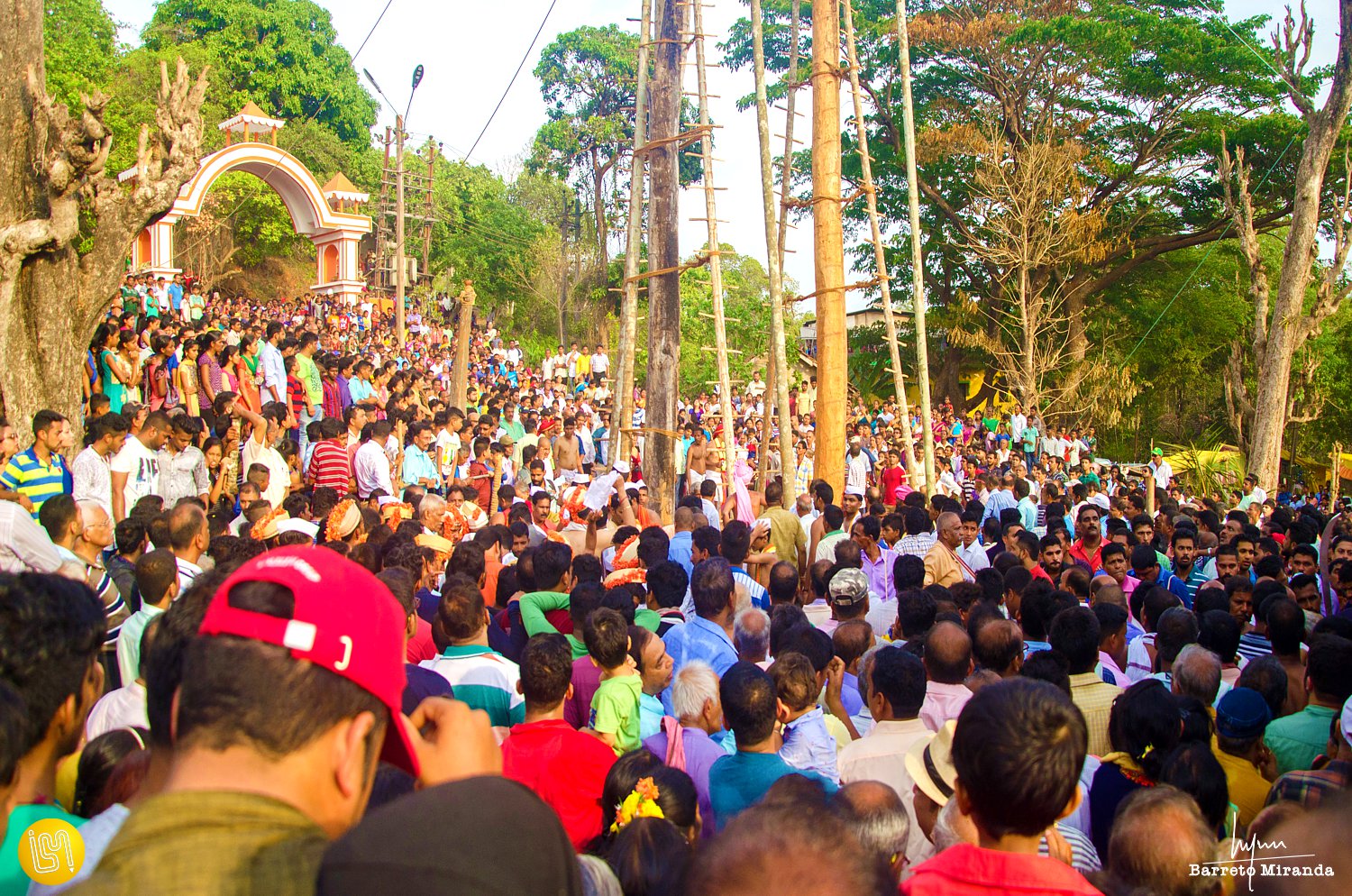
As dusk settles over the quiet village of Poinguinim in South Goa, the air thickens with anticipation. Drums roll, voices rise, and all eyes turn upward—to two towering wooden poles silhouetted against the fading sky. What unfolds next is not merely a festival, but an act of faith so intense, so visceral, that it blurs the line between devotion and endurance.
This is Gadyaanchi Jatra, a ritual observed once every three years in honour of Shri Betal—the most feared, and perhaps the most revered, guardian deity of Poinguinim and its neighbouring villages.
Unlike most festivals that arrive in a single burst of celebration, Gadyaanchi Jatra unfolds across a three-year cycle, each year building towards the final, dramatic culmination. The first year begins quietly with Jevnni, a ritual offering. In the second year, the village stirs to life with the Ttakaa procession—an elaborate ceremonial invitation extended to the deities of Poinguinim, Lolye, and Kharegaall. By the third year, the stage is set for the Jatra itself.
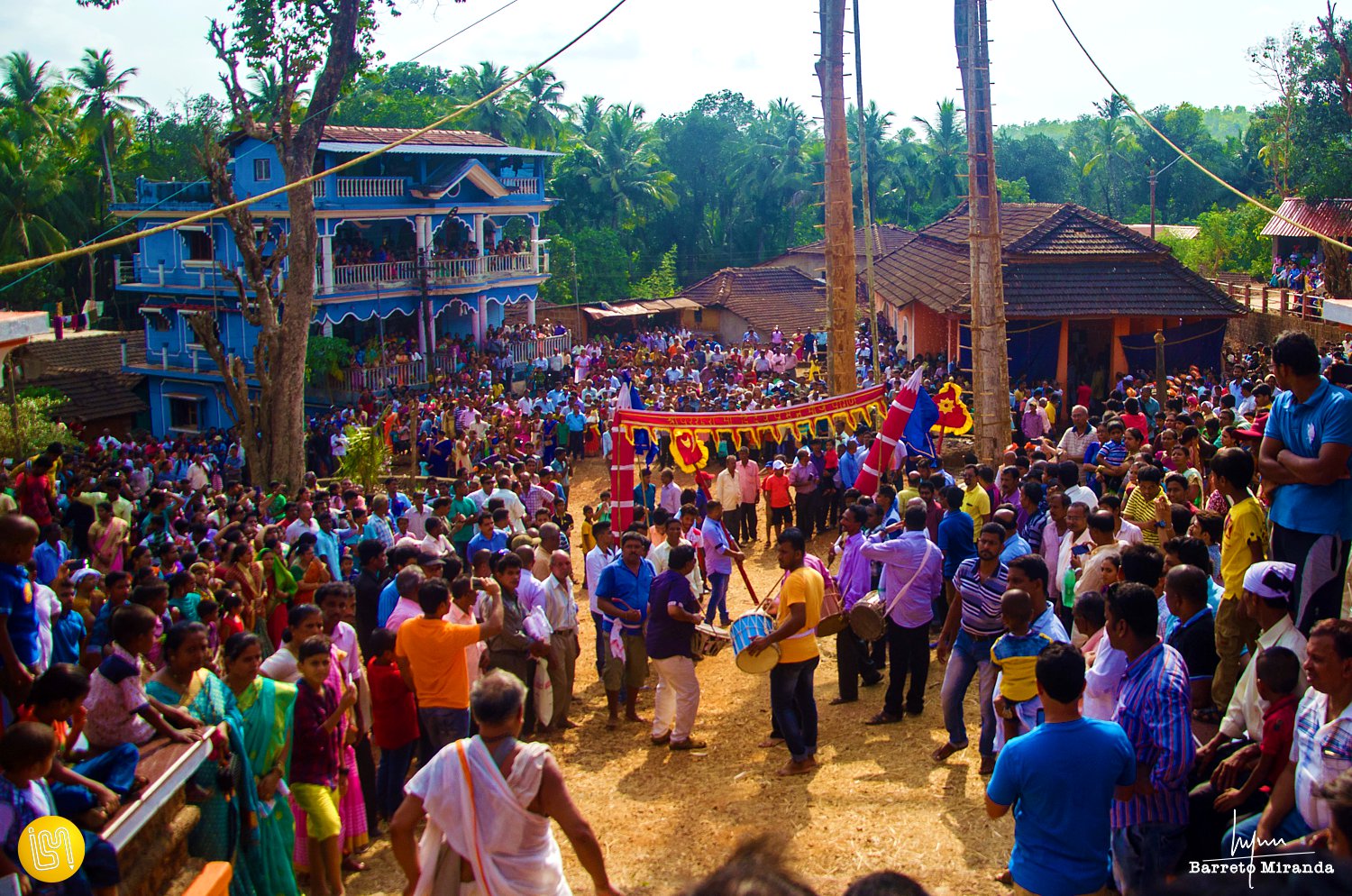
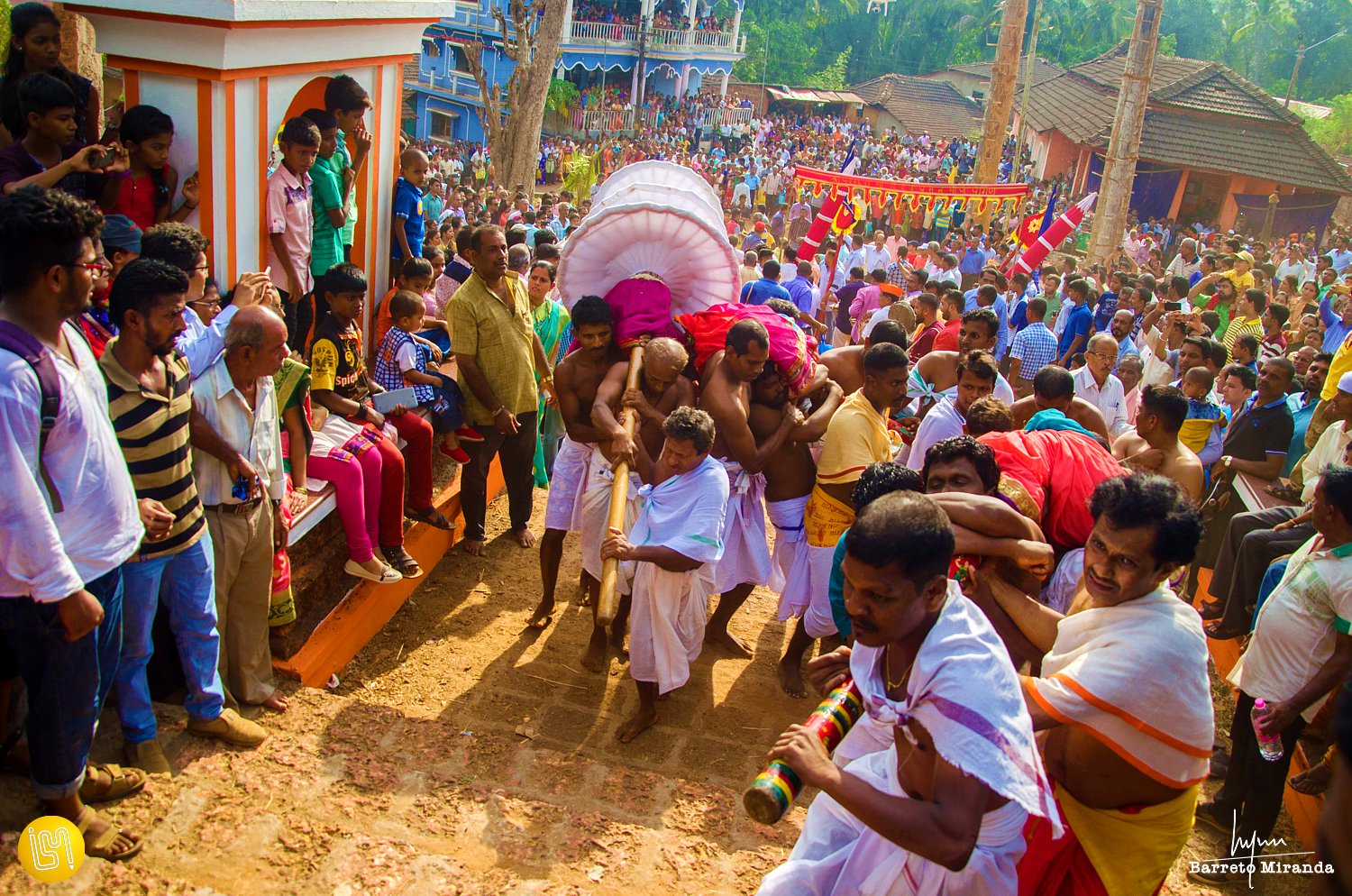
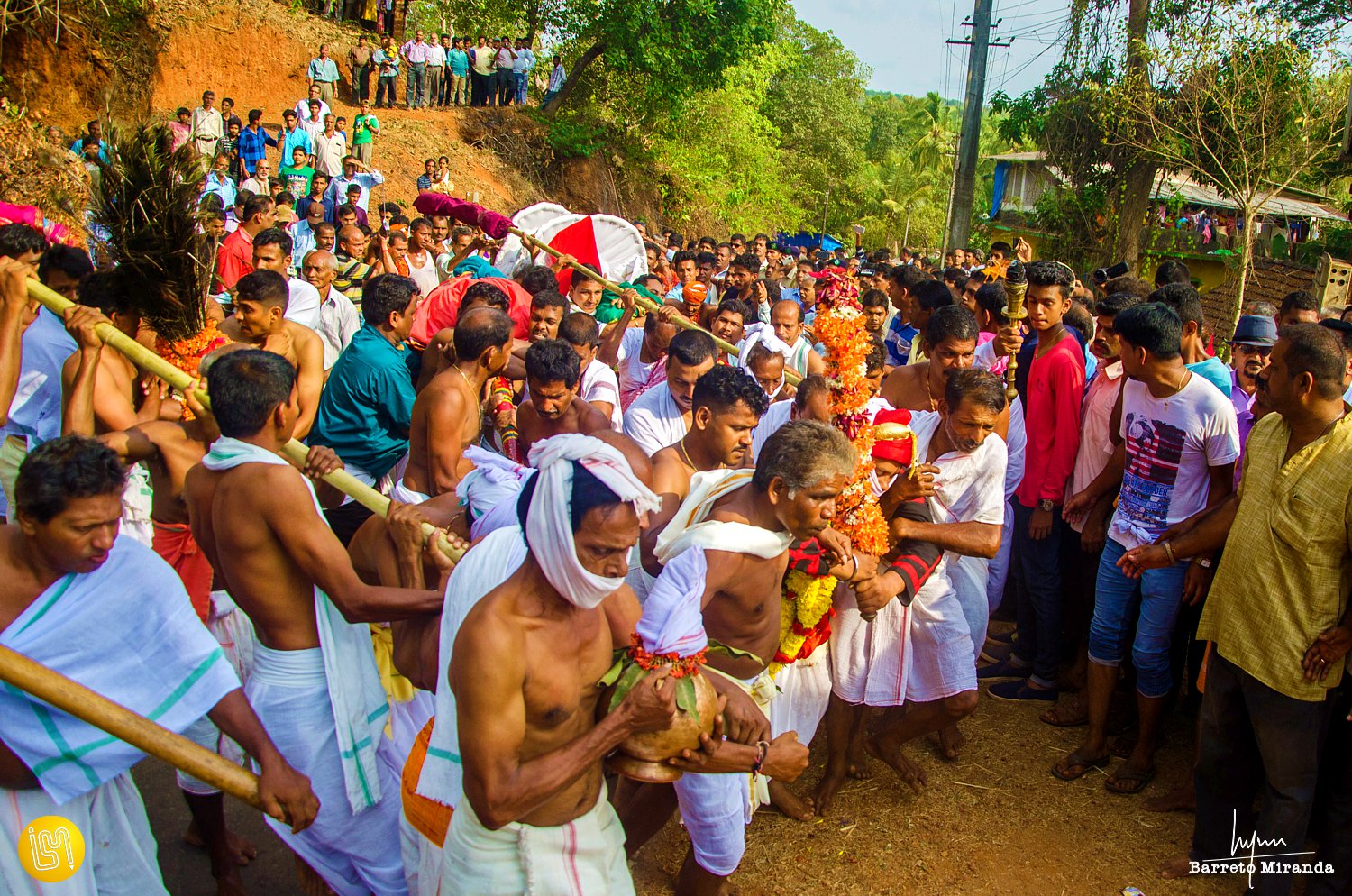
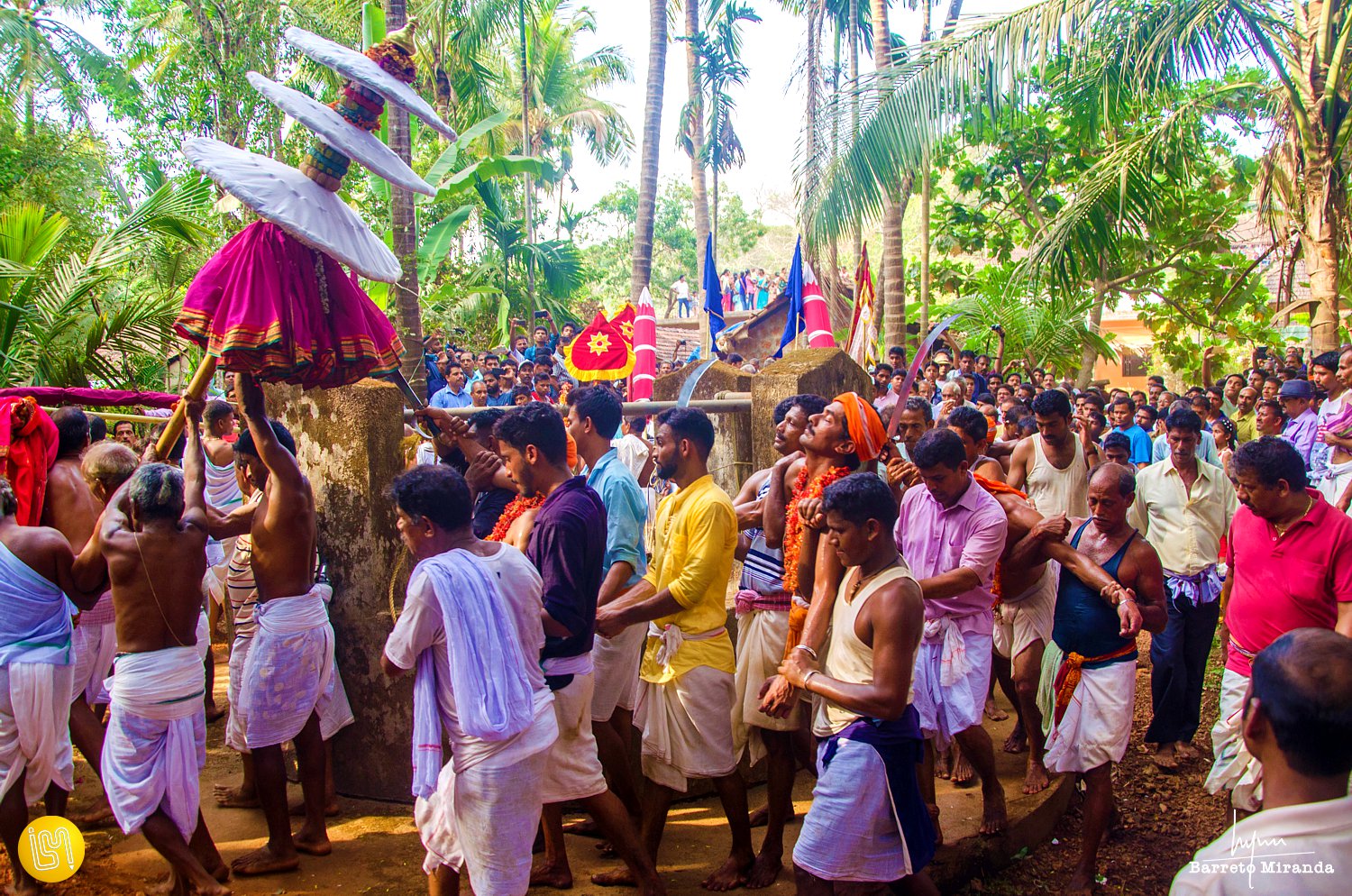
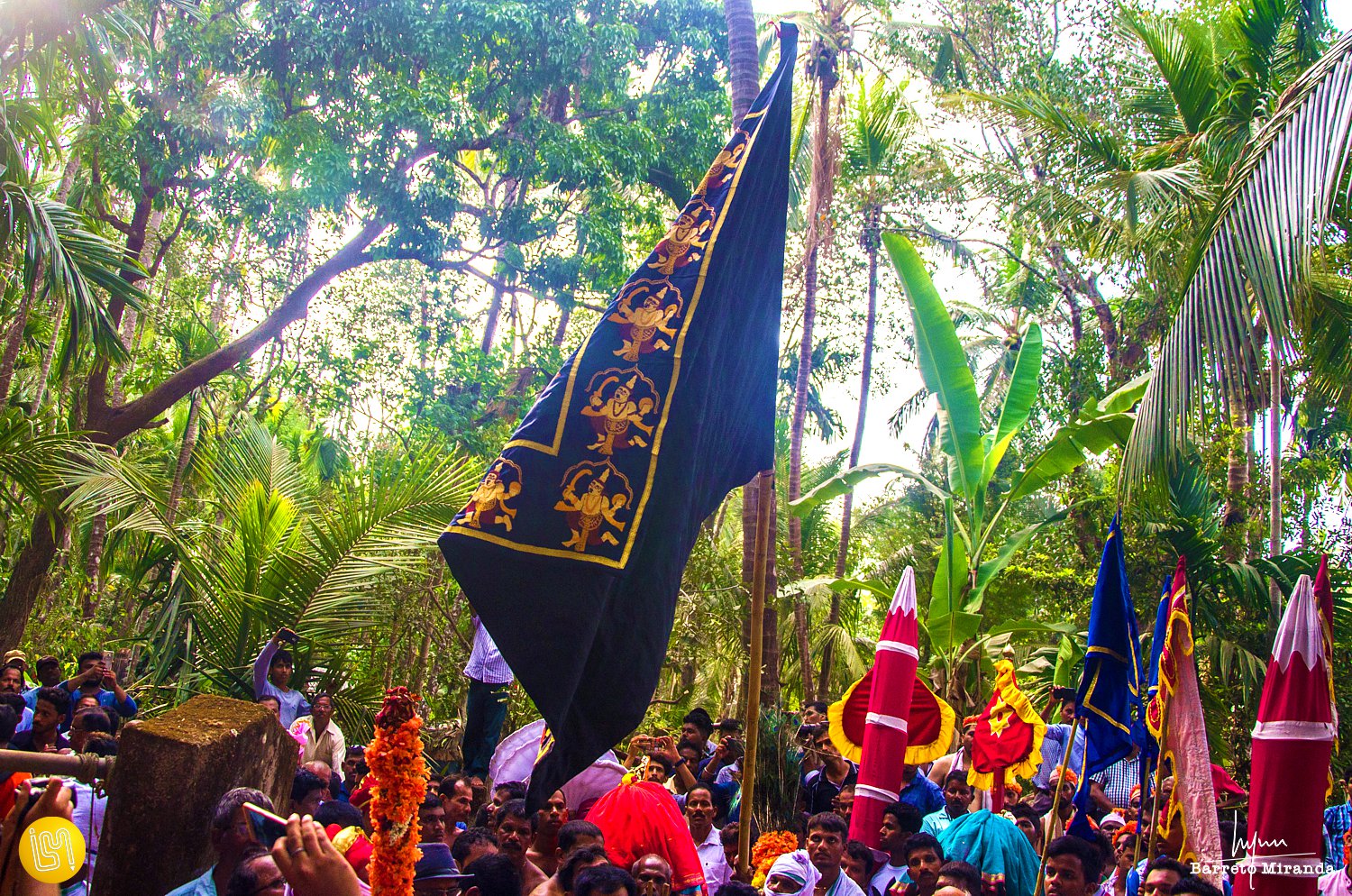
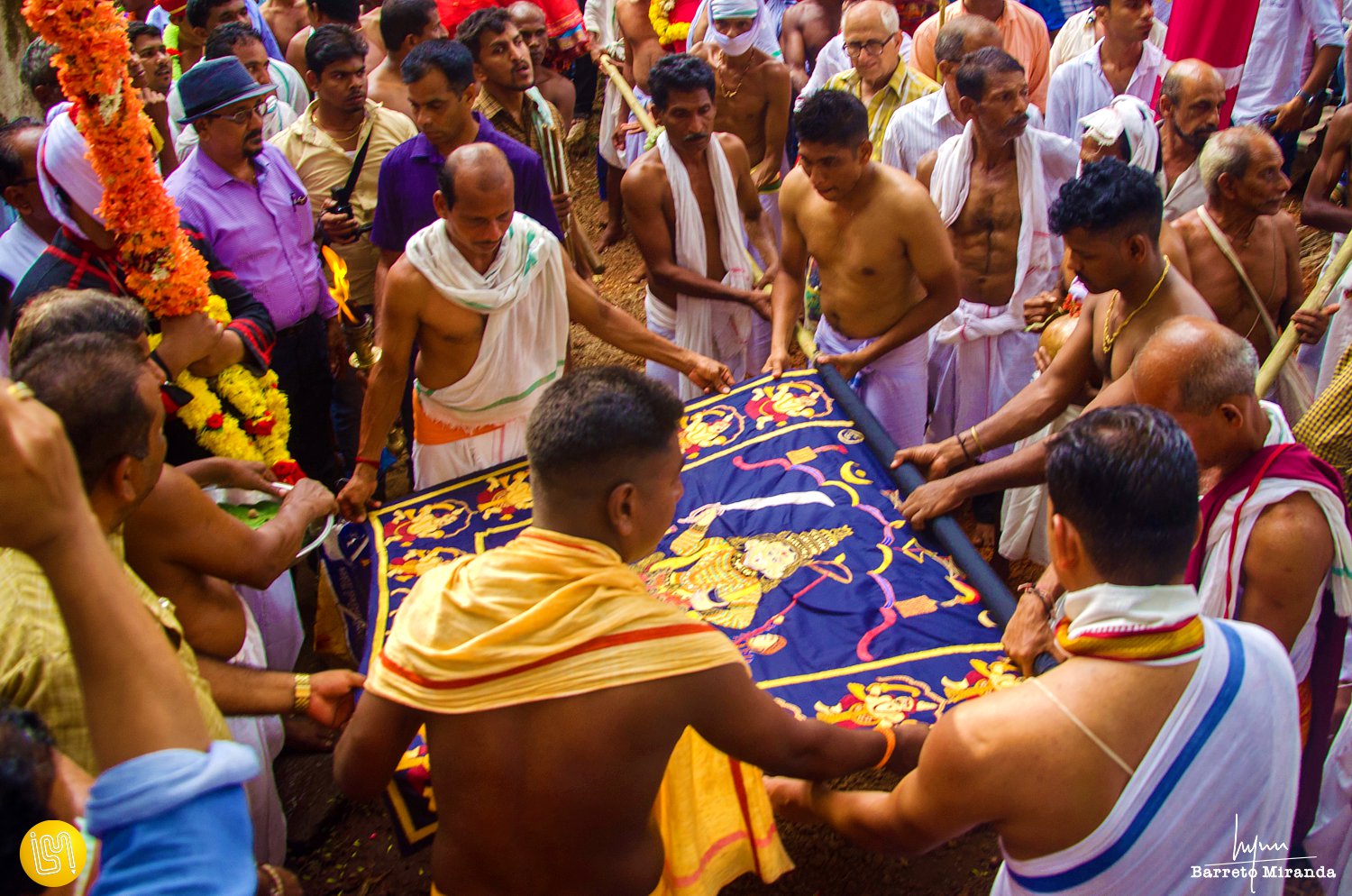
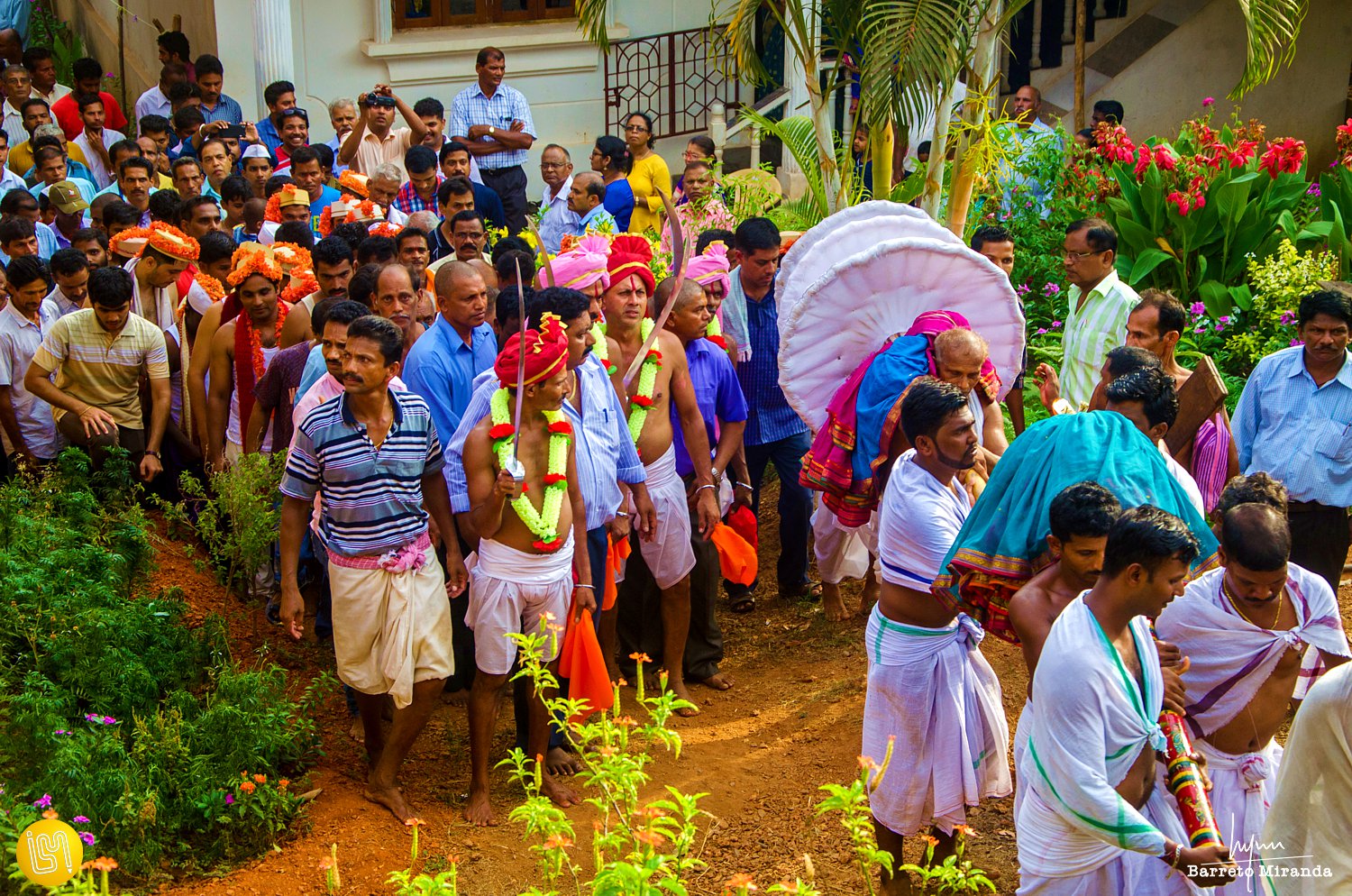
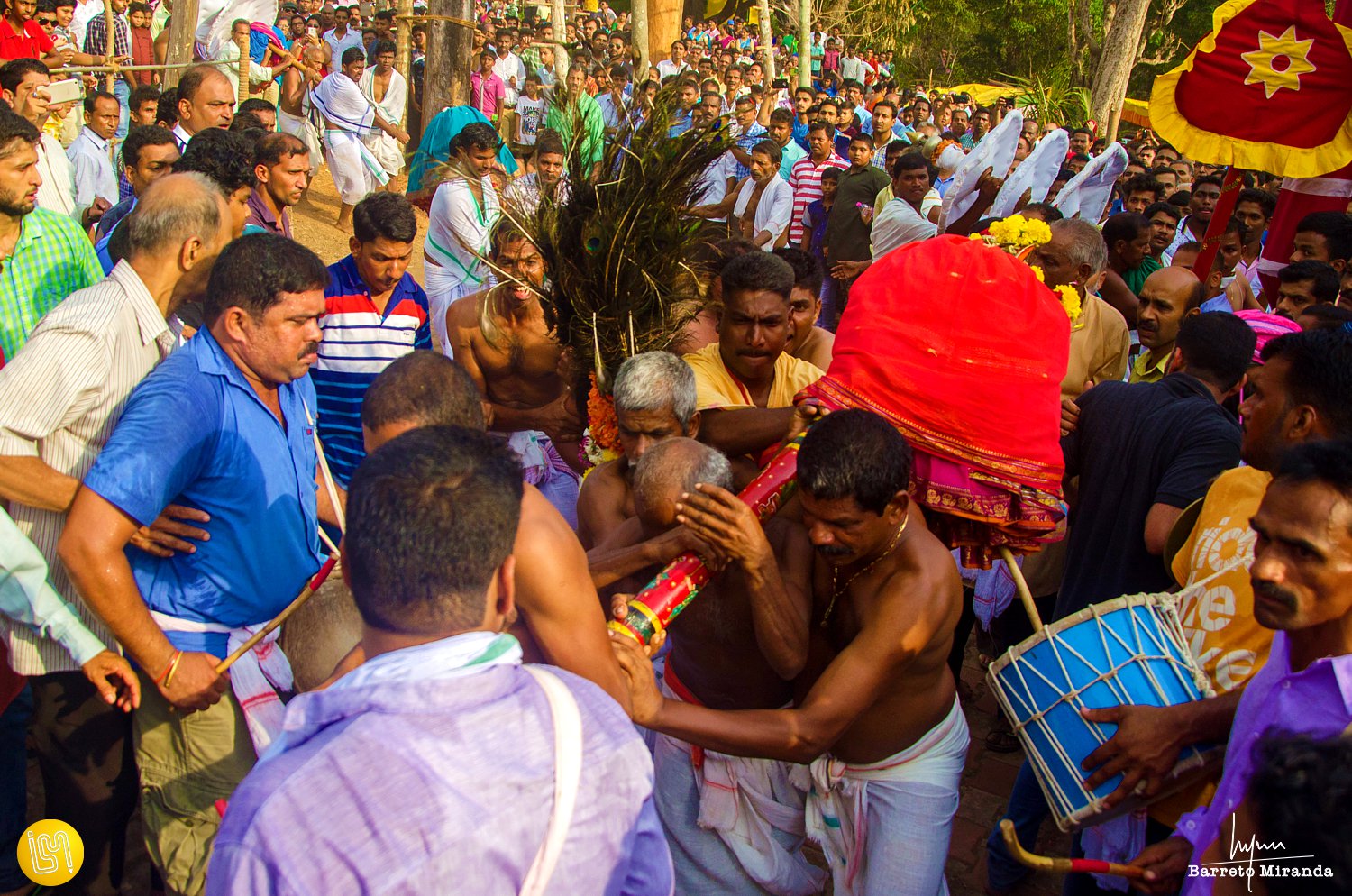
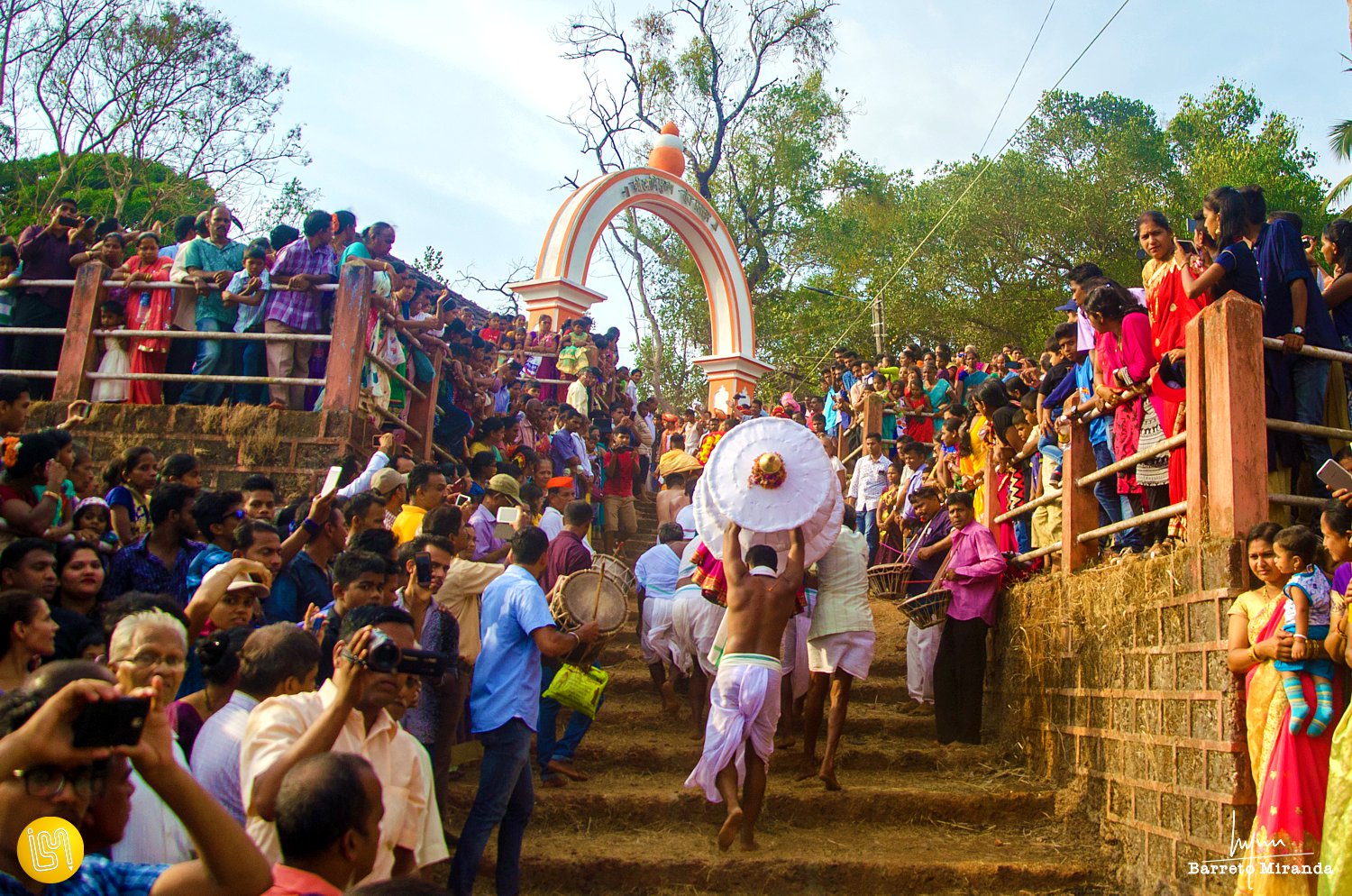
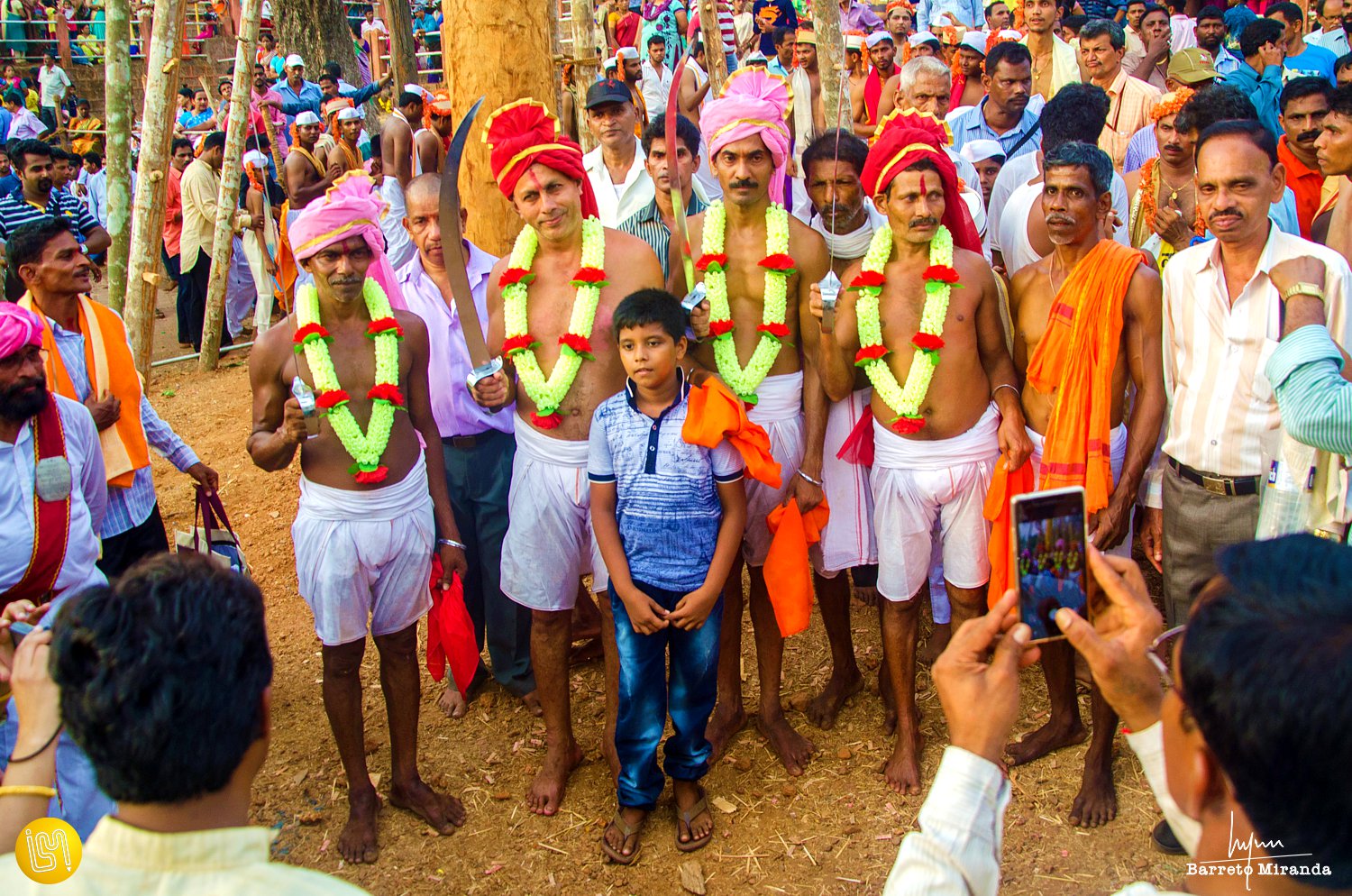
The Ttakaa procession is both symbolic and stately. Leading it is a representative of Shri Betal, followed by four men known as Gade, accompanied by Tarangaa and Satri—sacred, umbrella-shaped emblems of divine presence. At its heart is the Ttakaa itself: a cloth banner bearing embroidered images of Betal and other deities, along with an emblem of the Kadamba dynasty—a lion poised with a raised paw. The inscriptions sing of Betal’s legendary conquest of twelve kingdoms across Goa.
According to local lore, it was in the 13th century that Betal claimed Poinguinim as his own, annexing it to his dominion. The villagers, seeking peace, implored him to reside among them as a protector rather than a conqueror. In return, they pledged to honour him with a grand Jatra every three years—a promise that has endured through centuries.
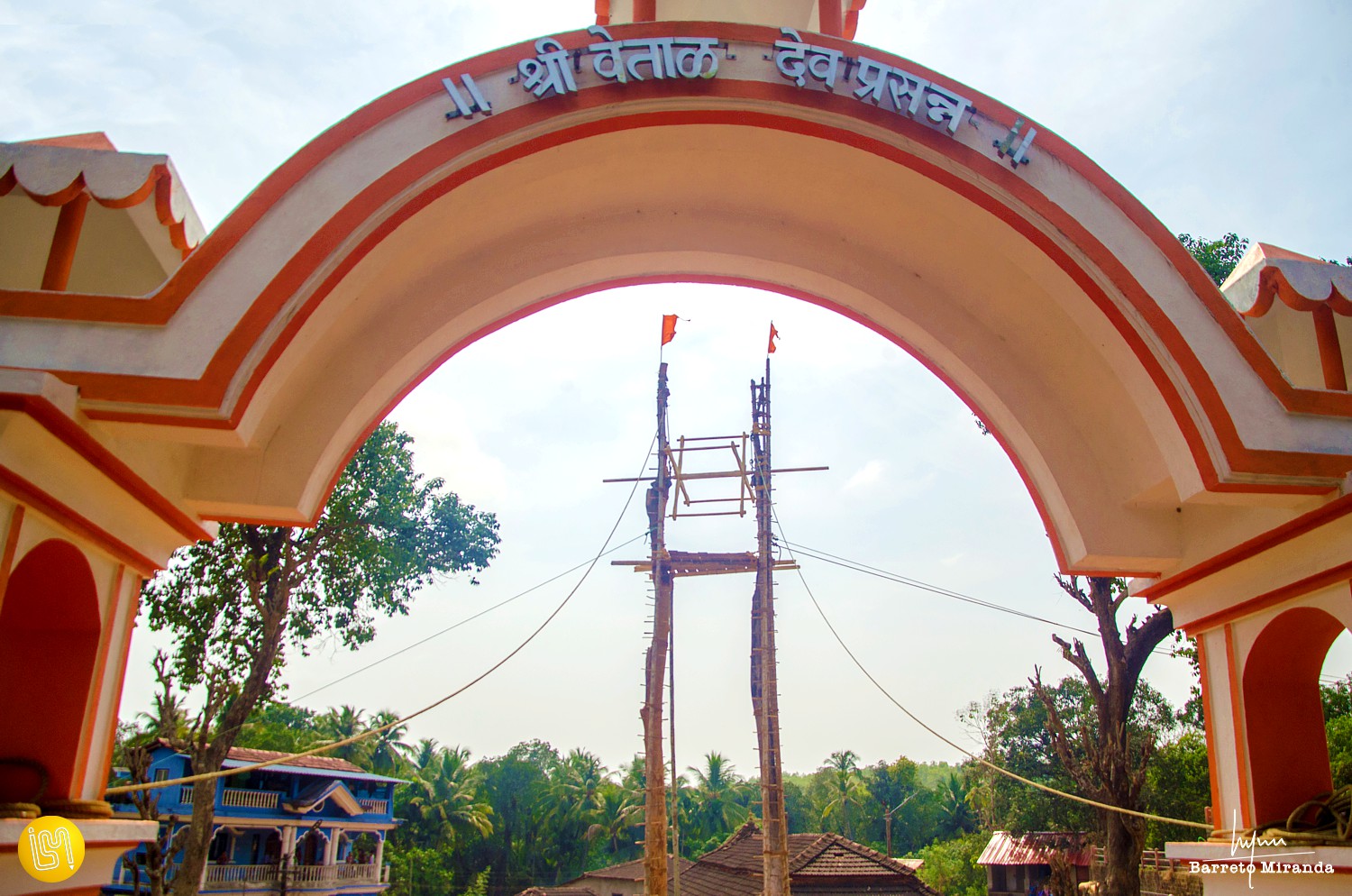
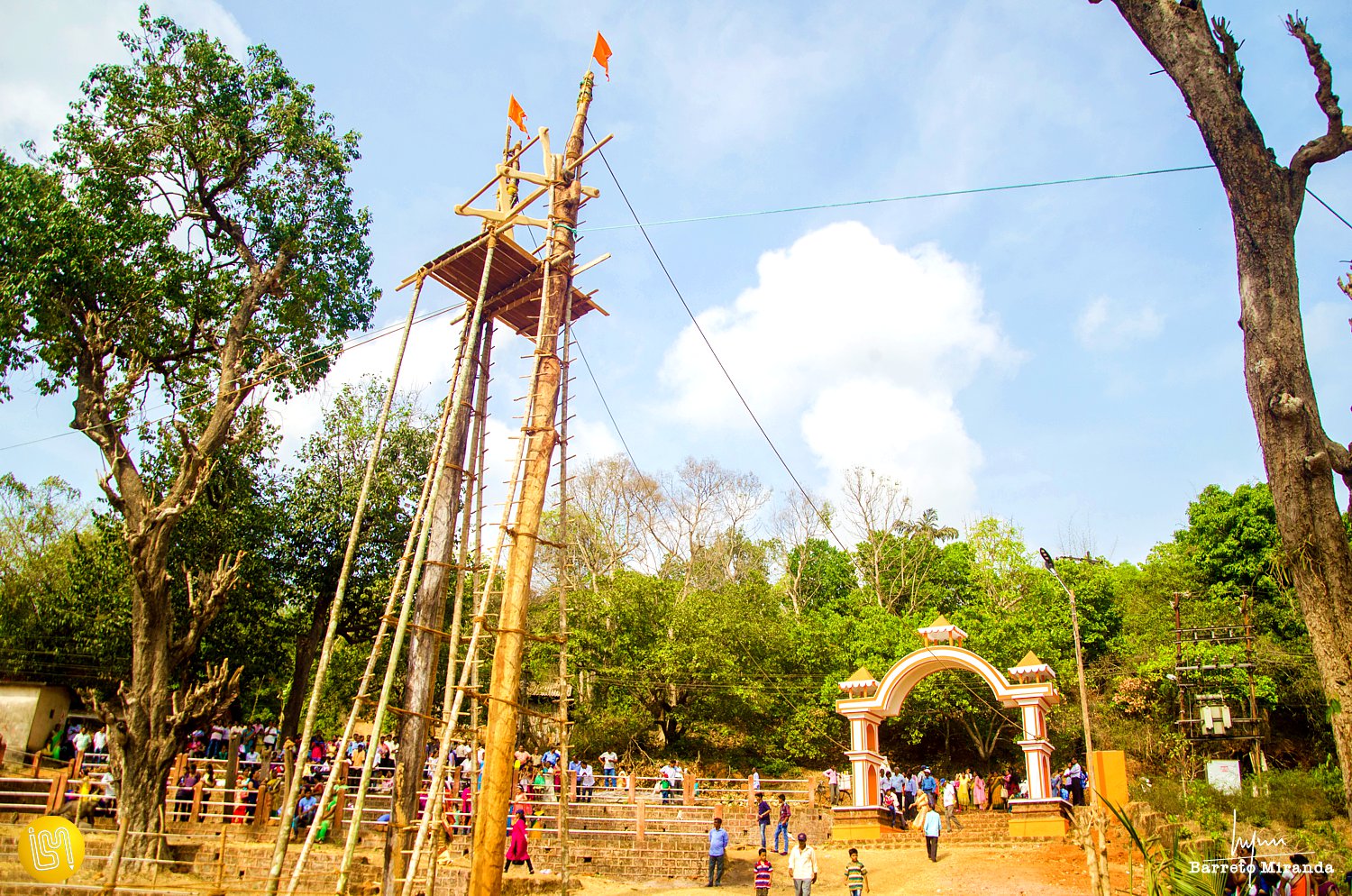
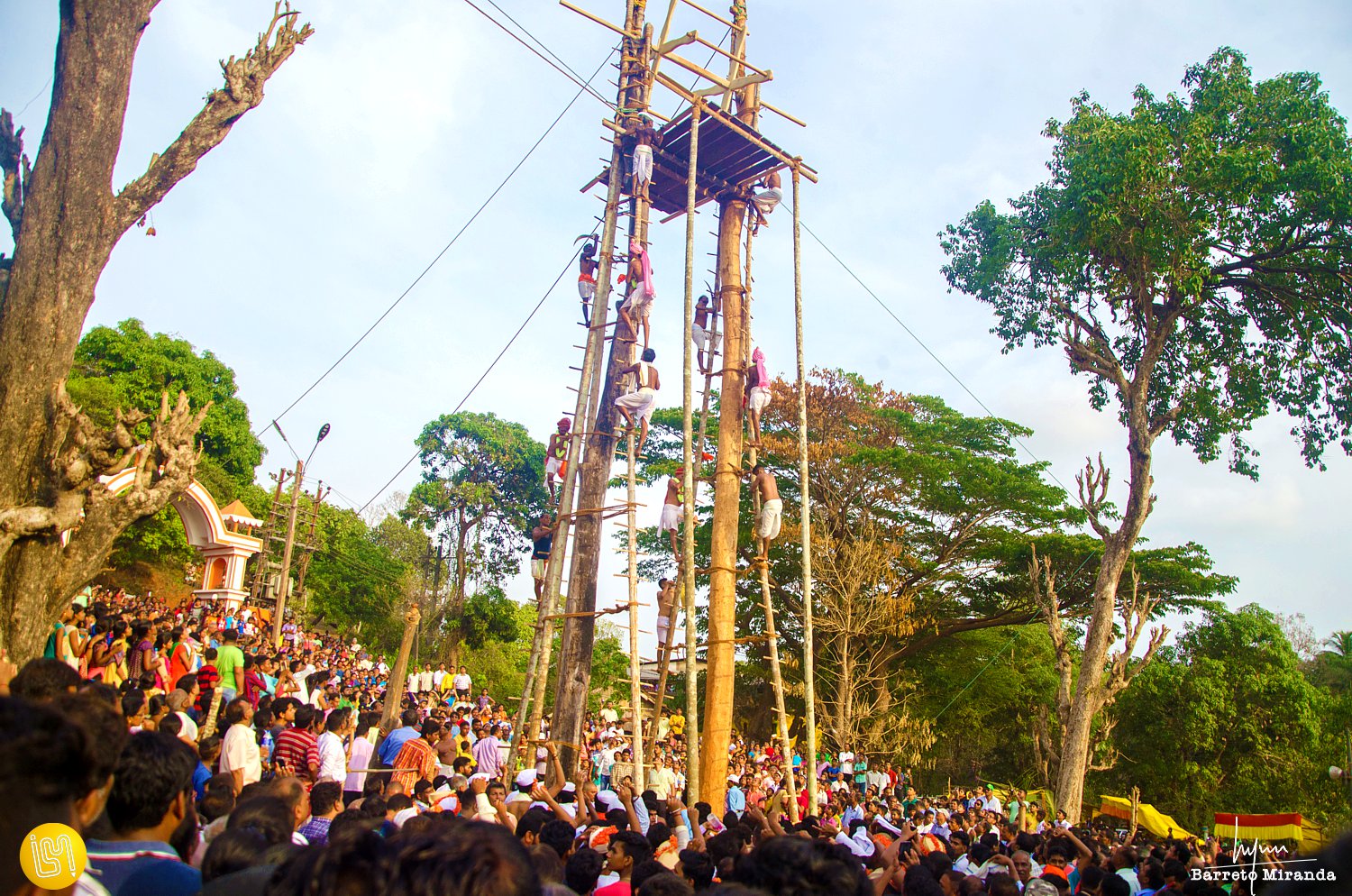
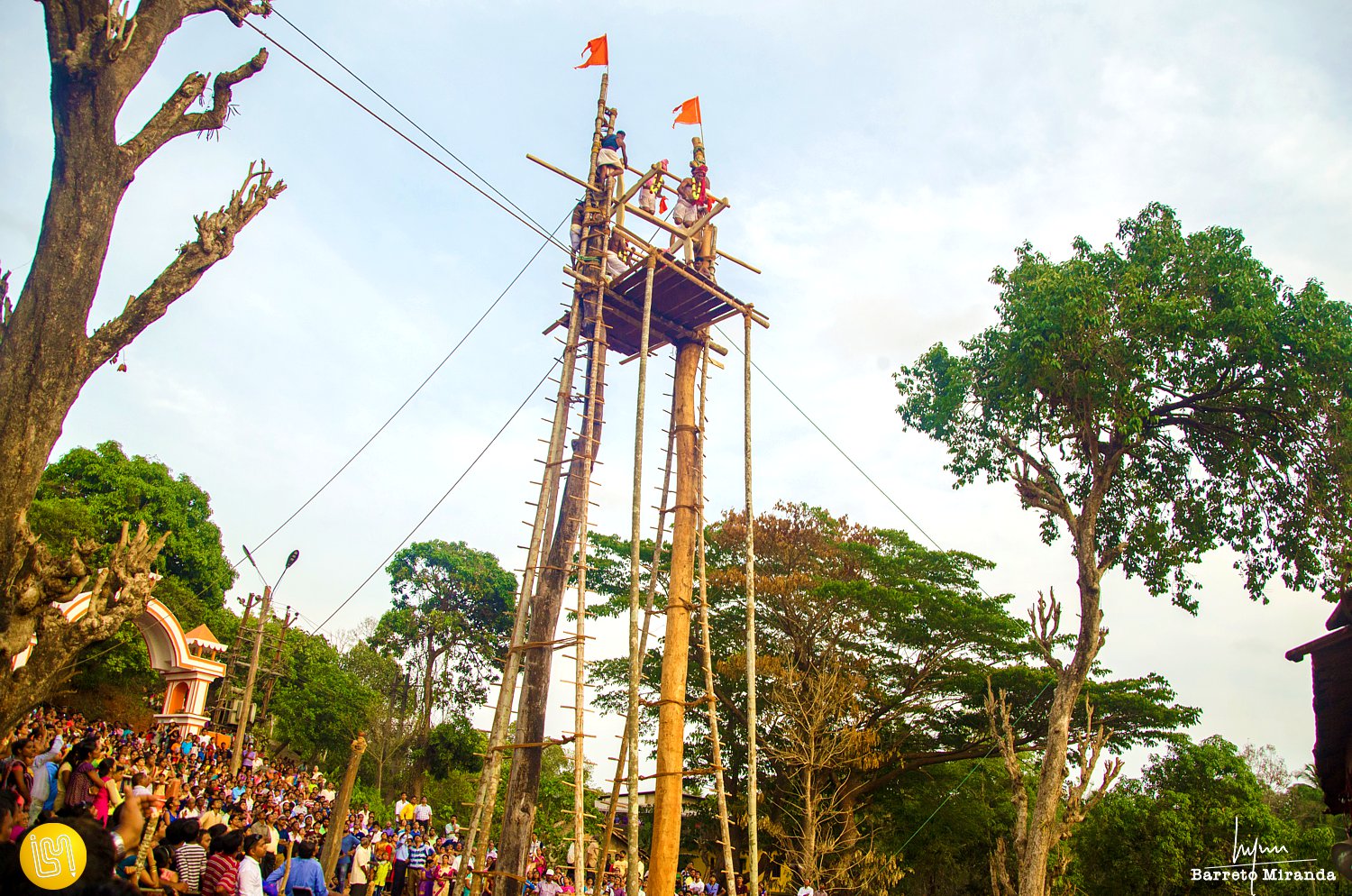
In the days leading up to the Jatra, ritual objects arrive ceremoniously from Amona near Khotigao: the Tarangaa, the Satri, and the Pillkucho—a striking cluster of peacock feathers. Soon after, two massive tree trunks, rising nearly 14 metres into the sky, are erected before the Shri Betal temple. These Khaamb form the axis of the ritual, supporting a large wooden spindle known as the Raat, its four arms extending outward like the spokes of a cosmic wheel.
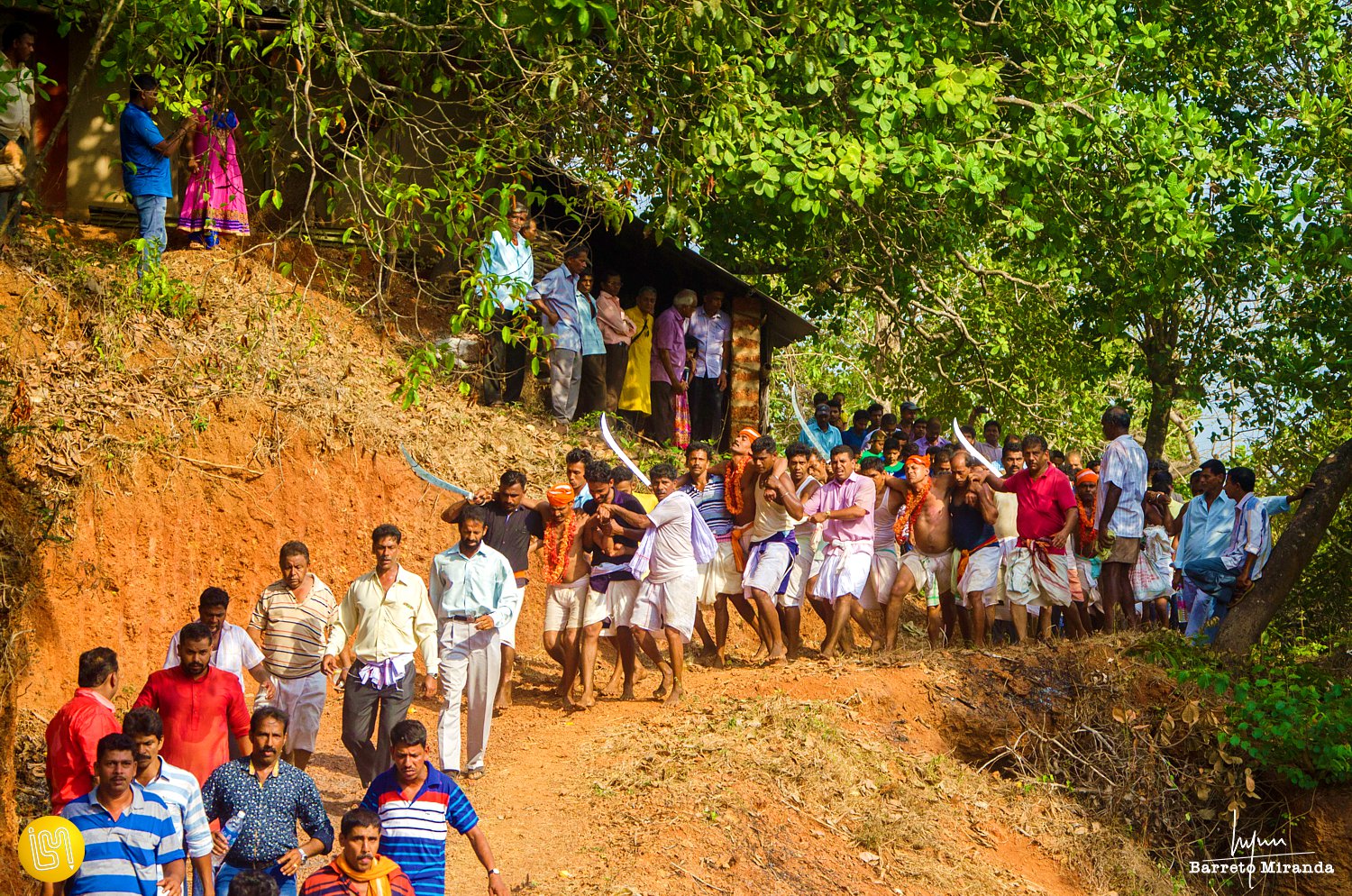
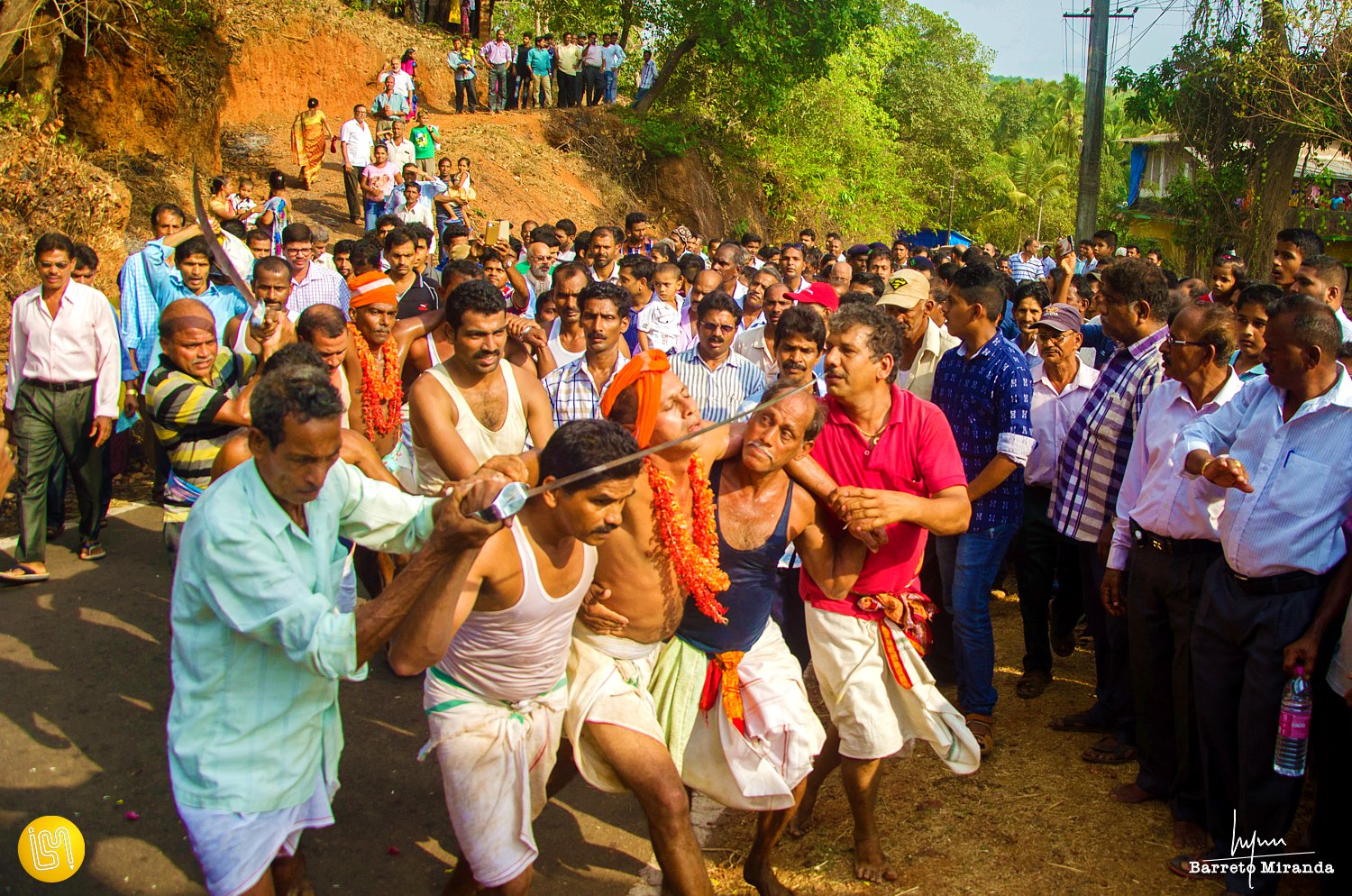
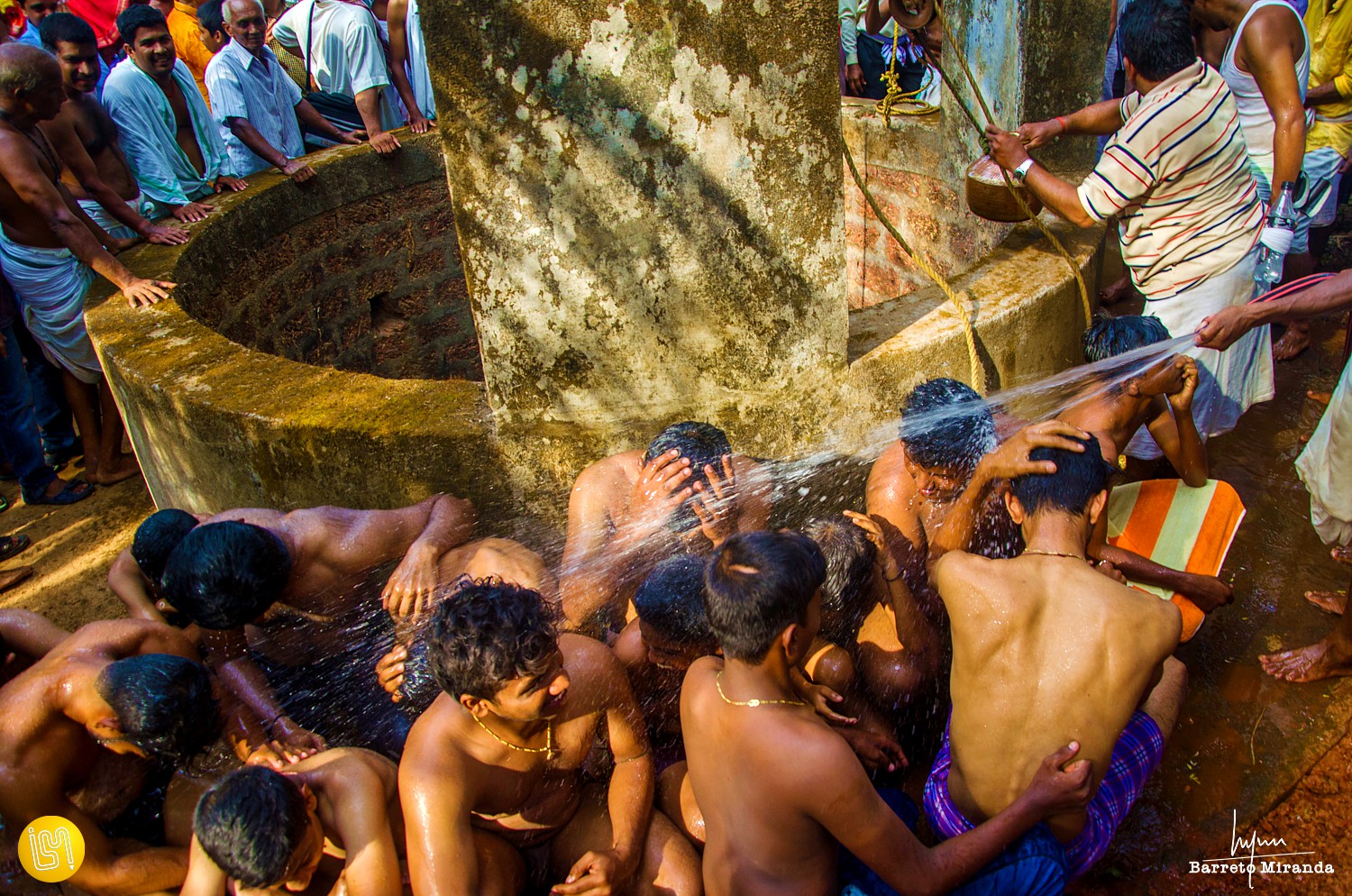
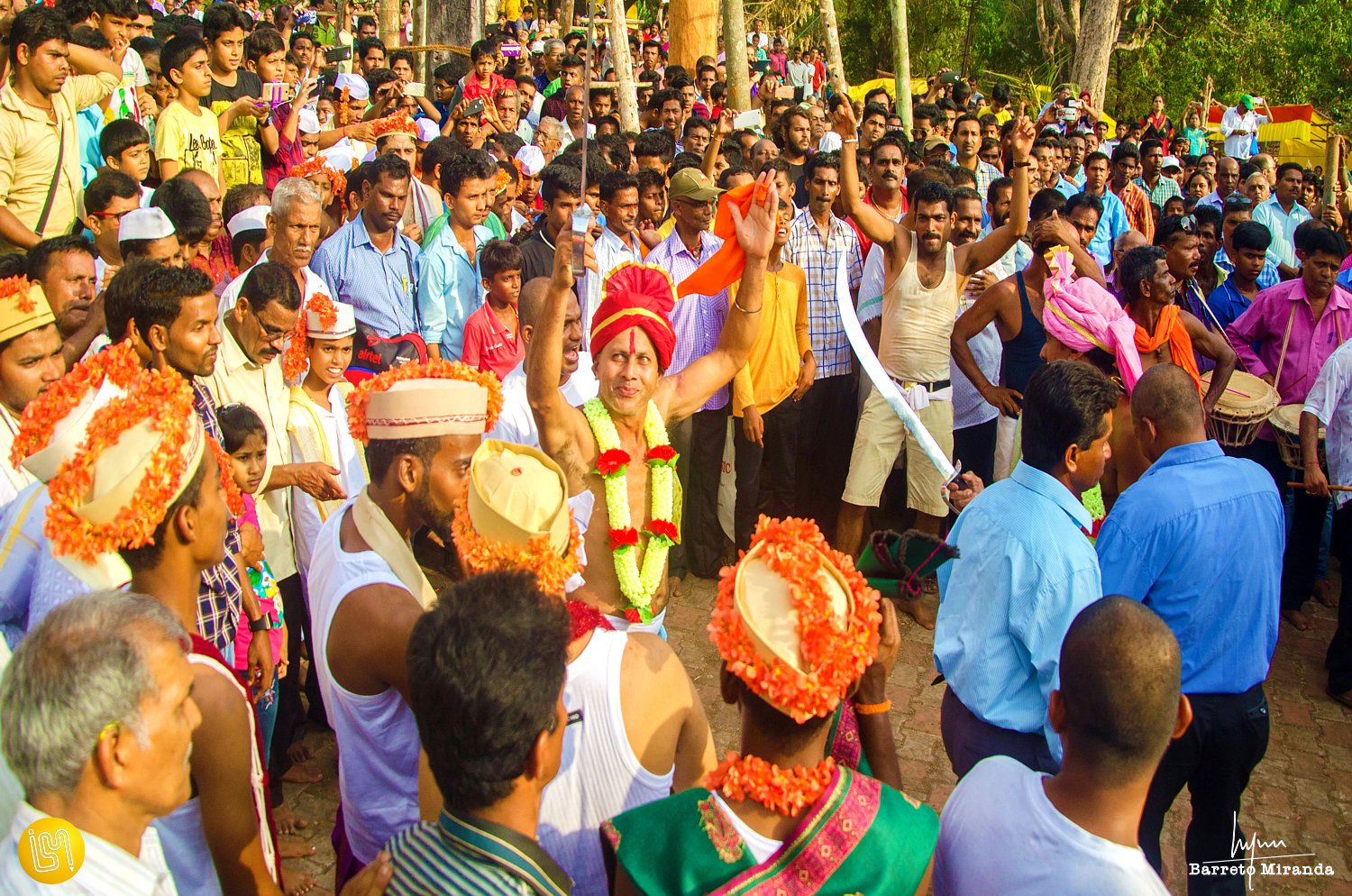
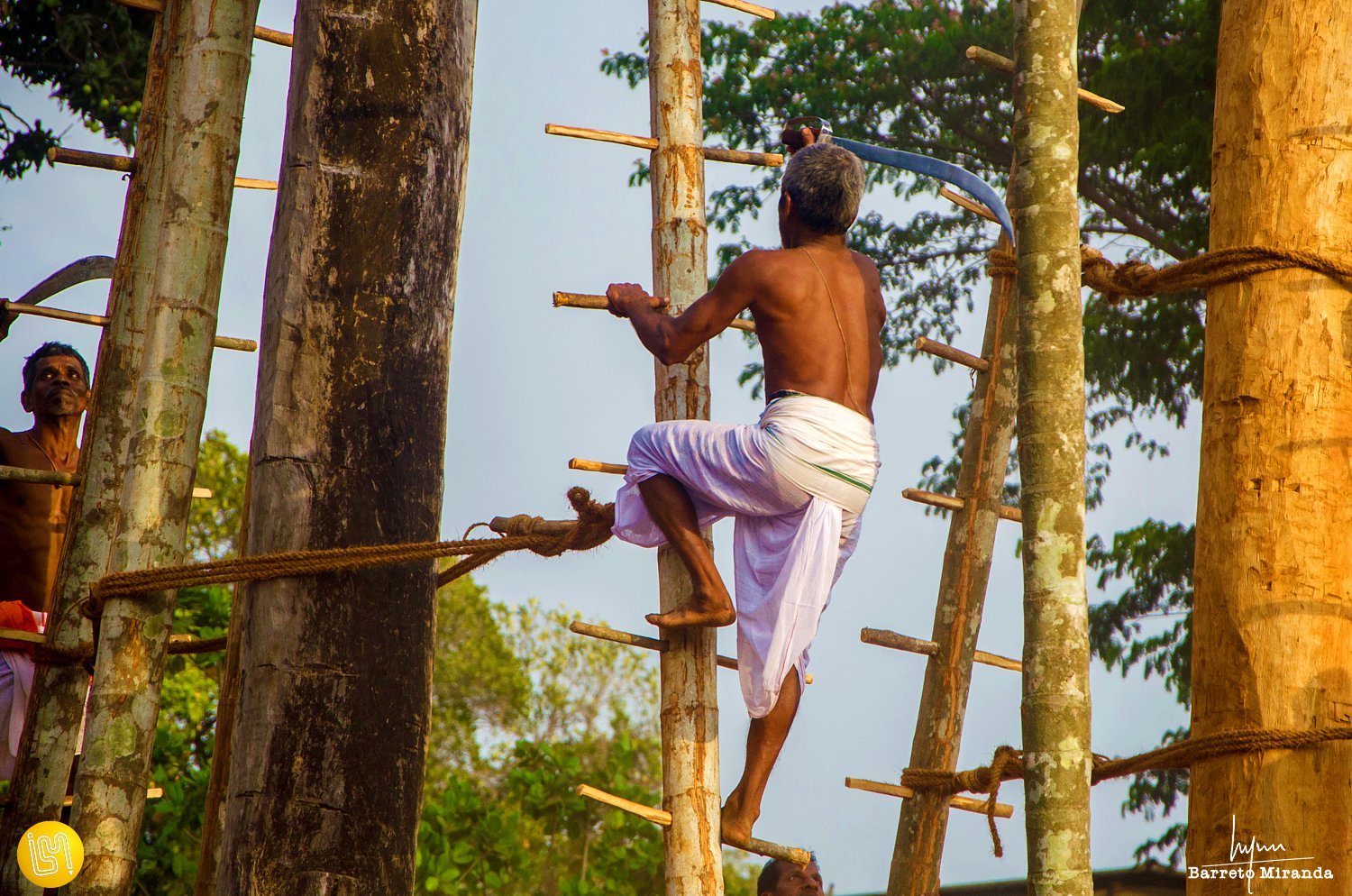
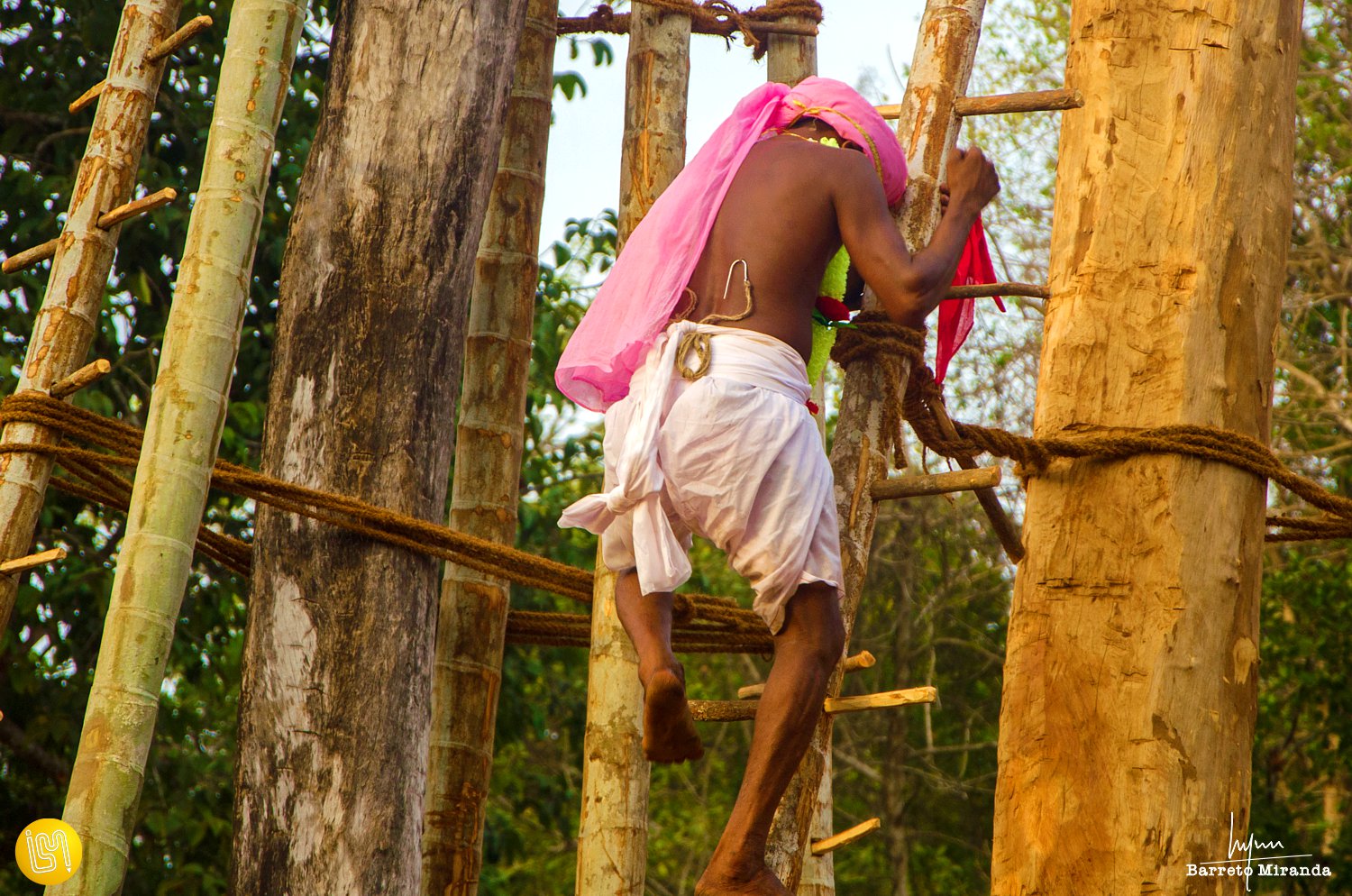
As evening deepens, the ritual reaches its most intense moment. Four Gade, dressed in turbans and dhotis, prepare themselves in solemn silence. In an act of extraordinary devotion, metal hooks are pierced into the muscles of their backs. One by one, they climb the towering Khaamb, gripping a sword in one hand and a cloth in the other, before being secured to the arms of the spindle.
Then, slowly, the Raat begins to turn.
Suspended high above the ground, the Gade circle through the air—an image at once unsettling and mesmerising. Below them, the gathered crowd watches, not with shock, but with reverence. This is not spectacle; it is offering.
At the height of the ritual, the Mhaal Gado, or chief, calls out to the crowd with four questions that echo across the night:
“Lolyekaar aayle?”
“Poinginkaar aayle?”
“Khargaallkaar aayle?”
“Khushi jaali?”
Have the people of Lolye arrived? Of Poinguinim? Of Kharegaall? Are you all happy?
Each question is met with a resounding affirmation—a collective voice binding village, deity, and tradition into one shared moment. Only then does the spindle slow, then stop, marking the ritual’s completion.
Inside the temple, Shri Betal stands adorned in a form unchanged for generations: a white dhoti, a red chequered saree draped over the head—an image both austere and powerful, embodying a deity who is as much protector as he is conqueror.
Many believe that Gadyaanchi Jatra is, at its core, a memory of victory—a ritualised echo of a battle once fought and won, perhaps led by four warriors whose legacy now lives on through the Gade. Over time, history has merged with myth, and what remains is a living tradition that continues to define the cultural identity of this region.
And as the crowd disperses, and silence gradually returns to Poinguinim, one realises that Gadyaanchi Jatra is not simply about devotion or daring. It is about continuity—the keeping of an ancient promise, renewed every three years under the Goan sky.
In that turning wheel, suspended between earth and air, the past does not feel distant. It feels very much alive.
Photos by Lynn Barreto Miranda / lynn.barretomiranda.com

Scan the code for directions.

website designed by lynn
goa / ph: 9822151419