
Colva’s Fama: When Goa Gathers Before the Miraculous Menino
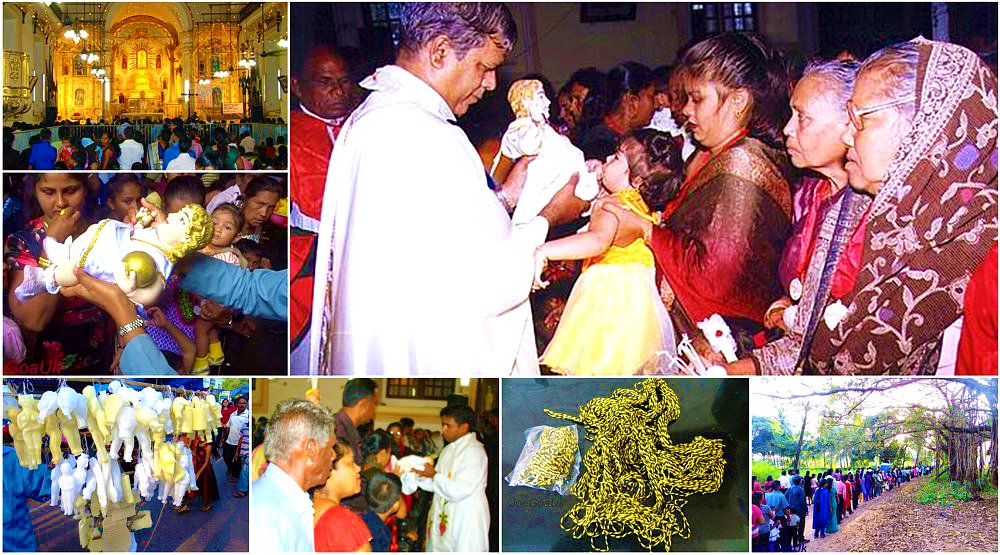
Before dawn breaks over the sands of Colva, long lines of devotees already stretch across the church square. The air carries the soft murmur of prayers, the occasional burst of fireworks, and the quiet anticipation of thousands who have come seeking the blessings of a child — the Menino Jesus, the Infant Jesus believed by many to be miraculous.
Every year, on the second Monday of October, the coastal village of Colva in South Goa witnesses one of the most remarkable religious gatherings in the state — the Colva Fama. Thousands of devotees throng the nearly 400-year-old Our Lady of Mercy Church to mark the ceremonial beginning of the celebrations dedicated to the Infant Jesus.
The day begins early. At 5:30 a.m., a solemn Mass is celebrated inside the church. Soon after, a ritual steeped in centuries of tradition unfolds. The niche that houses the revered statue of the Infant Jesus is opened — an act carried out with great care and ceremony. Several keys are required to unlock the shrine, each safeguarded throughout the year by members of the church’s Confraria (confraternity) and brought to the church only on this special morning.
Amid the expectant silence of the congregation, the vicar and the president of the confraternity ascend the altar. One by one, the locks are opened. Finally, the sacred statue is lifted from its resting place and revealed to the faithful. Fireworks crackle outside, announcing the moment to the waiting crowds.
Dressed in regal robes and adorned with jewellery, the statue of the Infant Jesus is then carried in a solemn procession around the church grounds. For many devotees, this brief glimpse is deeply emotional — a moment of prayer, hope, and gratitude.
Yet the Fama is neither the feast nor the novena. Instead, it marks the formal proclamation of the forthcoming novena, which begins immediately afterwards and culminates ten days later in the Feast of the Infant Jesus.
A distinctive ritual accompanies this proclamation. In the open square before the church, a tall maddi — a pole fashioned from the trunk of an areca nut tree — is erected. A banner bearing the image of the Infant Jesus is ceremonially hoisted upon it, announcing to the village and to pilgrims across Goa that the novena has begun. The banner remains in place until the day of the feast.
During the procession, the statue pauses beside this pole. The richly embroidered garments and ornaments are gently removed, and the image is ritually bathed. Devotees eagerly collect the blessed water, believing it carries healing and protection. The statue is then clothed in a simple white robe, and the famous gold ring on the Infant’s right thumb is refastened with new sacred cords before the statue is placed on the altar for public veneration throughout the day.
Among the most distinctive traditions associated with the Colva Fama are the “medidas.” These green cords, worn around the wrist by many devotees from October onwards, are believed to bring protection and good fortune. The word medidas literally means “to measure.” Each cord is measured to the size of the Infant Jesus, touched to the statue, and taken home as a cherished token of faith.
But what sets the Colva Fama apart from other church celebrations in Goa is the enduring belief in the miraculous powers of the Infant Jesus.
According to a long-told legend recorded by historians, the statue was discovered centuries ago on the shores of Sena in Mozambique after the ship carrying Jesuit priest Fr Bento Ferreira was wrecked during a voyage. The image was found resting on a stone, with birds circling above it. Recognising its sacred significance, the priest carried the statue first to Sena and later to Goa. When he was eventually appointed vicar of Colva, he brought the statue with him.
It is said that mysterious shafts of sunlight would illuminate the trunk where the statue was kept, convincing the priest to place it upon the altar of the church. Over time, stories of miracles began to circulate, and the devotion to the Infant Jesus grew steadily among both Christians and Hindus.
The statue’s history also carries an unusual twist. In the 19th century, after the suppression of the Jesuit order in Portuguese territories, the original statue was taken from Colva to Rachol Seminary. Despite appeals from the villagers, it was never returned. However, during the removal, a gold diamond ring that adorned the Infant’s finger fell and remained in the altar niche.
In 1836, the people of Colva installed a new statue in the church and placed the ring upon its finger. Devotees believe that when the original statue was taken away, the Infant chose to leave behind his blessings through that ring — and that it is this statue, bearing the ring, that continues to grant miracles.
Perhaps that is why the Fama — more than the feast itself — draws such extraordinary crowds. It is the day when the Infant Jesus once again emerges from his niche, when the village awakens to prayer before sunrise, and when faith gathers quietly in the shadow of an old church beside the Arabian Sea.
And as the first light of morning spreads across Colva’s palm-lined coast, the faithful leave with their medidas tied around their wrists, carrying home a simple yet enduring belief — that the gentle child they have just seen may still be listening to their prayers.
Photo: JoeGoaUK

Scan the code for directions.

website designed by lynn
goa / ph: 9822151419