
The Cucumber Feast of Goa: Faith, Fertility and Tradition at Telaulim
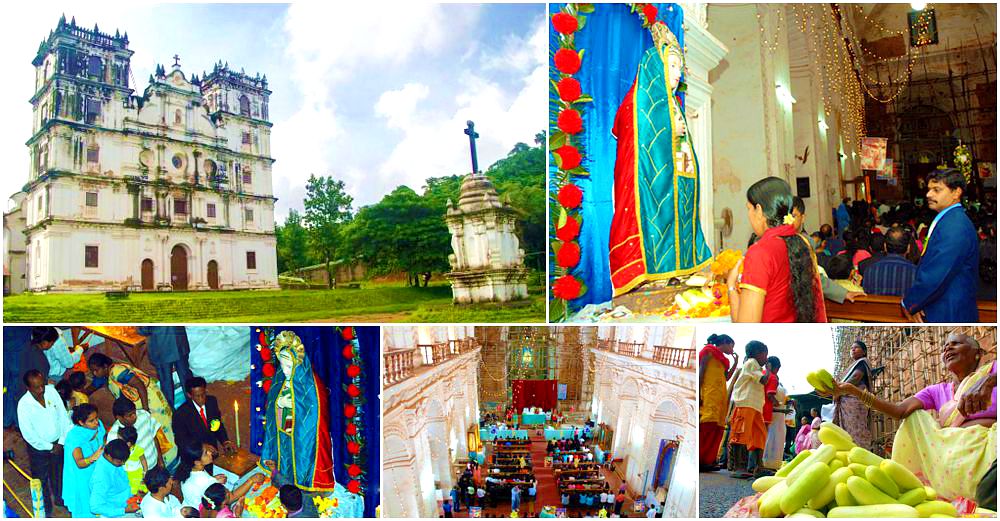
Every July, an unusual sight unfolds in the quiet village of Telaulim near Goa Velha. Outside the stately St Anne’s Church (Santana Church), Talaulim, vendors pile up baskets upon baskets of fresh cucumbers. Devotees arrive carrying them by the armful. What might appear to be an ordinary vegetable market is, in fact, part of one of Goa’s most distinctive religious celebrations — Touxeachem Fest, the celebrated Cucumber Feast.
Held annually on the last Sunday of July, the festival honours Saint Anne, the mother of Virgin Mary and wife of Saint Joachim. The feast coincides with the global celebration of Grandparents Day on July 26, commemorating the grandparents of Jesus Christ. Yet in Telaulim, the devotion extends far beyond grandparents. Over generations, thousands of devotees from across Goa have made their way to this picturesque village in Tiswadi taluka to seek the blessings of St Anne.
Preparations begin nine days earlier with a series of novenas. By the day of the feast, the grounds around the 16th-century church come alive with prayer, music and the bustle typical of Goan festivities. Alongside stalls selling sweets, roasted gram and candles, countless cucumbers — the central symbol of the celebration — dominate the scene.
The offering of cucumbers stems from a deeply cherished tradition. According to belief, St Anne herself was blessed with a child — Mary — after forty years of childlessness. Couples longing for a child therefore come to the shrine carrying cucumbers as an offering. As they place them before the saint, many utter the age-old Konkani-Portuguese plea: “Senhora, tomai pepino, dai-me menino” — “Lady, take this cucumber and grant me a child.”
Newly married couples are among the most devoted pilgrims to the shrine. Brides often offer their chuddo — the traditional bridal bangles — while grateful parents return in thanksgiving with armfuls of cucumbers after their prayers are answered. Bachelors seeking a bride sometimes offer spoons, while unmarried women place lentils such as urad dal before the altar in hope of finding a suitable husband.
At the heart of the celebration is the centuries-old statue and relic of St Anne housed inside the church, believed by devotees to be miraculous. Solemn High Mass and prayers mark the religious core of the feast, while outside, a festive atmosphere prevails with traditional bands and crowds mingling in the church courtyard.
A Church Wrapped in Legend
The story of the shrine itself is steeped in legend. According to the Jesuit chronicler Francisco de Souza in his 1710 work Oriente Conquistado, the site known as Quinta de Sant’Ana was purchased in 1577 and used as a retreat by students of the Jesuit College of St Paul.
When a priest attempted to establish a hermitage there, he was unsure to which saint it should be dedicated. The mystery was resolved, according to local lore, when a villager named Bartalomeu Marchon reported seeing an elderly woman walking down the hill claiming the hermitage as her home. Soon after, an elderly Brahmin woman recounted a dream in which the same figure appeared to her during illness, identifying herself as Anne and asking for a house in the village. The woman recovered miraculously, and the priest interpreted these events as a sign. The church was soon consecrated to St Anne.
Faith Rooted in Everyday Life
Today, more than four centuries later, Touxeachem Fest continues to blend faith with the rhythms of everyday Goan life. What sets the celebration apart is its striking simplicity: a humble cucumber becomes a symbol of hope, fertility and gratitude.
As pilgrims depart the hilltop church carrying prayers, promises and perhaps a cucumber or two, the message of the feast lingers gently in the warm monsoon air — that even the simplest offerings, when made with faith, can carry the deepest hopes of the human heart.
Lynn Barreto Miranda / lynn.barretomiranda.com

Scan the code for directions.

website designed by lynn
goa / ph: 9822151419