
Cumbarjua’s Sangodd: Goa’s Riverine Ganesh Ritual

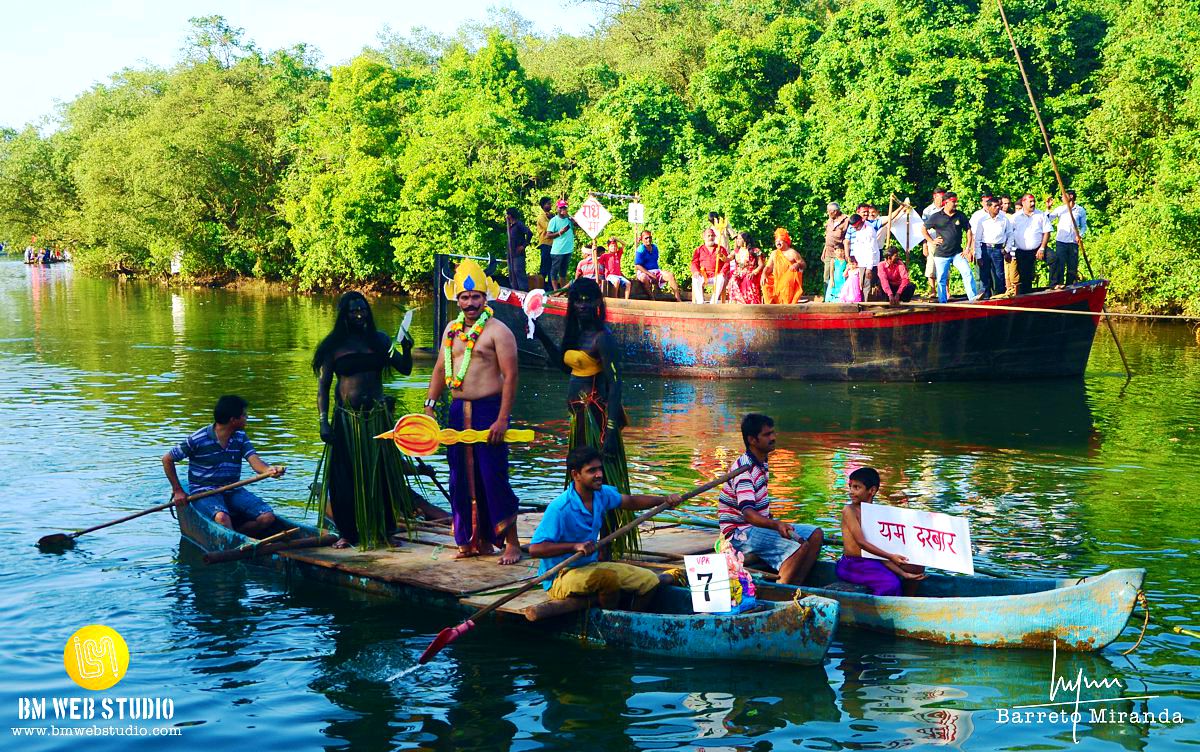
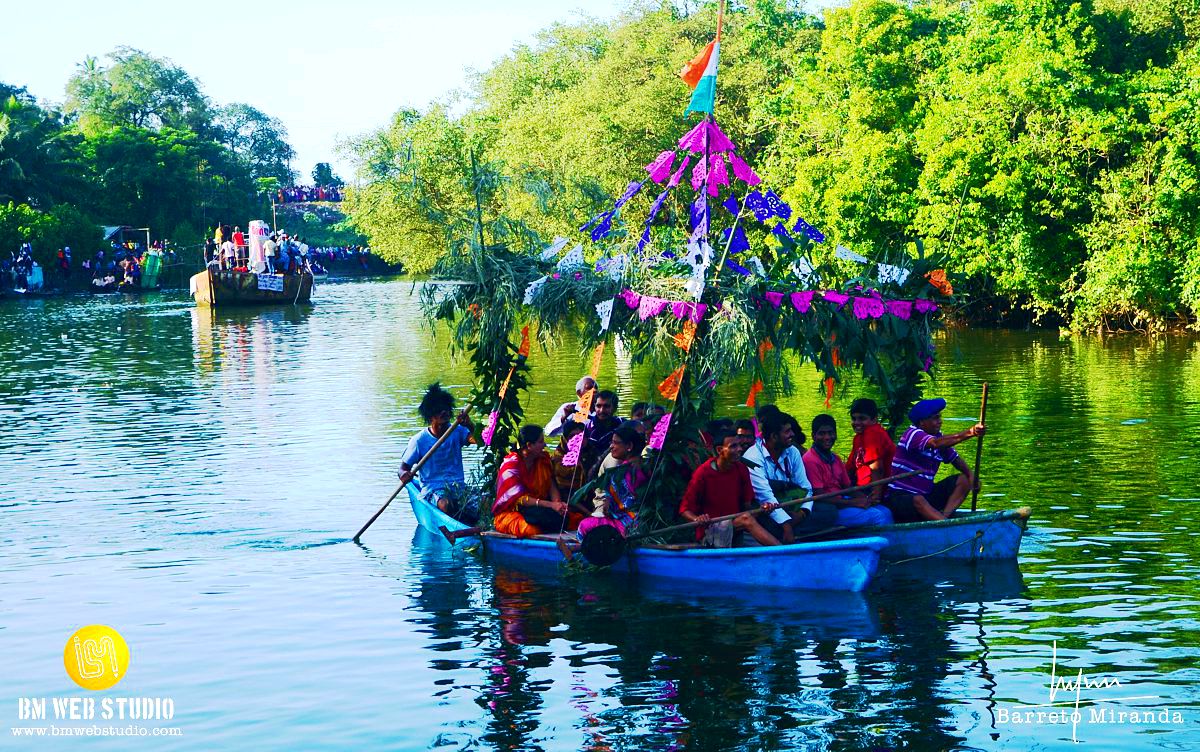
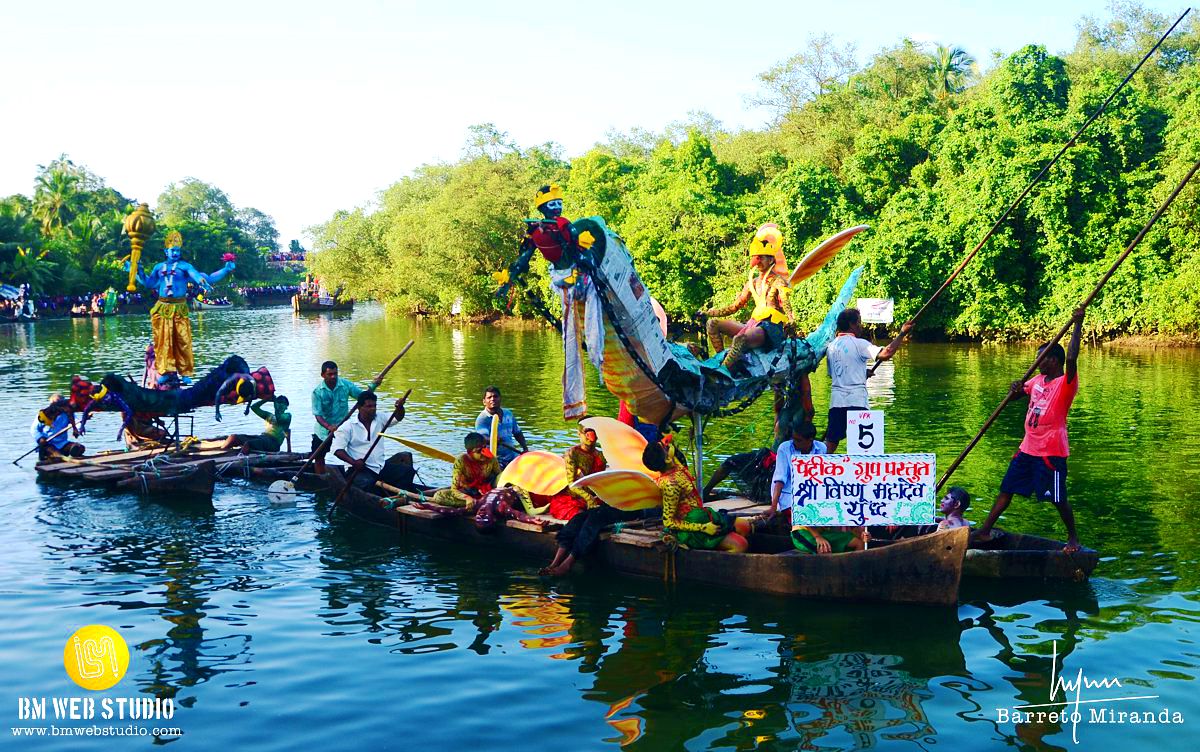
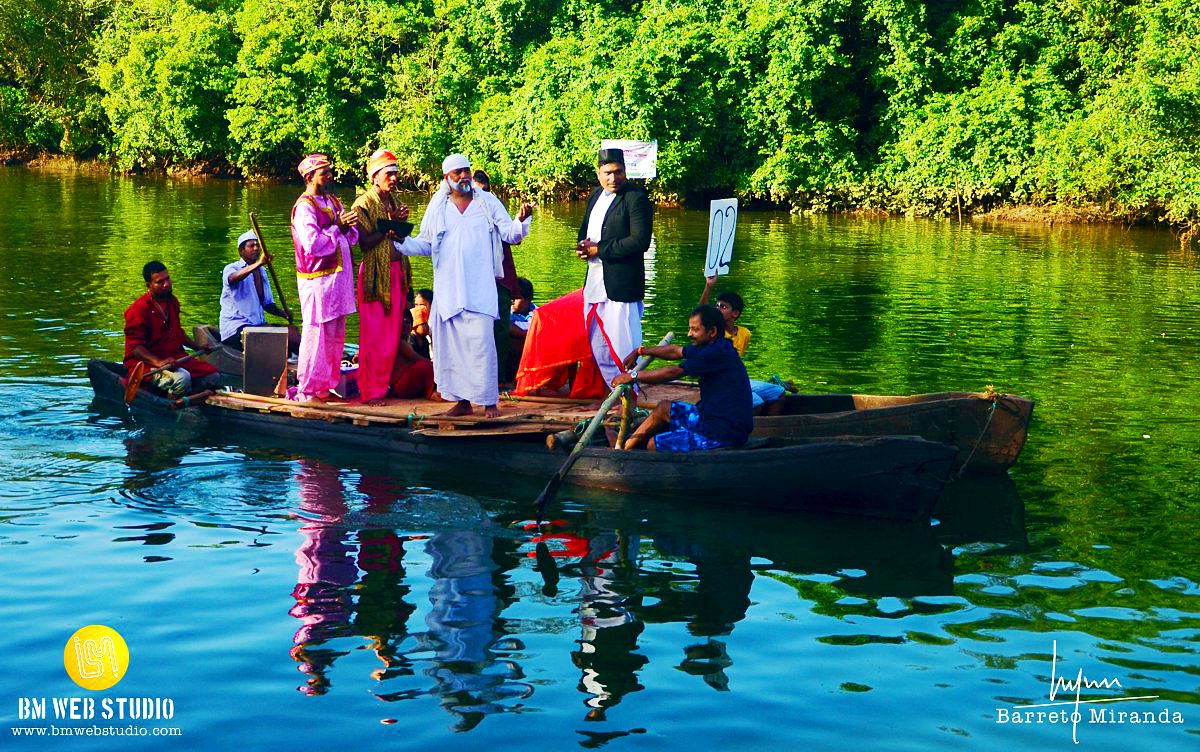

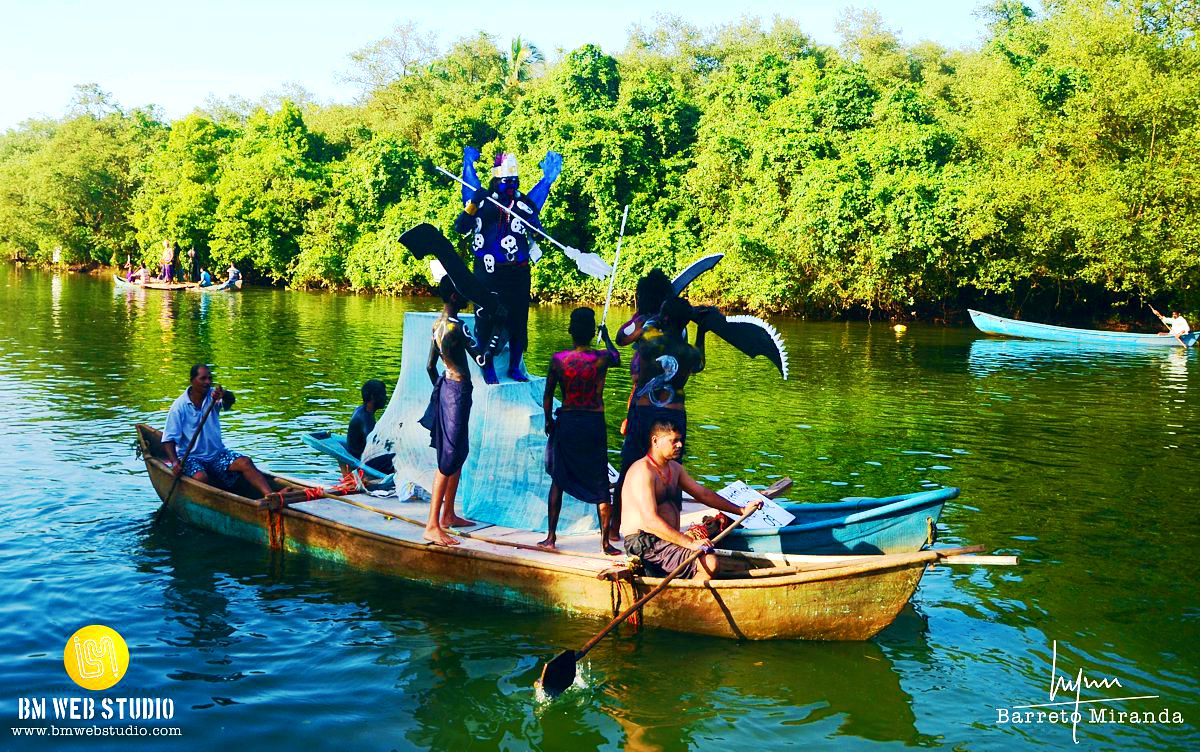
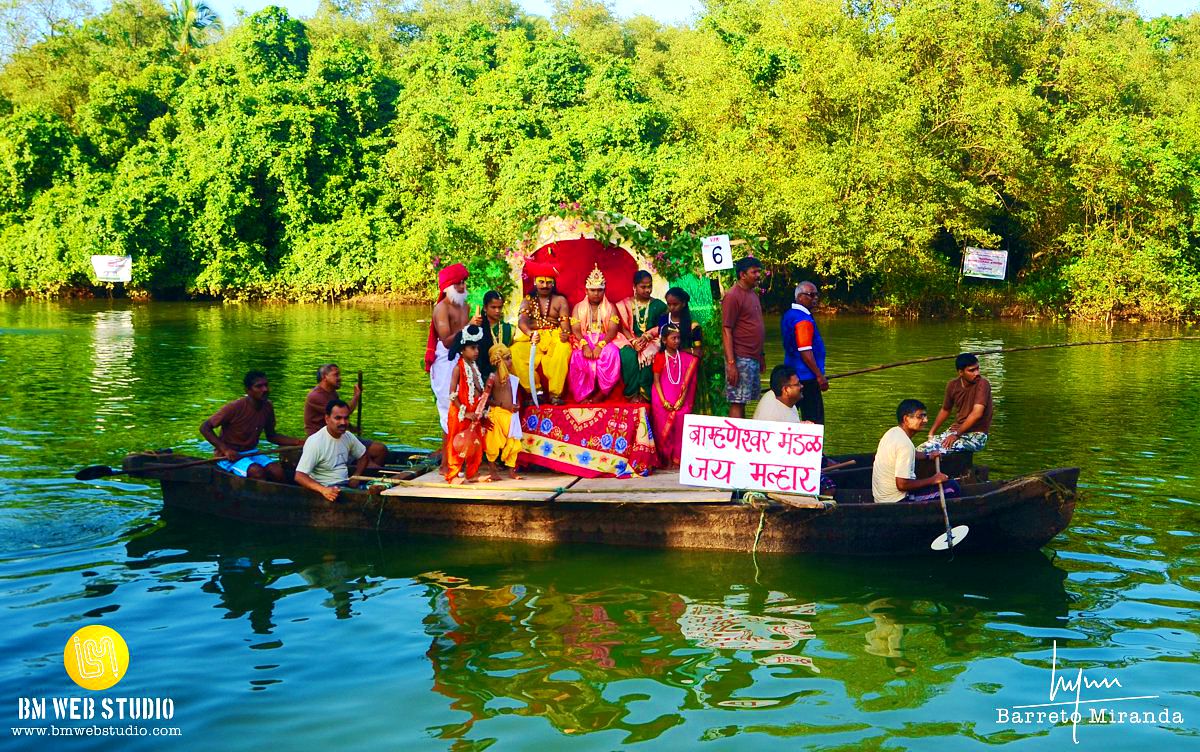
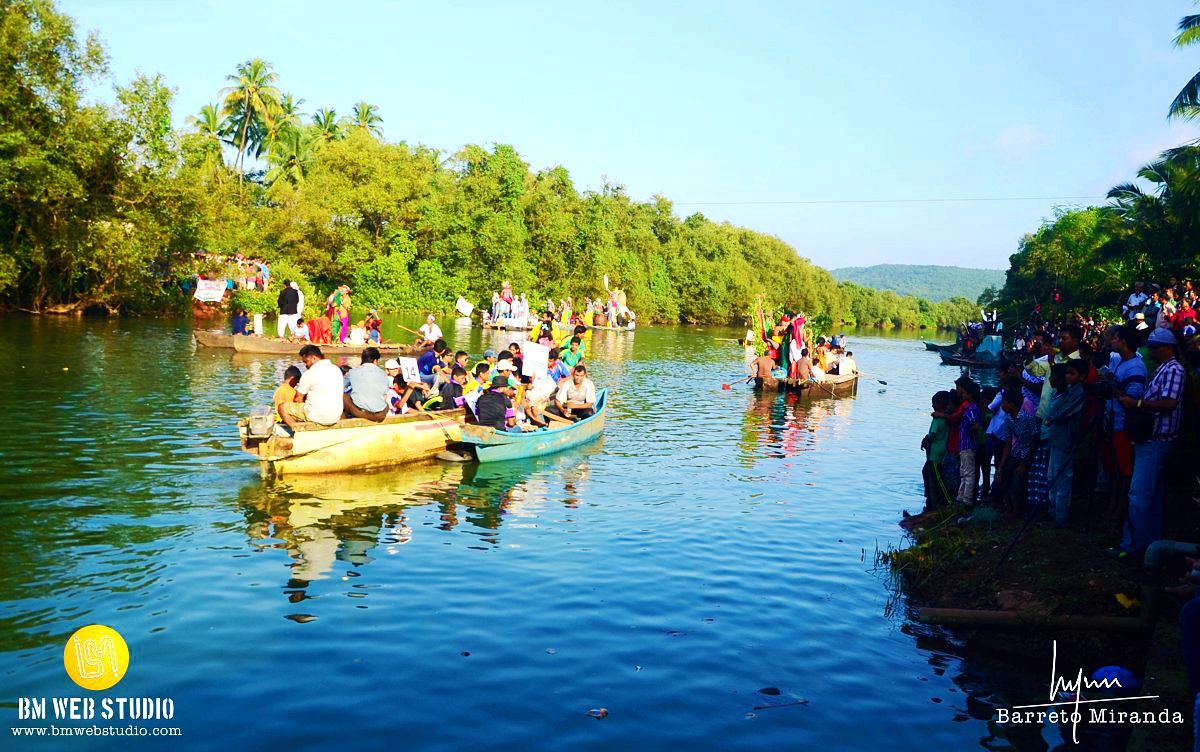
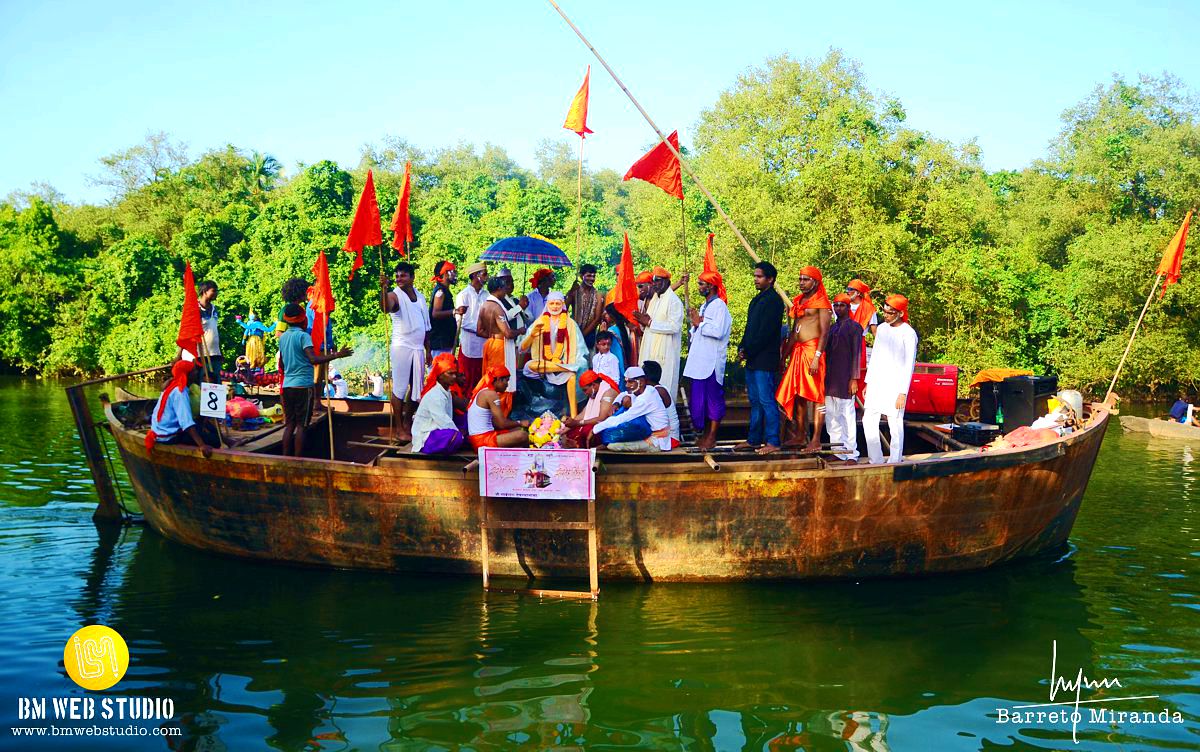

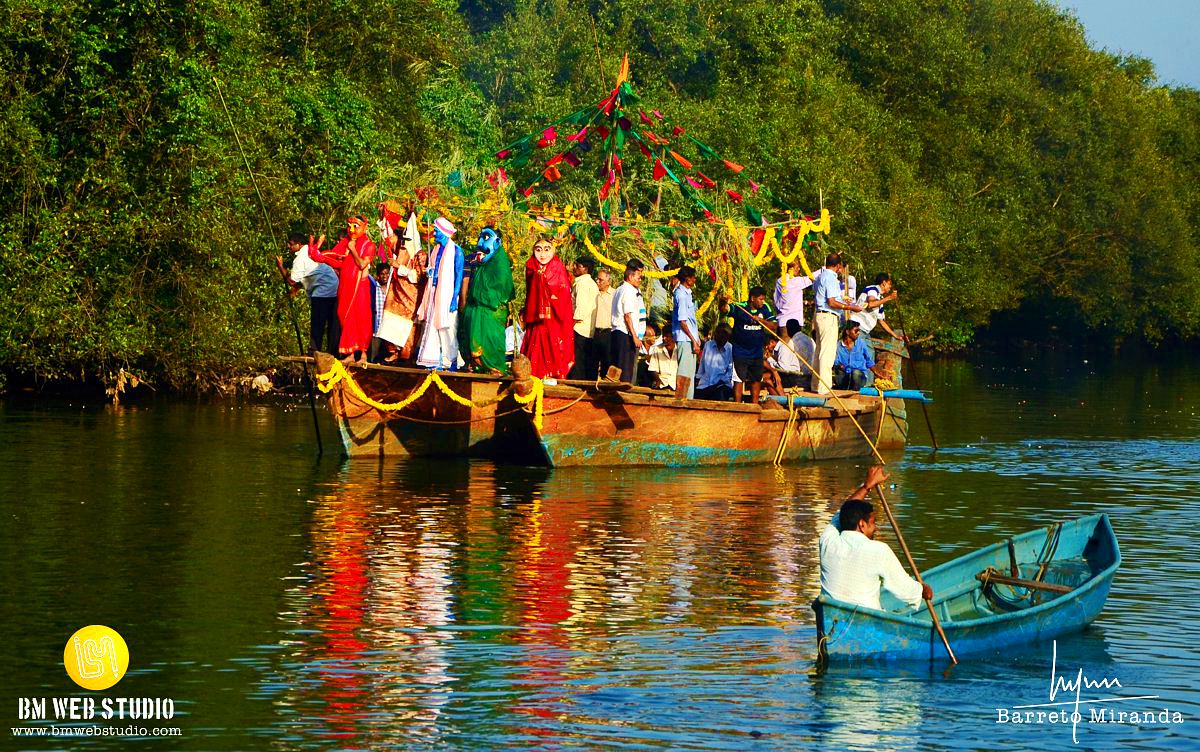
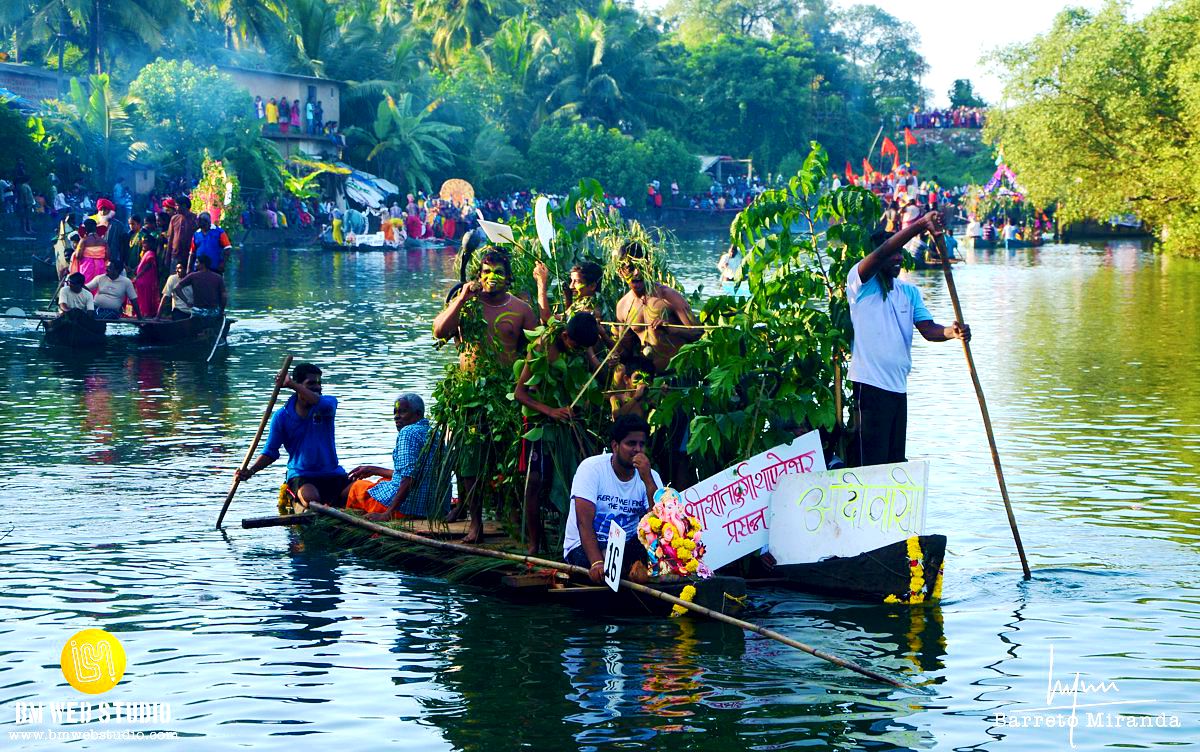
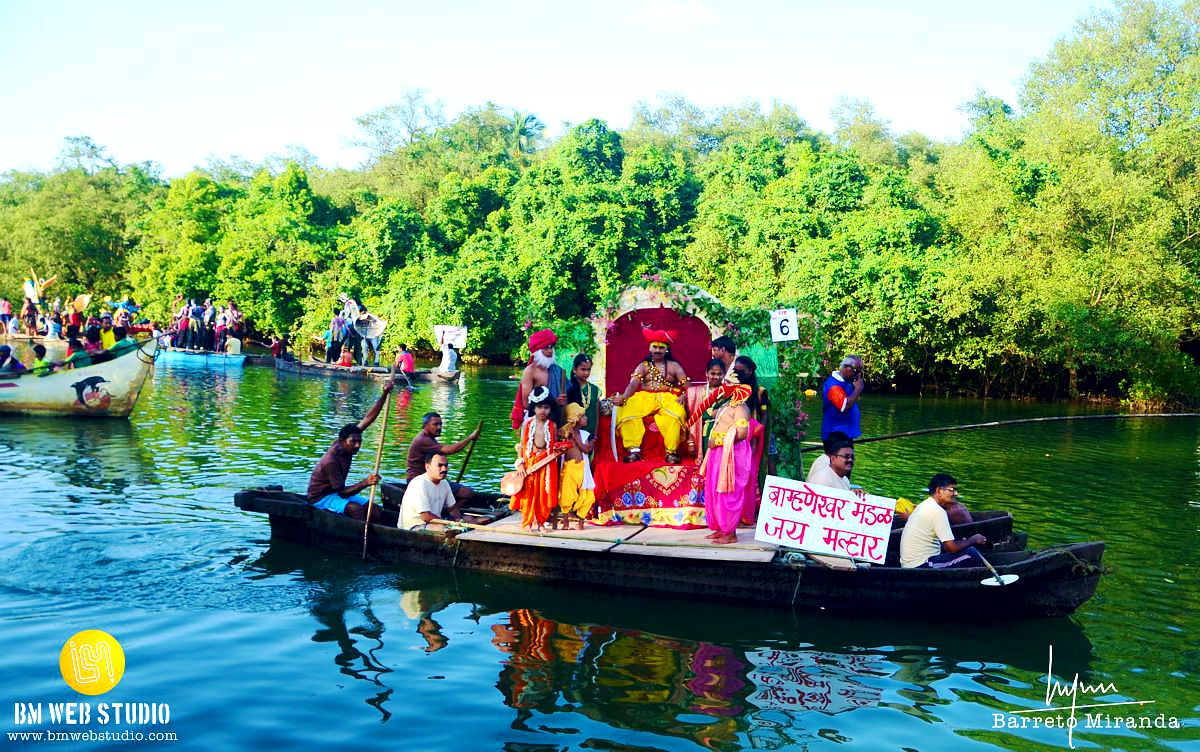
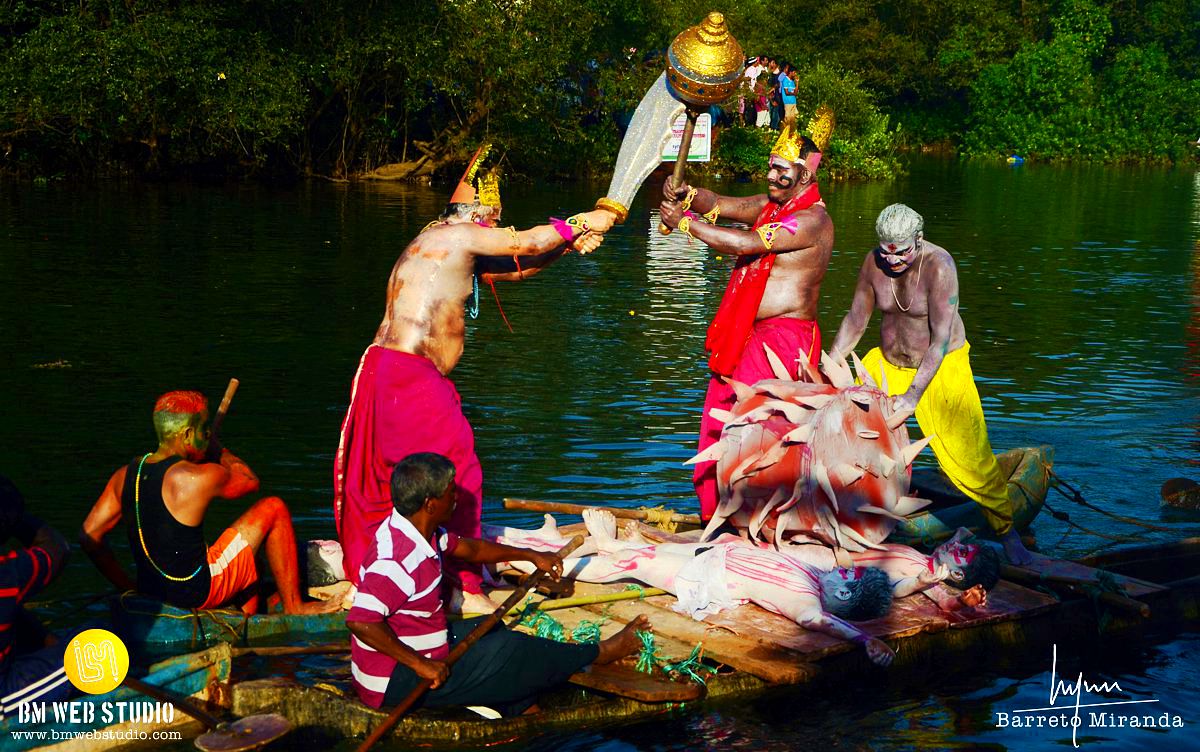
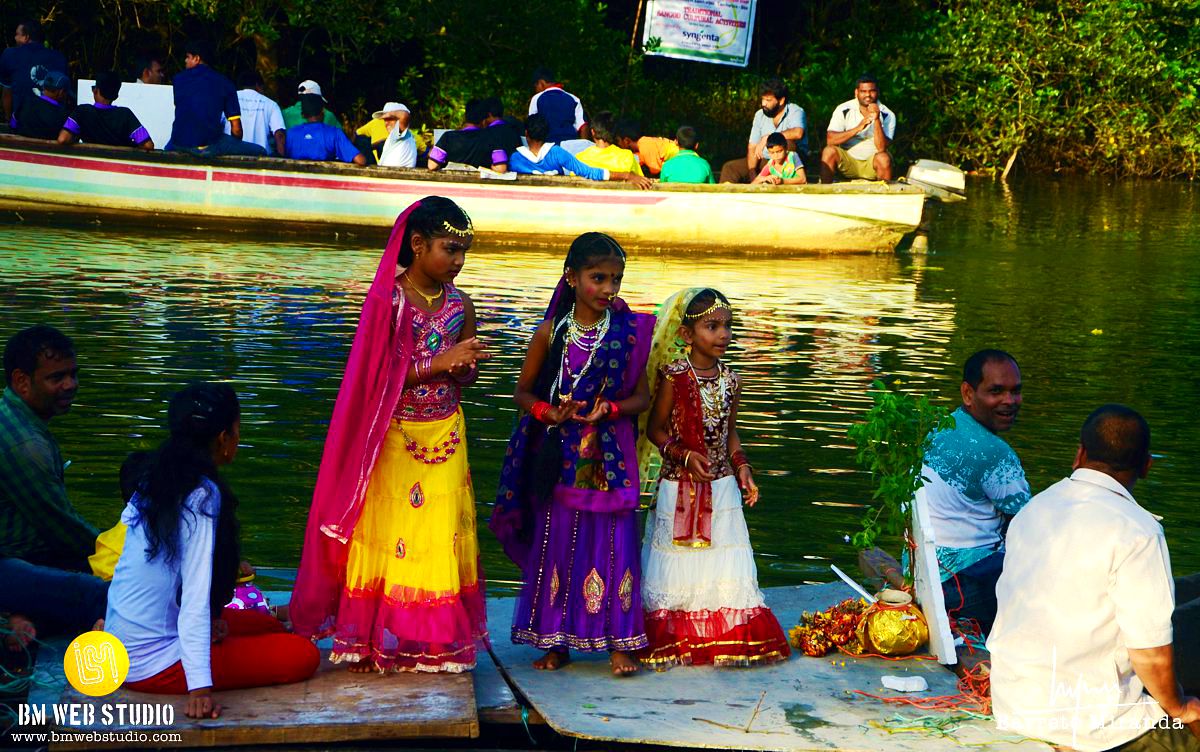

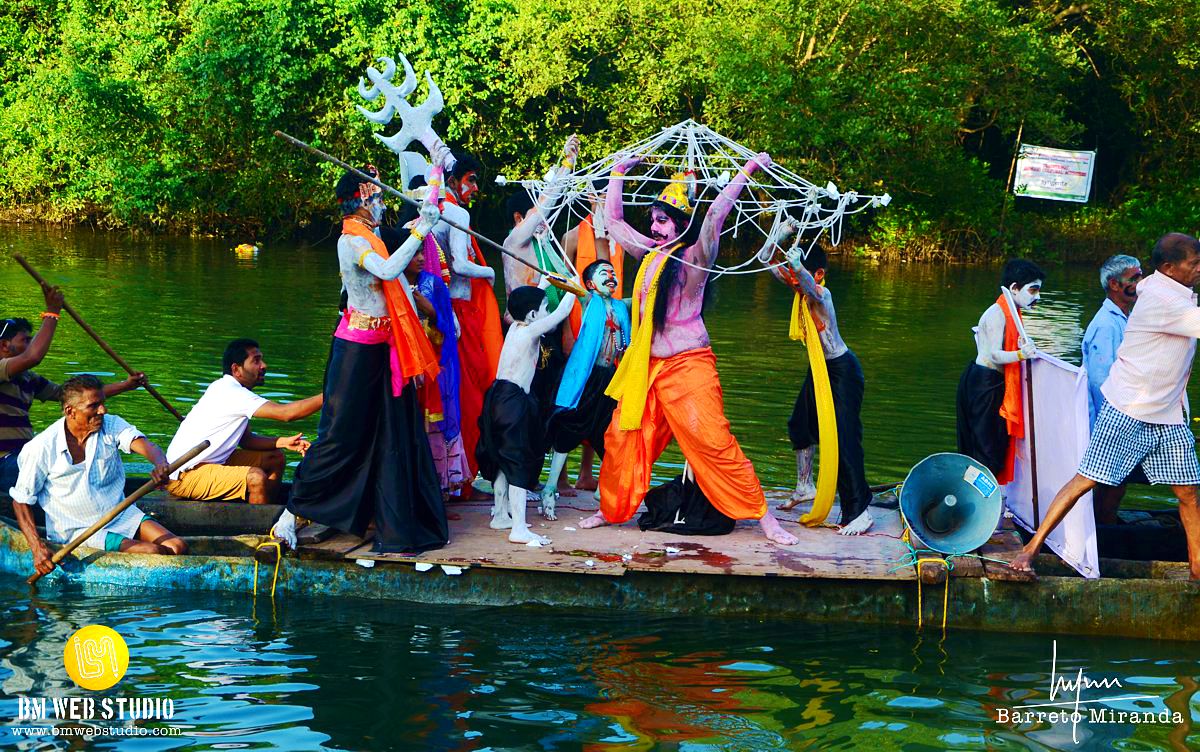
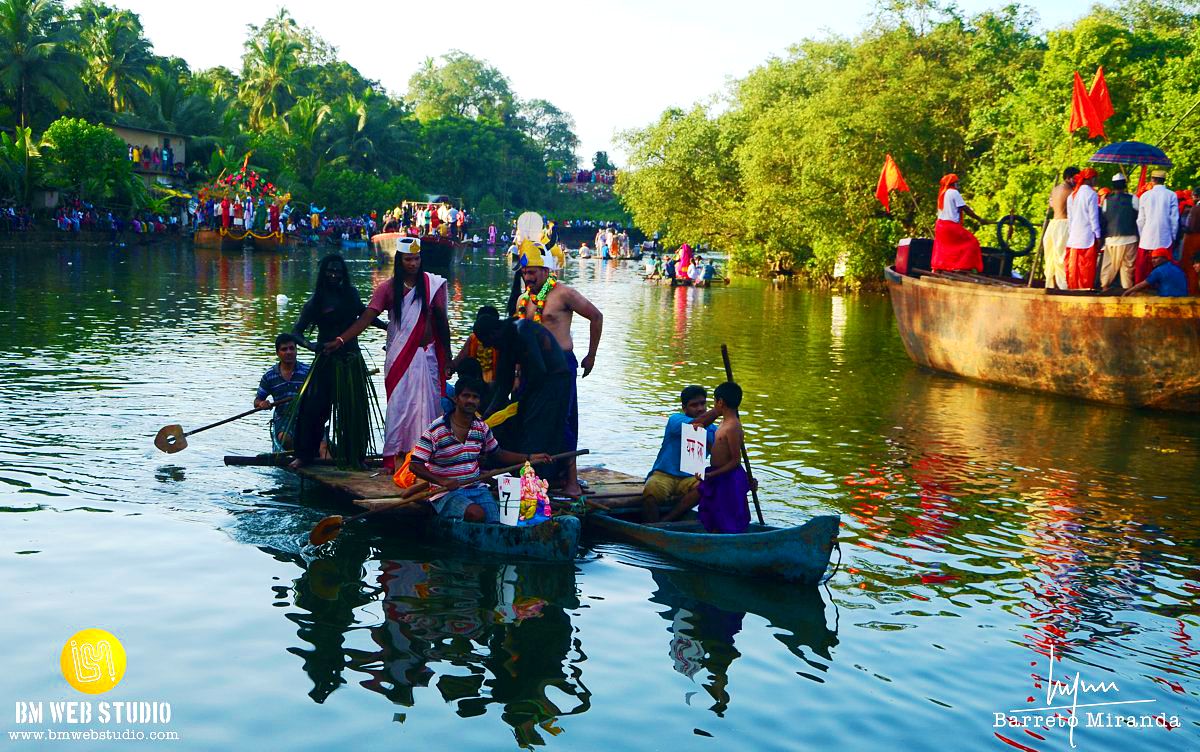
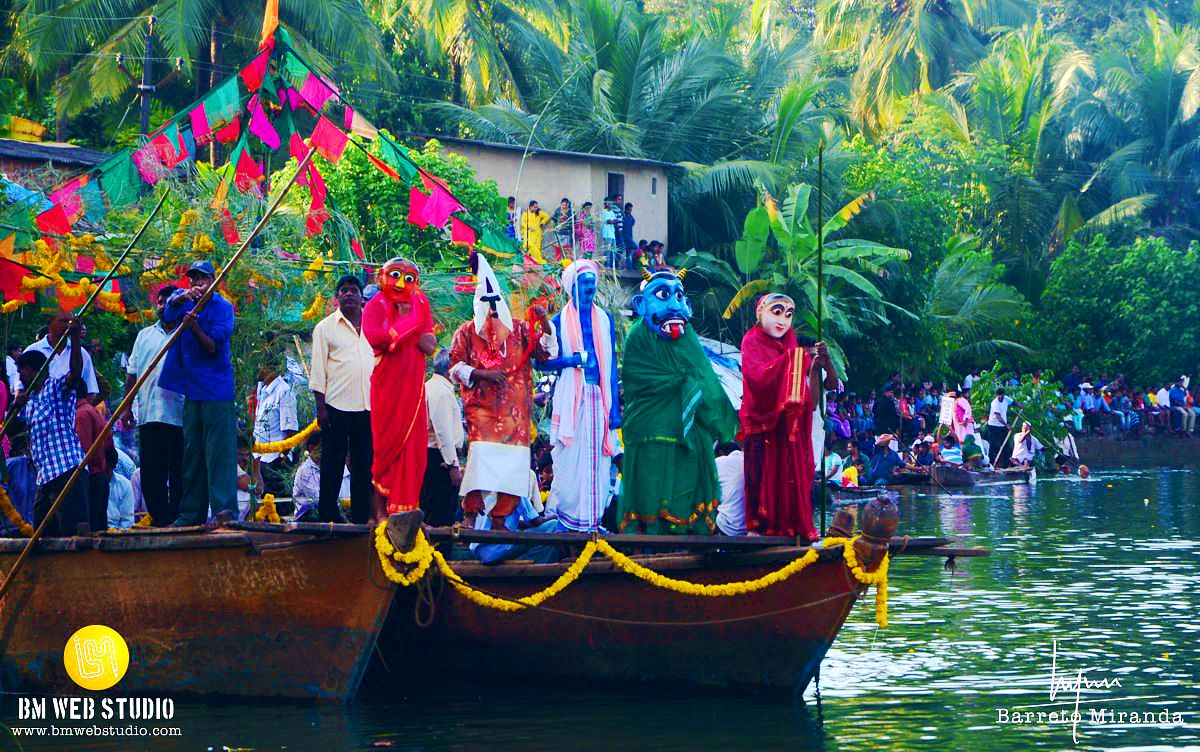
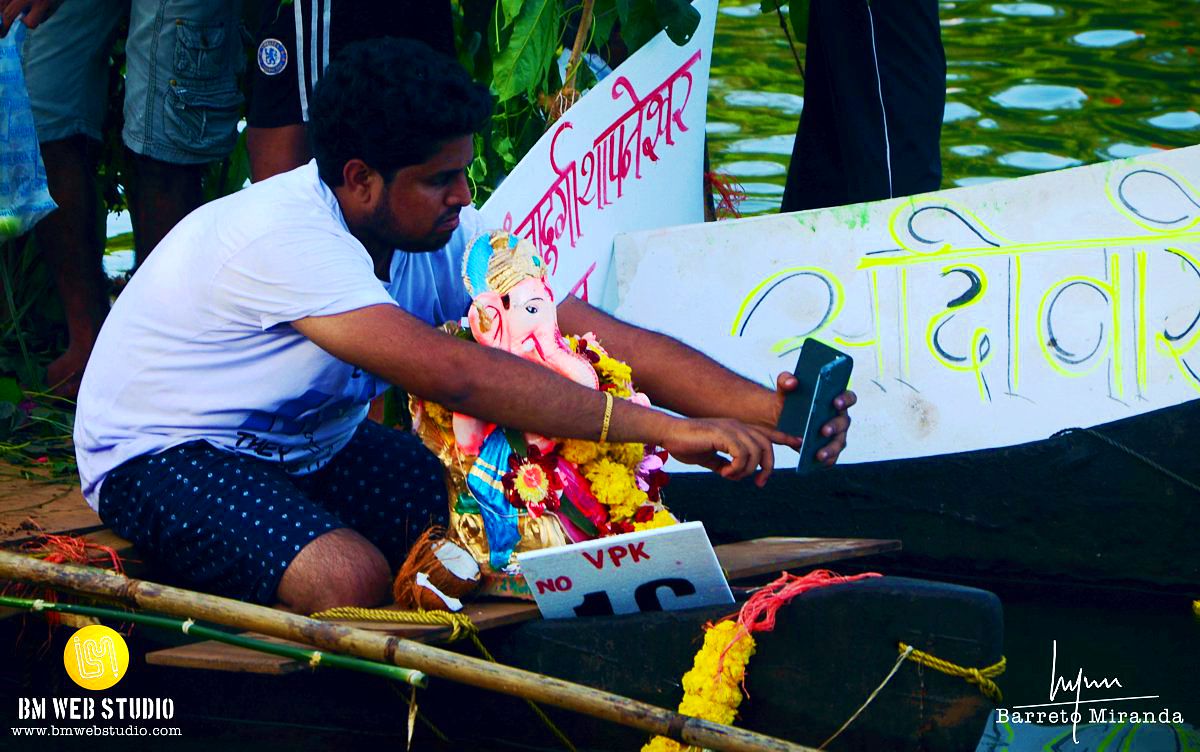
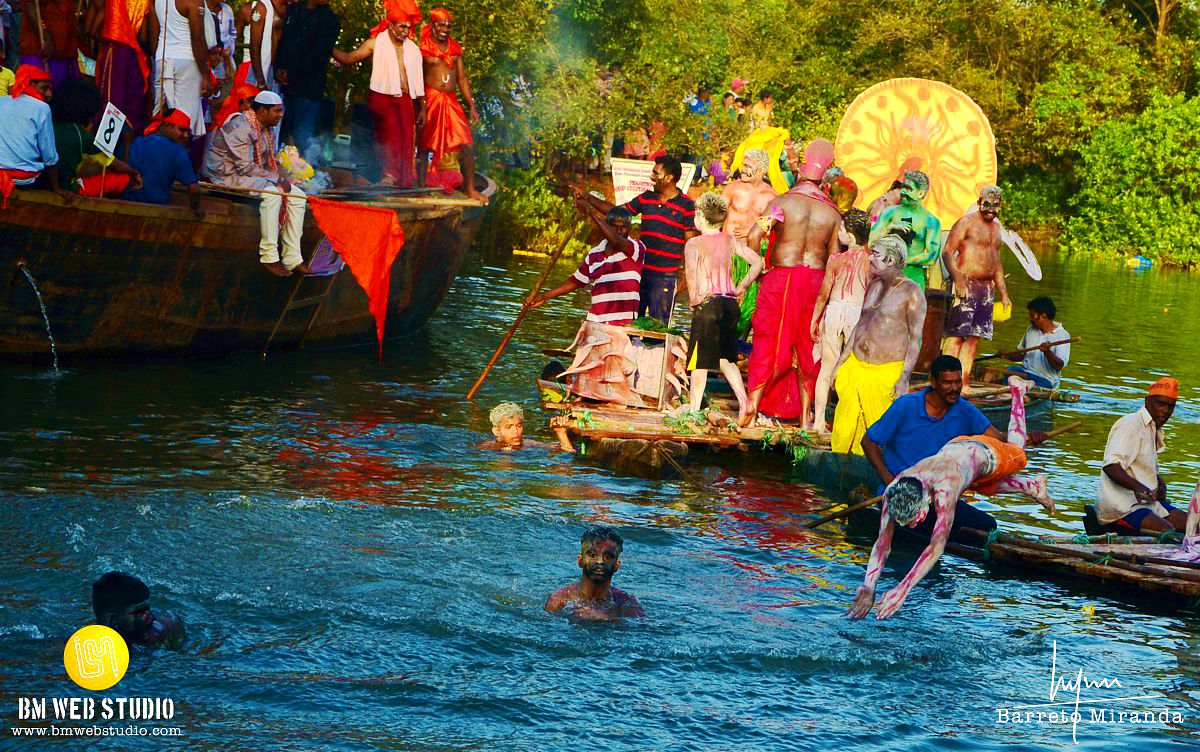
On the seventh day of Ganesh Chaturthi, the usually tranquil banks of the Cumbarjua canal — a quiet waterway edged by mangroves and old riverine homes — transform into the stage for one of Goa’s most distinctive immersion ceremonies. Known locally as the Sangodd, the ritual sees residents of Marcel and Cumbarjua carry their idols of Lord Ganesha not by road, but by river, aboard a flotilla of boats lashed together and transformed into lavishly decorated floating tableaux.
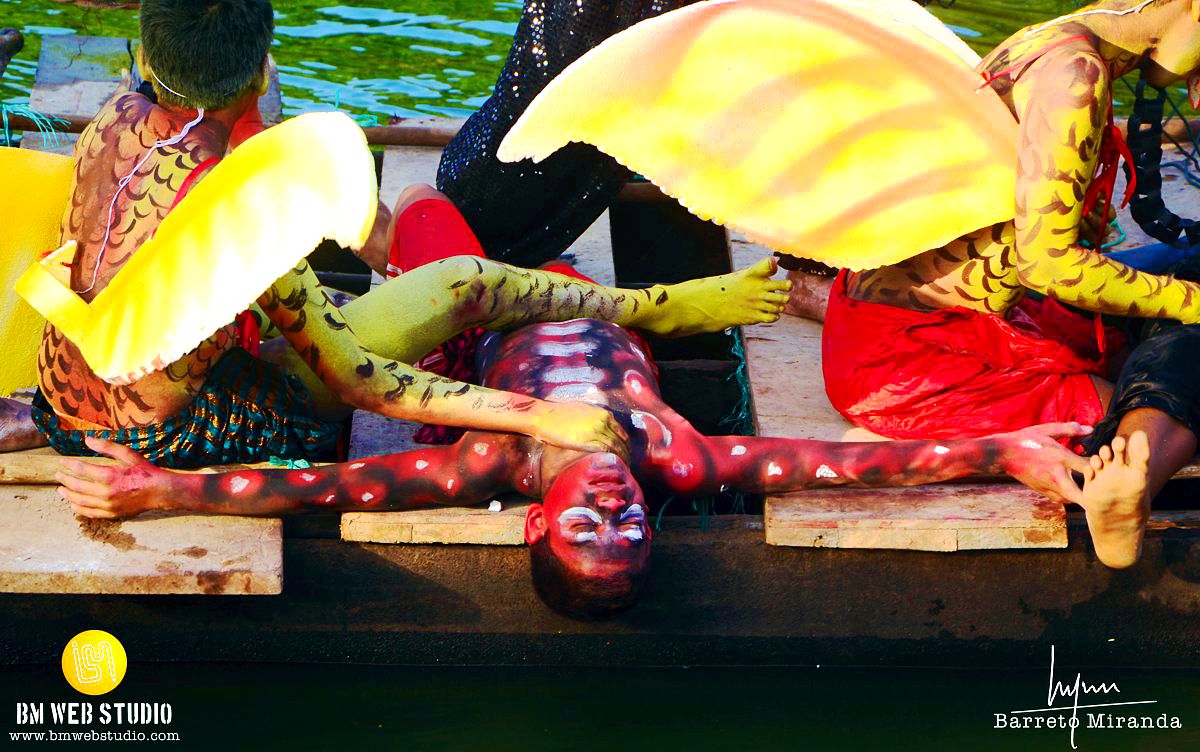
From the banks, the spectacle feels almost theatrical. Loudspeakers carry devotional hymns and the rhythmic pulse of drums across the water. At the centre of each floating platform sits the idol, framed by elaborate thematic displays depicting episodes from Hindu mythology, scenes from Goan village life, or contemporary social messages. The air resounds with music, drumbeats and celebration, yet devotion remains its steady undercurrent.
The word sangodd refers to boats bound together, and the tradition is believed to date back nearly a century. Villagers recount how a vodekar — a traditional boatman’s family — once installed their Ganesh idol at the Shantadurga Cumbharjuvekarin temple across the river in Marcel. On immersion day, they ferried the idol across in a simple canoe. Gradually, neighbours joined in. More boats were added. Ropes bound them together for stability. What began as necessity evolved into spectacle — and, over time, into heritage.
Today, the flotilla carries not only idols but imagination. Boats are adorned with mythological scenes, re-creations of village life, and messages reflecting contemporary concerns. The canal becomes an illuminated corridor of faith and creativity, watched by families who gather along the embankments hours in advance. There is celebration — music, cheers, the crackle of fireworks — but there is also reverence. As the moment of immersion approaches, the mood gently shifts. Voices rise in unison: “Ganpati Bappa Morya.” The idol is lowered carefully into the dark water. Lights shimmer against the ripples. And then it is done.
Unlike the grand urban immersions seen elsewhere in India, the Cumbarjua Sangodd feels intimate, almost cinematic. The narrowing canal draws the community close, collapsing the distance between spectator and participant. This is a landscape shaped by water — by boatmen, fishermen and traders — and here, devotion quite literally returns to the river that sustains it.
In recent years, there has been a conscious move towards eco-friendly clay idols and natural decorations, ensuring that the canal remains as alive the following morning as it was the night before. The spectacle may evolve, but its essence endures.
When the final fireworks fade and the boats untether, Cumbarjua slips back into darkness. Yet for those who stand on its banks that night, the memory lingers — of light dancing on water, of faith set afloat, and of a river that, for a few luminous hours, becomes both sanctuary and stage.
Photos by Lynn Barreto Miranda / lynn.barretomiranda.com
Clicked on 17th September 2018.

Scan the code for directions.