
Balli Shidiyotsav: Goa’s Ancient Ritual of Faith and Surrender




In the quiet village of Balli in South Goa, faith occasionally reveals itself in striking and unforgettable ways. Amid temple bells, incense and murmured prayers, a devotee is bound face-down to a tall pole and gently swung in sweeping arcs above the gathered crowd — a moment of devotion that is both dramatic and deeply spiritual. This powerful ritual lies at the heart of Balli’s revered Shidiyotsav, also known as the Gade Festival, an ancient celebration dedicated to Goddess Shantadurga Ballikarin.
Held annually at the Shree Shantadurga Ballikarin Sansthan, the five-day festival transforms the otherwise tranquil village into a vibrant centre of devotion. Pilgrims, devotees and curious visitors arrive in large numbers, drawn by a festival that blends solemn ritual, community participation and centuries-old tradition.
The celebrations begin with the Shristi Divja fast, marking the spiritual opening of the festivities. From that moment, the temple complex becomes a stage for a sequence of ceremonies that honour the goddess and reaffirm the deep bond between the deity and her devotees.
The festival reaches its emotional crescendo with the Gado ritual, one of the most distinctive religious observances in Goa. In this dramatic act of surrender and faith, a devotee known as the Gado is securely tied to a pole nearly fifteen feet high. Suspended face down, he is gently swung in both clockwise and anti-clockwise directions before the temple. For devotees, the ritual symbolises complete submission to the divine will of Goddess Shantadurga and a prayer for her protection and blessings.
Equally significant is the Kaul Prasad ritual, in which devotees receive sacred offerings believed to represent the goddess’s acceptance of their prayers. Each ritual during the festival carries deep meaning, reinforcing spiritual bonds within the community.
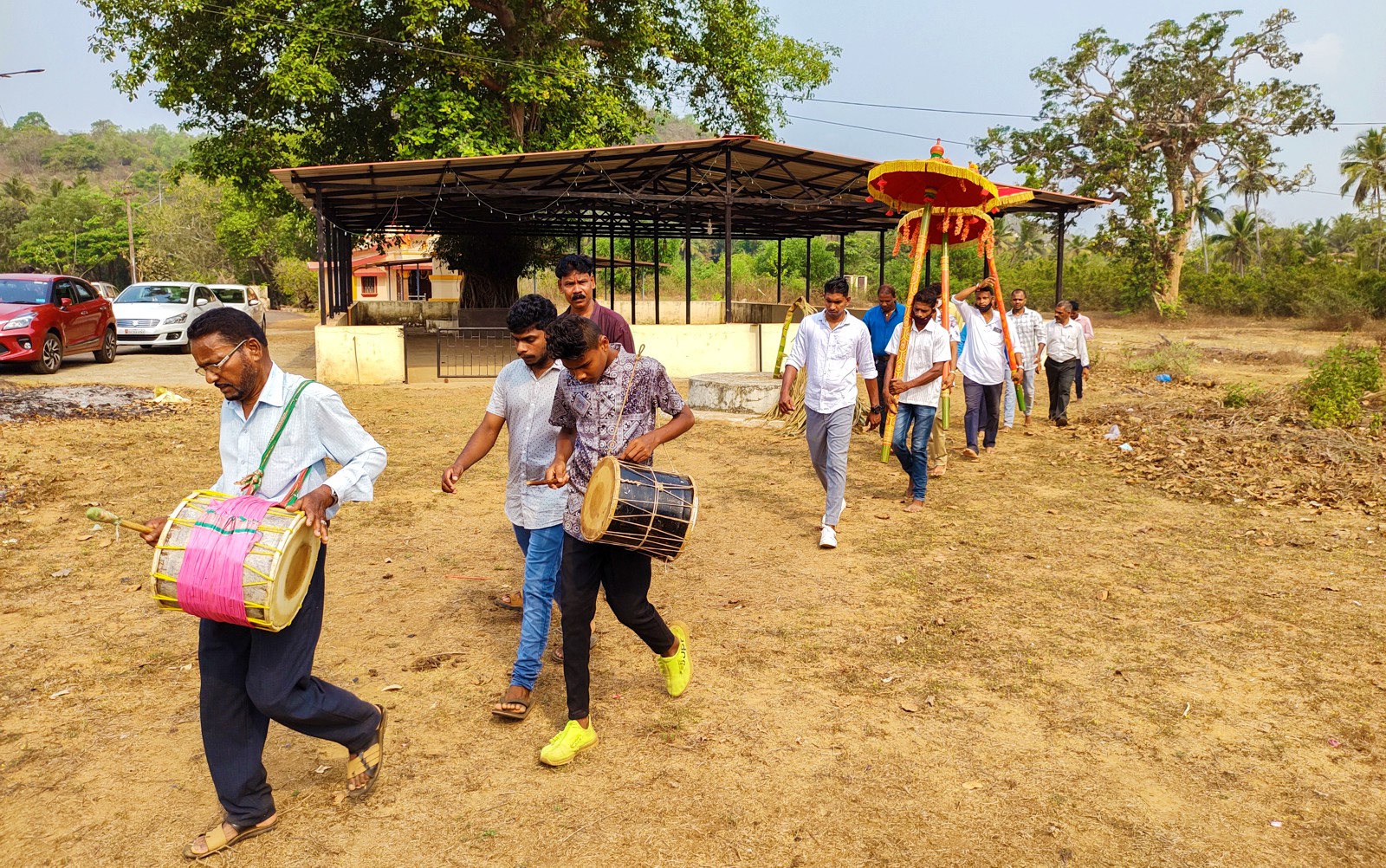
Among the most moving customs is the symbolic offering of children to the goddess by the Mahajans of the temple. A ceremonial wooden log known as the Lath is installed before the temple as a precursor to the Gado ritual. Women devotees present divaj (oil lamps) to the goddess, while the deity is taken in a grand procession on a beautifully decorated lion chariot, accompanied by music, chanting and a sea of devotees.
The festival culminates in the Maharatha procession, when the deity is carried in splendour through the temple precincts, escorted by Mahajans, Kulavis and devotees. The air fills with devotional songs, rhythmic drums and the fragrance of incense, creating an atmosphere that is both celebratory and profoundly sacred.
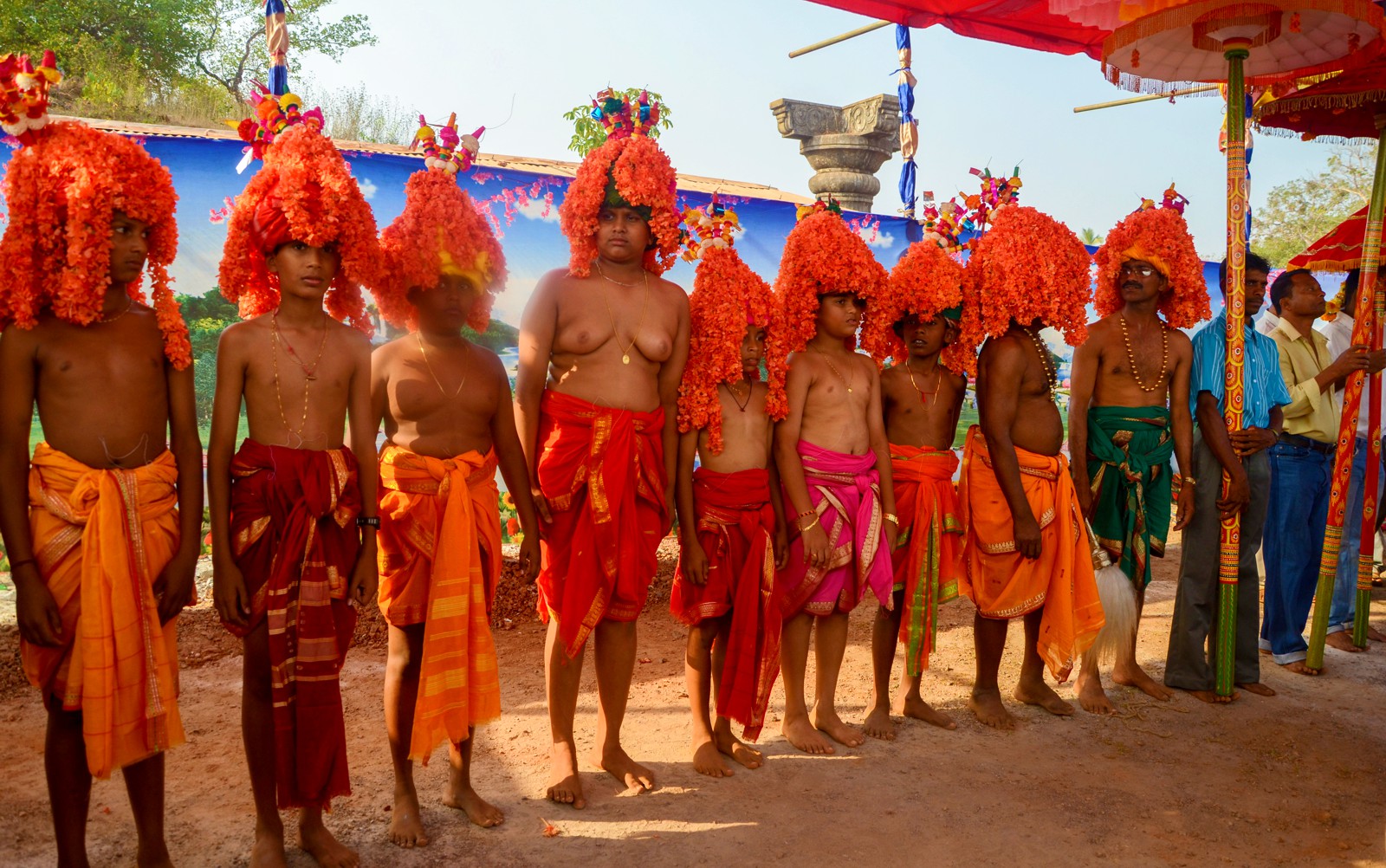
Adding to the festival’s uniqueness is a rare tradition practised by the Mahajans of Ballikarin known as Gado Bhetovni. On the day of Godetsov, young boys receive the goddess’s blessings through a striking ritual in which a small needle and thread are gently pinned to the skin of the abdomen. The boys observe a fast and offer prayers to their Kuldevi, marking a symbolic initiation that links the younger generation to their ancestral faith.
More than a religious observance, the Balli Shidiyotsav reflects the enduring strength of Goa’s living traditions. Through ritual, procession and shared devotion, the festival binds together generations of devotees and keeps ancient customs vibrantly alive.
And as the final chants fade into the warm night air of Balli, one realises that Shidiyotsav is not merely a spectacle of faith. It is a reminder that in Goa’s villages, centuries-old traditions still breathe quietly — carried forward by devotion, community and an unbroken connection to the sacred.




Photos by Lynn Barreto Miranda / lynn.barretomiranda.com
Photos are of the Balli Shidiyotsav held on 16th March 2012 (top) and 26th March 2022 (bottom).